About admin

Admin of www.Bakkah.net/en

Important Advice about Food Safety and Ramadhaan

In the Name of Allah, the Most Gracious, the Ever Merciful…

As the hearts look forward to the month of Ramadhaan and all the goodness our Lord brings us within it, it can be noted that sometimes we behave with some level of heedlessness about dunyaa (worldly) matters, which might lead to considerable harm to ourselves, our family, and/or our entire Muslim community. This article addresses one such concern about food safety.

Whether you host a gathering at your home, help serve catered food at an Islamic center, or get involved in any level of serving food, you should know about the most recent guidelines by food safety experts regarding the preservation and storage of leftovers.

THE DANGER ZONE

USDA guidelines are based on scientific studies of how fast bacteria develops and grows in foods left at certain temperatures. One of the most important of those guidelines is the two-hour rule. Foods left out for serving without any warming device should be stored within two hours. Studies shows that after two hours, when food is left out in the danger zone, i.e., between 40° F and 140° F, bacteria within it grows much more rapidly, in a way that can be hazardous to our health, especially for our children, elders, and those more sensitive or vulnerable!

Bacteria grow rapidly between the temperatures of 40° F and 140° F. After food is safely cooked, hot food must be kept hot at 140° F or warmer to prevent bacterial growth. Within 2 hours of cooking food or after it is removed from an appliance keeping it warm, leftovers must be refrigerated. Throw away all perishable foods that have been left in room temperature for more than 2 hours (1 hour if the temperature is over 90° F, such as at an outdoor picnic during summer).

Source: Leftovers and Food Satefy (USDA)

I strongly advise that we give careful consideration to the following matters:

1. These are government guidelines, based on scientific analysis of empirical data, not simply “What So-and-So has been doing for years…,”  and, “Nobody got sick…,” etc., claims that are not based on any actual follow-up or study, just whimsical claims. Community leaders need to take these issues very seriously and not dismiss them based on “what we’ve been doing” or other claims. Continue reading

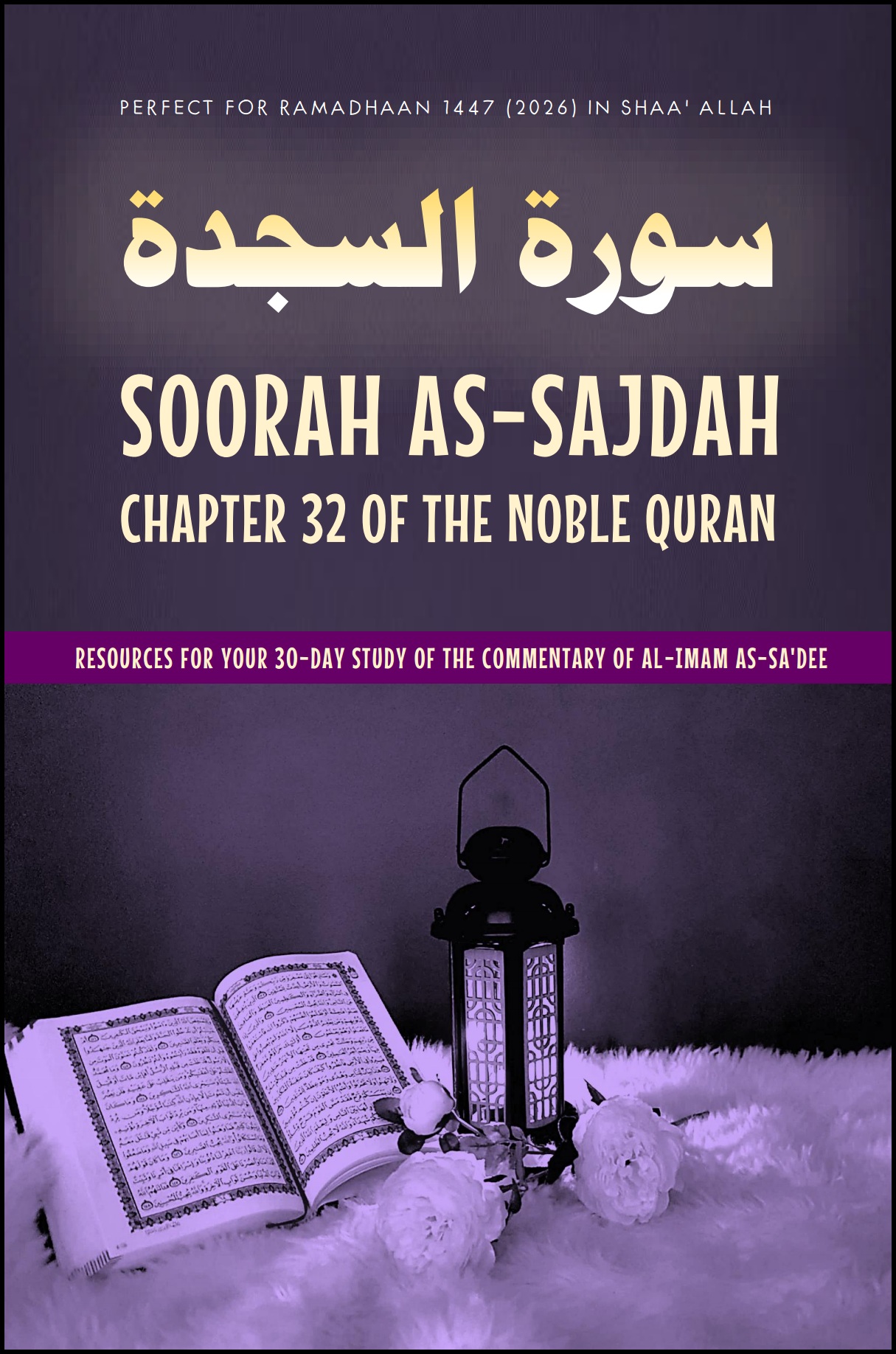
NEW PUBLICATION: Soorah as-Sajdah, Chapter 32 of the Noble Quran (Workbook for Ramadhaan Lessons 1447 [2026])

In the Name of Allah, the Most Gracious, the Ever Merciful…

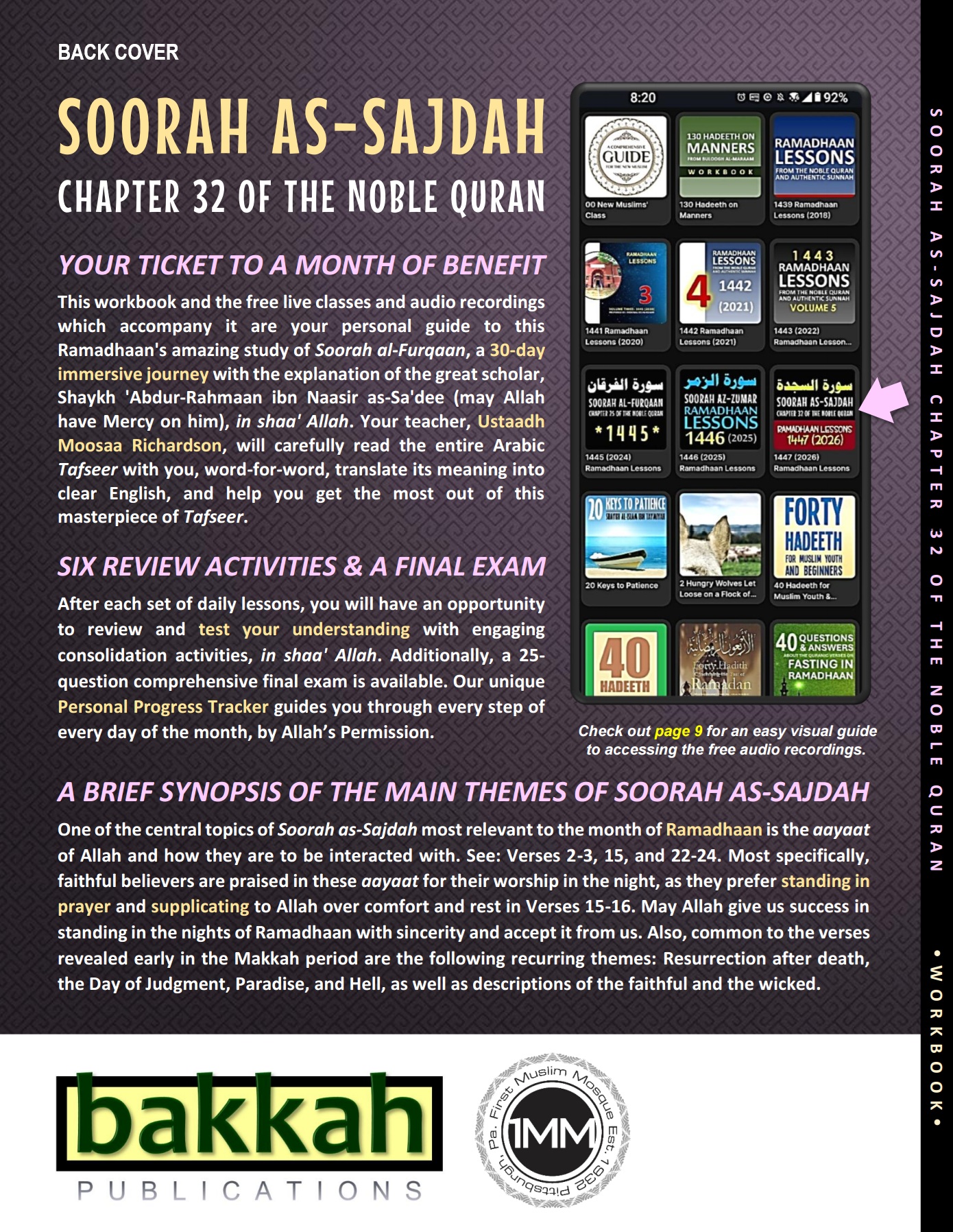
We are pleased to announce that our latest publication is now available: Soorah as-Sajdah, Chapter 32 of the Noble Quran (Workbook): Resources for Your 30-Day Study of the Commentary of al-Imam as-Sa’dee

Check out this FREE version: [PDF]

*This article features affiliate links, through which we may earn a small commission which helps maintain our website and da’wah activities, so we thank you, jazaakum Allahu khayran!


BRIEF OVERVIEW:

Continue reading

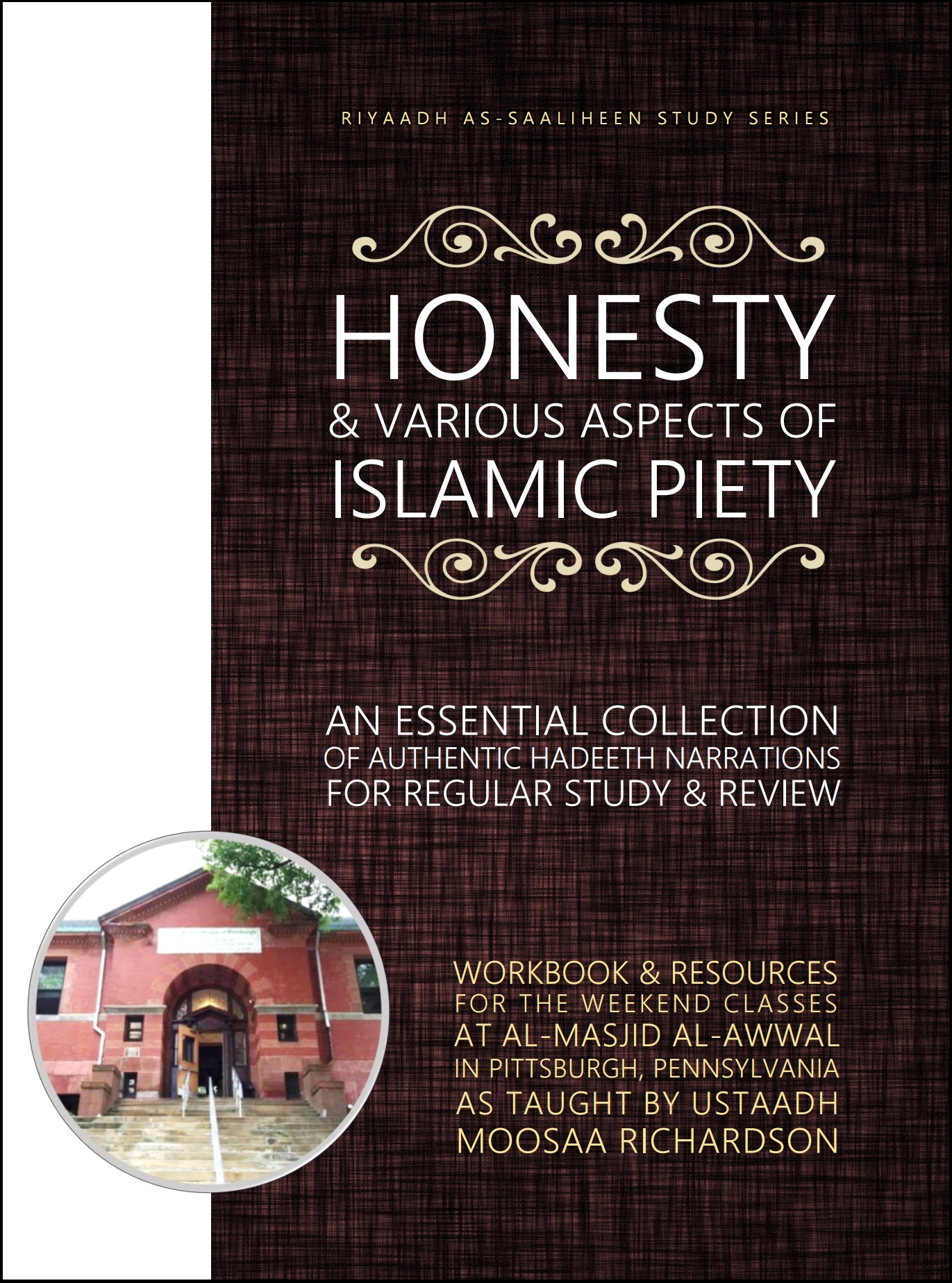
NEW PUBLICATION: Honesty & Various Aspects of Islamic Piety (Workbook)

Al-hamdu lillaah, we are pleased to announce that our latest publication is now available -by the Permission of Allah-, the official workbook and for the Saturday night classes at al-Masjid al-Awwal (the First Muslim Mosque) in Pittsburgh:

  • Honesty & Various Aspects of Islamic Piety (Chapters 4-10 of Riyaadh as-Saaliheen)

*This article features affiliate links, through which we may earn a small commission which helps maintain our website and da’wah activities, so we thank you, jazaakum Allahu khayran!

BRIEF OVERVIEW:

  • Workbook and resources for chapters 4-10 of the book, Riyaadh as-Saaliheen, your guide to 41 Hadeeth studies (Hadeeths 54-94), as explained by the great scholar, Shaykh Muhammad ibn Saalih al-‘Uthaymeen (may Allah have Mercy on him), as read at the classes taught live every Saturday night by Ustaadh Moosaa Richardson. [MP3 recordings]
  • In this workbook, you have the entire Arabic text of the book, paired with a clear English translation, laid out with ample space for notetaking during classes with guiding prompts for each main idea. After the text there are other helpful resources, including the uninterrupted text, in its original Arabic (both voweled and unvoweled), as well as its uninterrupted English translation, an original Arabic manuscript, a personal progress tracker, and a helpful index to all of the narrations.
  • 212 pages, 8.5×11″ size, glossy cover, cream-colored pages (paperback) or white pages (hardcover)
  • Available resources: MP3 recordings | Free PDF Version | Mobile version (English) | Mobile version (Arabic) (TBA in shaa’ Allah)
  • Printed Workbook on Amazon (affiliate links):*

Continue reading

An Easily Avoidable Mistake Some Ladies Make in Their Prayers

In the Name of Allah, the Most Gracious, the Ever Merciful…

It happens that some ladies neglect the issue of covering the feet properly for prayer, while it is an issue which leads to prayer being invalid and unaccepted, according to the majority of Islam’s scholars. Sometimes we underestimate the priority of an issue, and sometimes that can have very serious consequences!

Allah, the Exalted and Most High, commands us to tell the believing women to cover themselves fully with their modest garments. He says:

وقل للمؤمنات يغضضن من أبصارهن ويحفظن فروجهن ولا يبدين زينتهن إلا ما ظهر منها وليضربن بخمرهن على جيوبهن
“And say to the believing women that they are to lower their gazes and protect their private parts, and they are not to expose their beauty, except for what is apparent of it, and they must cover their bodies with their khimaars…” (24:31)

“Except for what is apparent of it,” refers to the face and the hands, according to Ibn ‘Abbaas and the majority of the scholars.(1)

And Allah, the Most High, says:

ياأيها النبي قل لأزواجك وبناتك ونساء المؤمنين يدنين عليهن من جلابيبهن ذلك أدنى أن يعرفن فلا يؤذين وكان الله غفورا رحيما
“O you Prophet! Tell your wives, daughters, and the [other] women among the believers to cover themselves [fully] with their jilbaabs (modest garments). This is so they could be recognized and not harmed. Allah is Oft Forgiving and Ever Merciful.” (33:59)

In these Verses, Allah commands ladies to wear hijaab, mentioning specifically the khimaar and jilbaab, which are modest garments worn to cover the entire body, from head to toe.

This is required when they are out in public, in situations visible to men not part of their immediate family, or in prayer. The 31st Verse of Soorah an-Noor, quoted previously, goes on to list the close family members around whom a woman does not need to cover completely.

As for when praying, the Messenger of Allah (may Allah raise his rank and grant him peace) said:

لا يقبل الله صلاة حائض إلا بخمار
“Allah does not accept the prayer of adult lady not dressed in a khimaar.”(2)

It is reported that Umm Salamah, the Mother of the Believers (may Allah be pleased with her), was asked about what a lady needs to wear when she prays. She replied:

تصلي في الخمار والدرع السابغ إذا غيب ظهور قدميها
“She prays in a khimaar and a long garment which covers over her feet.”(3)

Shaykh Ibn Baaz (may Allah have Mercy on him) said:

لا تقبل صلاتها إلا بخمار، يعني ساتر، فلا بدّ من ستر شعرها كله، وبدنها كله في الصلاة، حتى أقدامها تسترها، إما بالجوارب، أو بالثوب الساتر المرتخي الذي يستر قدميها.
“Her prayer is not accepted without being dressed in a khimaar, meaning: which is fully covering. So she must cover her hair, entirely, as well as her entire body during prayer. She must even cover her feet, either with socks or with a long garment that hangs low enough to cover her feet.”(4)

The majority of the scholars consider the prayer of a lady with her feet exposed to be invalid, with the exception of some incidental exposure of the bottoms of her feet in prostrations.

What about qadhaa’ (repeating the prayer after covering the feet)?

  • Regarding a lady who is incapable of covering (completely) because she does not have access to enough clothing, or because she is in prison and prevented from covering fully, or because of winds that blow her garments in a way that exposes her in the prayer, or any other excuse which is outside of her control, then she has fulfilled her duty, and no qadhaa’ or anything further is required from her.
  • When capable of covering, regarding a prayer that was just offered in such a way (with the feet exposed), a lady is to be told to repeat the prayer, as it was invalid.
  • Regarding prayers offered in the past, the times of which have ended, then hopefully Allah would excuse what was done in the past because of ignorance of the ruling, and Allah knows best.
  • Regarding a lady who knows this ruling, but neglects this issue intentionally, then may Allah aid her in fulfilling genuine repentance and in overcoming whatever has led to such disastrous neglect in her worship of Allah. She should fear Allah and be afraid that a small matter of easily correctable negligence leads to great loss on the Day of Judgment. She should seriously consider that the first matter of all her deeds she will be questioned about on the Day of Judgment is incorrect and invalid with her Creator, and then all the rest of her deeds would all be similar, and this she would be absolutely ruined on the Day of Reckoning!

The Prophet (may Allah raise his rank and grant him peace) said:

إن أول ما يحاسب به العبد يوم القيامة من عمله الصلاة فإن صلحت فقد أفلح وأنجح وإن فسدت فقد خاب وخسر
“Indeed, the first of a worshipper’s actions he/she will be questioned about on the Day of Judgment is the prayer. If it is sound, he/she is successful and triumphant. If it is corrupt, he/she fails and loses.”(5)

In another hadeeth:

أول ما يحاسب به العبد يوم القيامة الصلاة، فإن صلحت صلح له سائر عمله وإن فسدت فسد سائر عمله
“The first thing a worshipper will be questioned about on the Day of Judgment is the prayer. If it is sound, all of the rest of his/her deeds will be sound. If it is corrupt, all the rest of his/her deeds will be corrupt.”(6)

So being that this issue is an easy one to correct, let us fear Allah and be more diligent in our worship, so our sworn enemy does not lead us into ruin and destruction in the Hereafter with an issue so easily correctable!

What about that “minority” opinion held by some scholars?

While there is a position among a minority of the scholars that the woman’s feet are not required to be covered in prayer, ask yourself the following questions in all sincerity:

  • When Allah has commanded me to cover myself fully, how certain am I that HE, the Lofty and Exalted, has exempted my feet from this command?
  • Am I upon clear, doubt-free evidence that ALLAH HIMSELF has exempted my feet from His Command to cover my body?
  • Am I comfortable offering a prayer that the majority of Muslim scholars throughout history would classify as invalid?
  • How important is it to me to stick to such a position when covering my feet is so easy; something that would remove me from an issue of differing over such a serious matter of such potentially disastrous results?

May Allah grant us success in worshipping Him in the best way, and may He forgive us and all the believing men and women.

And Allah knows best.

Written by: Moosaa Richardson (1447.06.06) 

RESOURCE: PDF of this article (with Arabic quotes fully voweled)

FOOTNOTES:

(1) Tafseer of Ibn Katheer (24:31)

(2) As narrated by ‘Aa’ishah (may Allah be pleased with her) and collected by Ahmad, Aboo Daawood, at-Tirmithee, Ibn Maajah, and others; authenticated in Irwaa’ al-Ghaleel (196).

(3) Collected by Maalik in his al-Muwatta’ and Aboo Daawood.

(4) As found on the shaykh’s official website [accessed by this link] [MP3 audio]

(5) As narrated by Aboo Hurayrah (may Allah be pleased with him) and collected by Aboo Daawood, at-Tirmithee, and Ibn Maajah; authenticated in Saheeh Sunan Abee Daawwood (no.810-812)

(6) Collected by at-Tabaraanee in his al-Mu’jam al-Owsat. See: Silsilat al-Ahaadeeth as-Saheehah (no.1358).

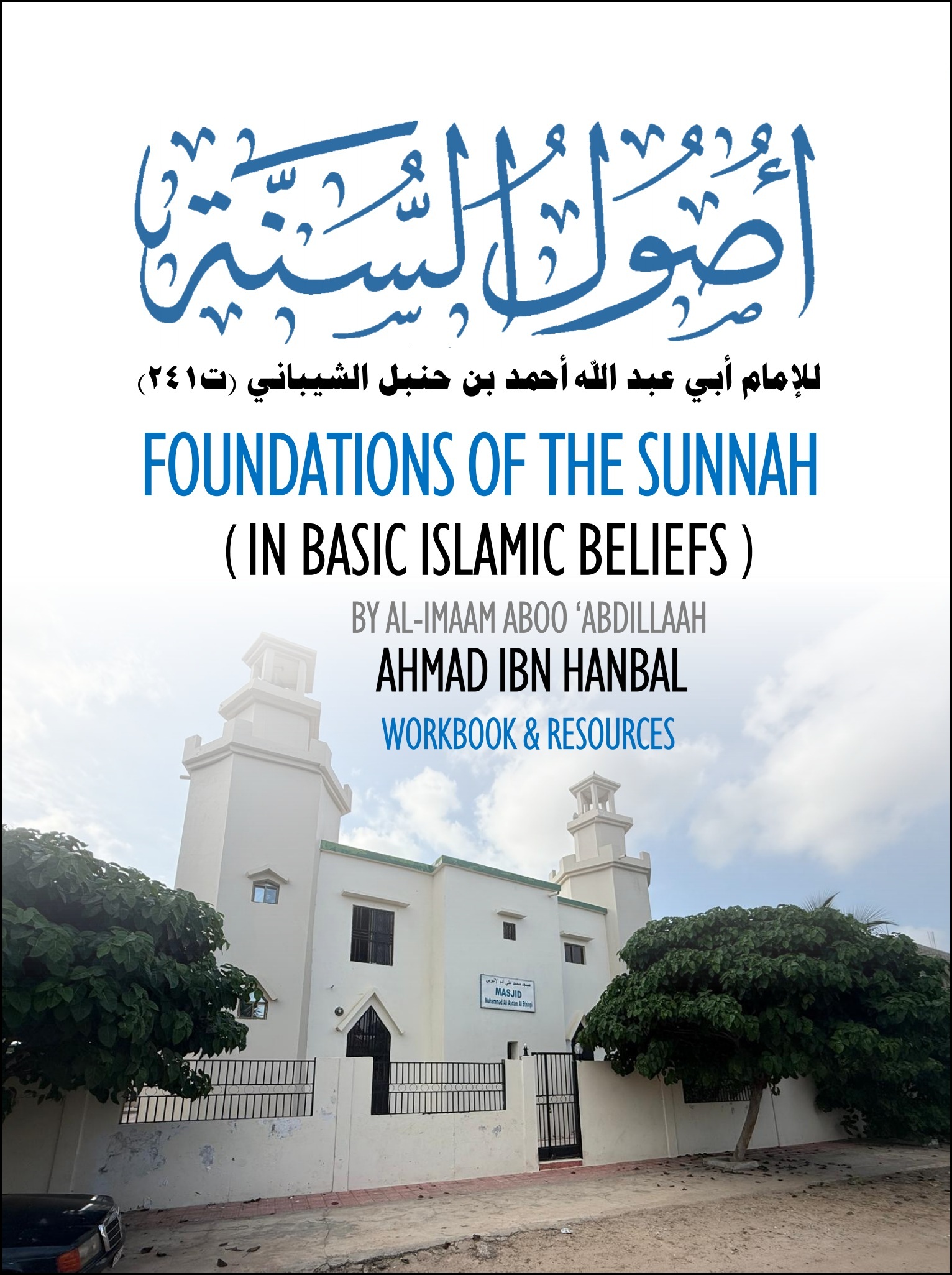
NEW PUBLICATION: Al-Imaam Ahmad’s Usool as-Sunnah (Foundations of Sunnah in Basic Islamic Creed) Workbook

Al-hamdu lillaah, we are pleased to announce that our latest publication is now available -by the Permission of Allah-, our workbook and resources for your study of Foundations of the Sunnah in Basic Islamic Beliefs, by the great imaam, Ahmad ibn Hanbal (may Allah have Mercy on him):

*This article features affiliate links, through which we may earn a small commission which helps maintain our website and da’wah activities, so we thank you, jazaakum Allahu khayran!

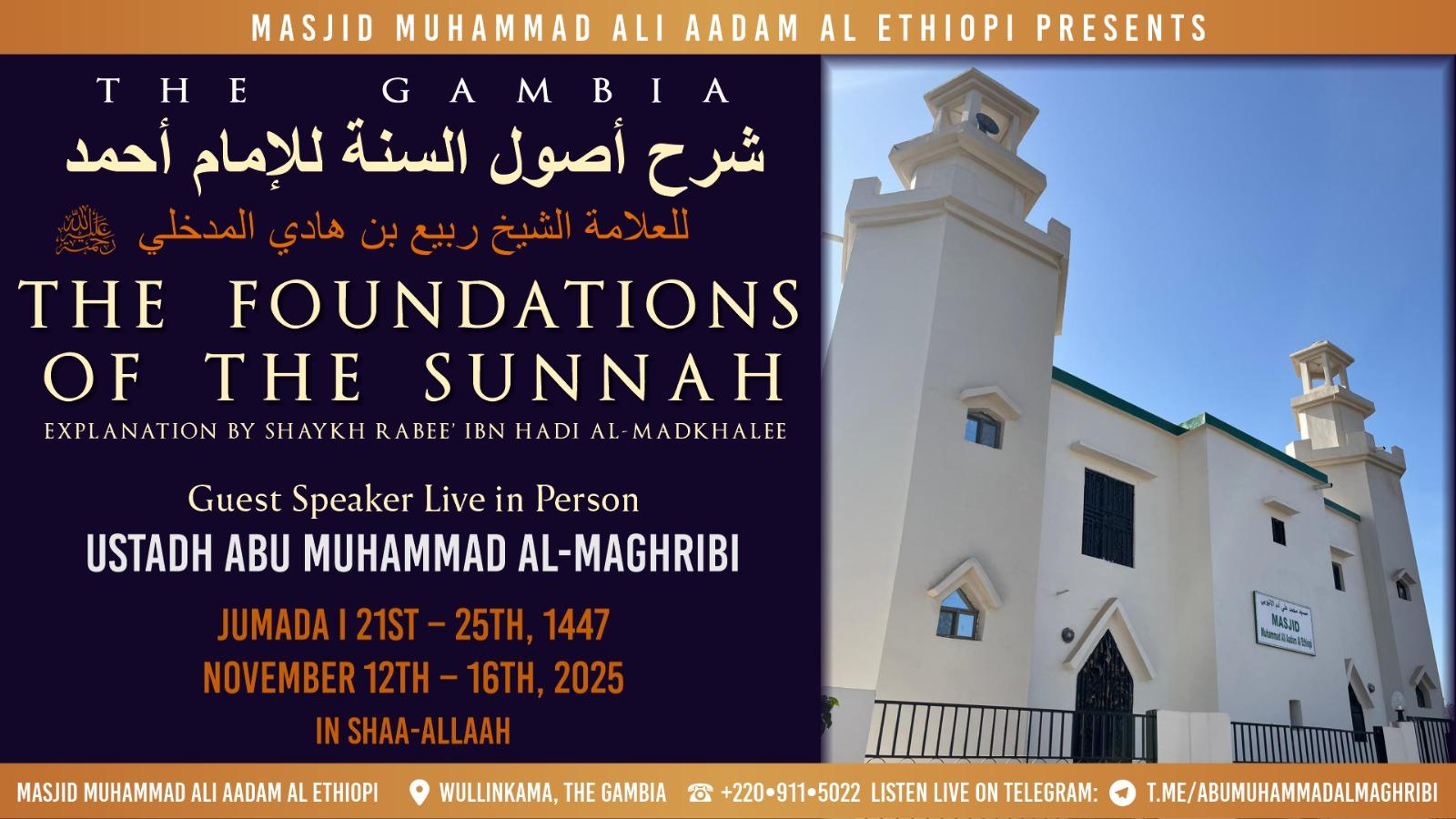
SPECIAL NEWS: This workbook will be used at the upcoming seminar in the Gambia, in shaa’ Allah:

BRIEF OVERVIEW:

  • Workbook and resources for the 35 major points of Muslim creed penned by the great imaam, Ahmad ibn Hanbal.
  • In this workbook, you have the entire Arabic text of the book, paired with a clear English translation, laid out with ample space for notetaking during classes. After the text there are other helpful resources, including the uninterrupted text, in its original Arabic (both voweled and unvoweled), as well as its uninterrupted English translation, and an original Arabic manuscript.
  • 82 pages, 8.5×11″ size, glossy cover, cream-colored pages (paperback) or white pages (hardcover)
  • Available resources: MP3 recordings (TBA) | Free PDF Version | Mobile version (English) | Mobile version (Arabic)
  • Printed Workbook on Amazon (affiliate links):*

Continue reading

NEW PUBLICATION: When Allah Wants Good for Someone He Grants Him Fiqh (Understanding) in the Religion by Shaykh Rabee’ ibn Haadee al-Madkhalee

Al-hamdu lillaah, we are pleased to announce that our latest publication is now available -by the Permission of Allah-, When Allah Wants Good for Someone He Grants Him Fiqh (Understanding) in the Religion, by the great scholar, Shaykh Rabee’ ibn Haadee al-Madkhalee (may Allah have Mercy on him):

*This article features affiliate links, through which we may earn a small commission which helps maintain our website and da’wah activities, so we thank you, jazaakum Allahu khayran!

BRIEF OVERVIEW:

  • Summary: A complete translation of a lecture delivered in 1426 (2005) in the city of Jeddah, Saudi Arabia, including the shaykh’s responses to seven questions posed after the lecture.
  • Laid out with the entire Arabic text on the right-hand page, the matching English translation on the left side, for easy comparison.
  • Includes a biography of the shaykh, a glossary, and three complete multiple-choice quizzes with answer keys.
  • 107 pages, 6×9″ size, glossy cover, cream-colored pages (paperback)
  • Available resources: MP3 recordings | Free PDF Version | Mobile version
  • Printed Workbook on Amazon (affiliate links):*

Continue reading

Categories of People in How They Respond to Islamic Knowledge

In the Name of Allah, the Most Gracious, the Ever Merciful…

The great scholar, Shaykh Rabee’ ibn Haadee al-Madkhlee (may Allah have Mercy on him) said:

The Messenger (may Allah raise his rank and grant him peace) provided a comparison about the knowledge he came with: “The likeness of what Allah sent me with of guidance and knowledge is like abundant rain which falls upon the land. Some areas have pure soil which absorbs the water and produces grass and much vegetation. Other areas have hard surfaces which hold the water and provide benefit to people; they drink it, give some to their animals, and irrigate [their crops] with it. The rain also falls on other areas which are merely barren lands which do not hold any water nor produce any vegetation. This is the likeness of someone who has understanding in the religion of Allah and benefits from what Allah has sent me with, as he learns and teaches, compared to someone who does not raise his head to heed any of that, nor does he accept any of Allah’s guidance which I have been sent with.” [1]

So people are of different types as it relates to benefitting from [Islamic] knowledge:

One type is like the pure soil, his heart accepts this goodness, and so it produces yields like when the soil absorbs rain, producing vegetation and harvests. It provides people with food for their animals and food for themselves, of fruits and other harvests. Such soil benefits [itself] from that rain and also provides benefit to others. This is like the one who gains understanding by memorizing knowledge and learning how to understand it and derive rulings, beliefs, and principles from it. Such a person presents these matters to the people so they could [also] benefit from them.

Another category is Continue reading

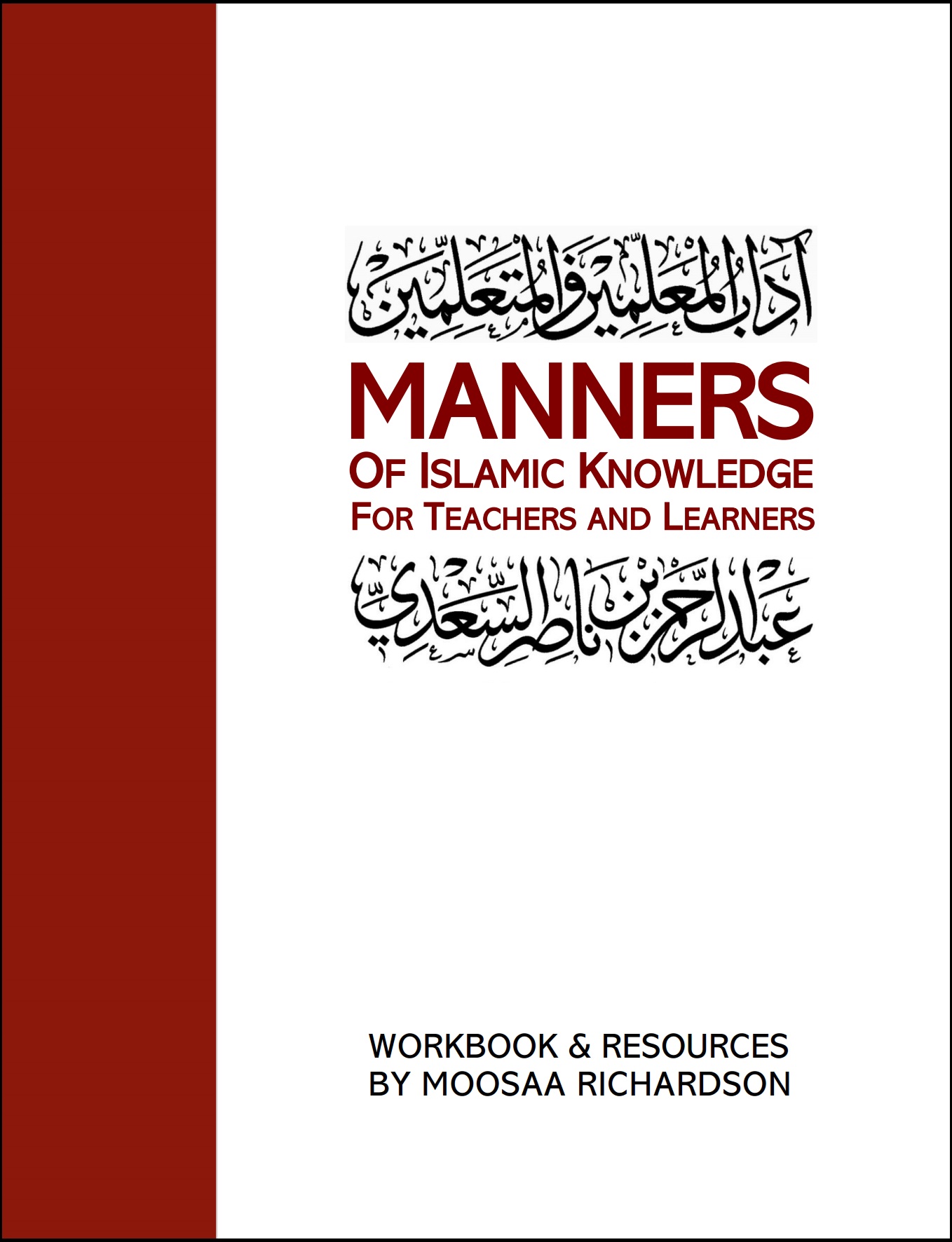
NEW PUBLICATION: Manners of Islamic Knowledge (Official Workbook)

Al-hamdu lillaah, we are pleased to announce that our latest publication is now available -by the Permission of Allah-, Manners of Islamic Knowledge for Teachers and Learners: Workbook & Resources for Your Study of al-Imaam as-Sa’dee’s Aadaab al-Mu’allimeen wal-Muta’allimeen

*This article features affiliate links, through which we may earn a small commission which helps maintain our website and da’wah activities, so we thank you, jazaakum Allahu khayran!

BRIEF OVERVIEW:

  • Summary: 21 major points of essential manners needed by teachers and students alike, from the insightful scholarly writings of al-Imaam ‘Abdur-Rahmaan ibn Naasir as-Sa’dee (may Allah have Mercy on him).
  • In this workbook, you have the entire Arabic text of the book, paired with a clear English translation, laid out with ample space for notetaking during classes. After the text there are other helpful resources, including the uninterrupted text, in its original Arabic (both voweled and unvoweled), as well as its uninterrupted English translation.
  • Available resources: MP3 recordings | Free PDF Version
  • Printed Workbook on Amazon (affiliate links):*
  • Mobile versions of the text only: ( ENGLISHعربي ) [for viewing on your phone specifically, large clear font, no space for note taking] coming soon, in shaa’ Allah
  • Sample pages:

Continue reading

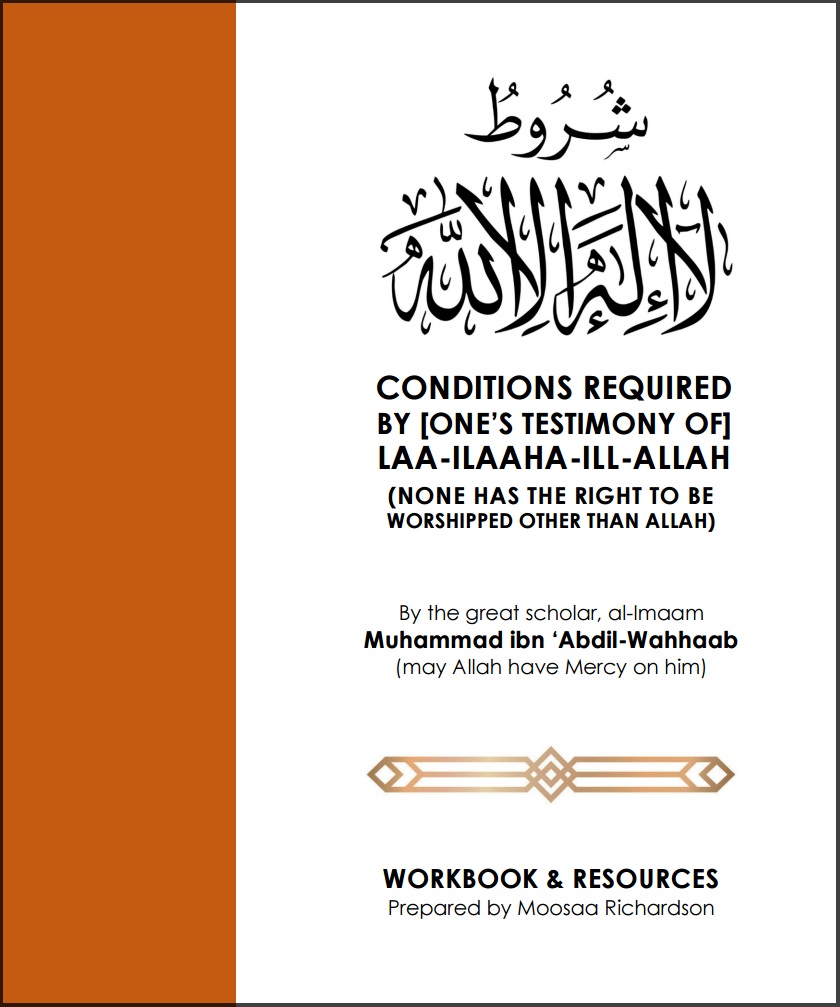
NEW PUBLICATION: Conditions Required by One’s Testimony of Laa-ilaaha-ill-Allah (Workbook)

We are pleased to announce that our latest publication is now available: Conditions Required by One’s Testimony of Laa-ilaaha-ill-Allah (Workbook)

*This article features affiliate links, through which we may earn a small commission which helps maintain our website and da’wah activities, so we thank you, jazaakum Allahu khayran!

BRIEF OVERVIEW:

  • Summary: In order to clarify the meanings and requirements of the Muslims’ testimony of faith, Shaykh al-Islam Muhammad ibn ‘Abdil-Wahhaab (may Allah have Mercy on him) penned a short explanation of the topic called, “Shuroot Laa-ilaaha-ill-Allah,” or: The Required Conditions of the Testimony of Faith. These conditions mentioned and explained by Shaykh al-Islam Muhammad ibn ‘Abdil-Wahhaab (may Allah have Mercy on him) can be summarized as follows: [1] Knowledge, [2] certainty, [3] sincerity, [4] honesty, [5] love, [6] compliance, and [7] acceptance.
  • In this valuable set of resources, you have the entire Arabic text of the book, paired with a clear English translation, laid out with ample space for notetaking during classes. After the text there are other helpful resources, including the uninterrupted text, in its original Arabic (both voweled and unvoweled), as well as its uninterrupted English translation. A chain of transmission is also included, as well as quizzes to check one’s basic understanding of the text. An answer key is provided on the bottom of page 3. The seven conditions are also presented in poetry form, from the book, Sullam al-Wusool, by Shaykh Haafith al-Hakamee (may Allah have Mercy on him).
  • Available resources: MP3 recordings | Workbook (digital version) [PDF]
  • Printed Workbook on Amazon (affiliate links):*

Continue reading

NEW PUBLICATION: Foundations of the Sunnah in Islamic Beliefs (Workbook and Resources)

In the Name of Allah, the Most Gracious, the Ever Merciful…

We are pleased to announce that our latest publication is now available: Foundations of the Sunnah in Islamic Beliefs: Workbook and Resources for Study of al-Imaam al-Humaydee’s Usool as-Sunnah

*This article features affiliate links, through which we may earn a small commission which helps maintain our website and da’wah activities, so we thank you, jazaakum Allahu khayran!

BRIEF OVERVIEW:

Continue reading

Important Advice from Shaykh Ibn Baaz About Nameemah

In the Name of Allah, the Most Gracious, the Ever Merciful…

The great scholar, Shaykh ‘Abdul-‘Azeez ibn Baaz (may Allah have Mercy on him), stated:

From what is necessary to avoid, be distant from, and warn against is nameemah, which is narrating [negative] speech from one person to another, one group to another, or one tribe to another, with the intention of causing corruption or clashes between them.

It [nameemah] is to expose what is disliked to be known, whether the one being quoted is the one who dislikes it, or the one being informed, or even if some third party dislikes it. It does not matter whether it is exposed verbally, in writing, or by gestures and signals. It does not matter whether words or actions are reported. It does not matter if that [report] is about someone’s [actual] faults or deficiencies, or not. A person must remain silent about all things he sees from the situations of people, except when sharing such a thing would benefit some Muslim or repel some harm.

What causes nameemah is either ill-intent for the one he speaks about or an attempt to show affinity for the person he shares with, or maybe just indulging in idle conversation, chatting away about useless things or falsehood. All of that is Continue reading

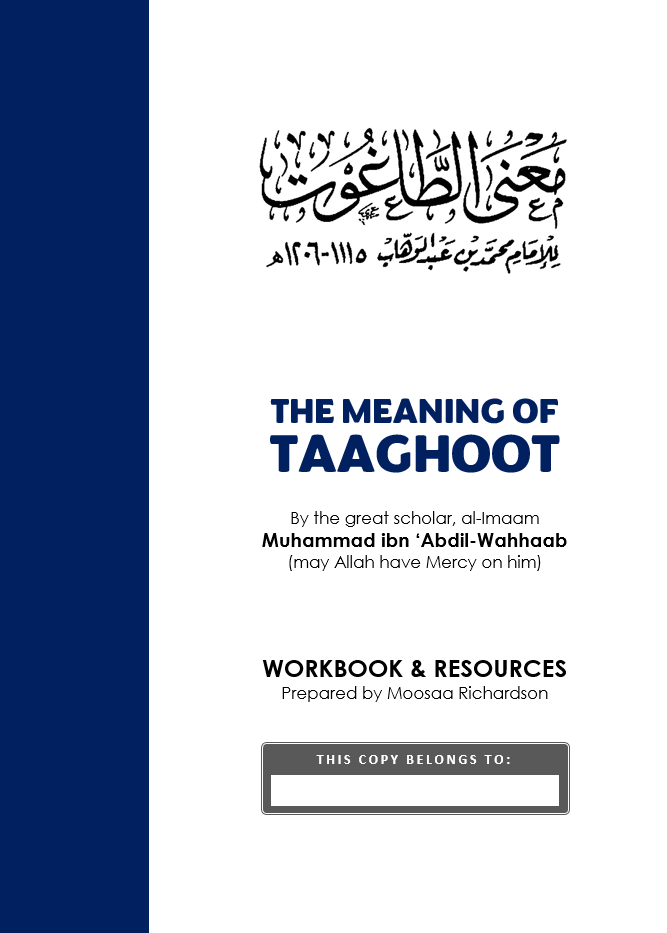
Resources: The Meaning of Taaghoot

In the Name of Allah, the Most Gracious, the Ever Merciful…

This page is a collection of helpful resources for those who are studying the text, Ma’naa at-Taaghoot (The Meaning of Taaghoot), by Shaykh al-Islam Muhammad ibn ‘Abdil-Wahhaab (may Allah have Mercy on him).

*This article features affiliate links, through which we may earn a small commission which helps maintain our website and da’wah activities, so we thank you, jazaakum Allahu khayran!

Get the paperback version of the workbook from Amazon (affiliate links):

HIGH-QUALITY MP3 AUDIO RECORDINGS (FREE): https://www.spreaker.com/podcast/things-that-nullify-someone-s-islam–1667061


WORKBOOK: The Meaning of Taaghoot (31 pages)

  • Introduction by Moosaa Richardson
  • Full text in Arabic and English, with space for note taking
  • Uninterrupted Arabic text (both vowelled and unvowelled)
  • Isnaad (Chain of Transmission)
  • Older Arabic Printing of Text

Get the paperback version of the workbook from Amazon (affiliate links):

Get the PDF version of the workbook here: https://payhip.com/b/A3Pzu

Get the mobile version of the text (Arabic): https://payhip.com/b/wXIMj

Get the mobile version of the English translation: https://payhip.com/b/r7oC3

*This article features affiliate links, through which we may earn a small commission which helps maintain our website and da’wah activities, so we thank you, jazaakum Allahu khayran!

Top Ten Products That Can Help Our Community Maintain Essential Food Safety Standards

*This article features affiliate links, through which we may earn a small commission which helps maintain our website and da’wah activities, so we thank you, jazaakum Allahu khayran!

If you have not read our recent article about the importance of knowing and applying food safety standards at community events, please read it now:

Important Advice about Food Safety and Ramadhan

The following is an updated list of products available for purchase which can help our communities uphold and maintain essential standards of food safety in Ramadhan, the Eid gatherings, and at any time we come together for community meals.

1. Chefman Electric Warming Tray with Adjustable Temperature Control

Keep your trays of food safely warm with this highly-rated and convenient large warming surface. It is big enough to keep a large tray (21″x13″) warm for hours while you attend class, pray, or socialize, and then return to the food for seconds. A typical serving station for hot foods at a small to medium gathering might need three or four of these. Keep hot foods at a temperature above 140° F.

ON AMAZON (affiliate link): https://www.amazon.com/dp/B0DJ3HR489?tag=144205-20

2. Slightly Larger Electric Warming Tray (31.5″ × 17.7″)

This larger warming tray is also highly rated, offering considerably more surface space.

ON AMAZON (affiliate link): https://www.amazon.com/dp/B0FNQQB4YN?tag=144205-20


3. Digital Thermometer (Instant Read, Waterproof, with Backlight)

This inexpensive tool is great for quick checks to make sure our hot foods stay above 140° F when left out on our warming trays.

ON AMAZON (affiliate link): https://www.amazon.com/dp/B0C37DLHWW?tag=144205-20

4. Five-Tray Warming Cabinet (Electric) (for Smaller Gatherings)

This is good for keeping right at the place of serving, just before serving the food. If the food is usually consumed completely, this might be a better option than the warming trays (#1 and #2).

ON AMAZON (affiliate link): https://www.amazon.com/dp/B0DZWTJZBL?tag=144205-20

5. Larger Full-Tray/Pan Warming Cabinet (For Larger Centers/Gatherings)

This larger version of #6 is good for keeping right at the place of serving, just before serving the food. If the food is usually consumed completely, this might be a better option than the warming trays (#1 and #2). This is commercial grade and highly rated.

ON AMAZON (affiliate link): https://www.amazon.com/dp/B09C2J8VHZ?tag=144205-20

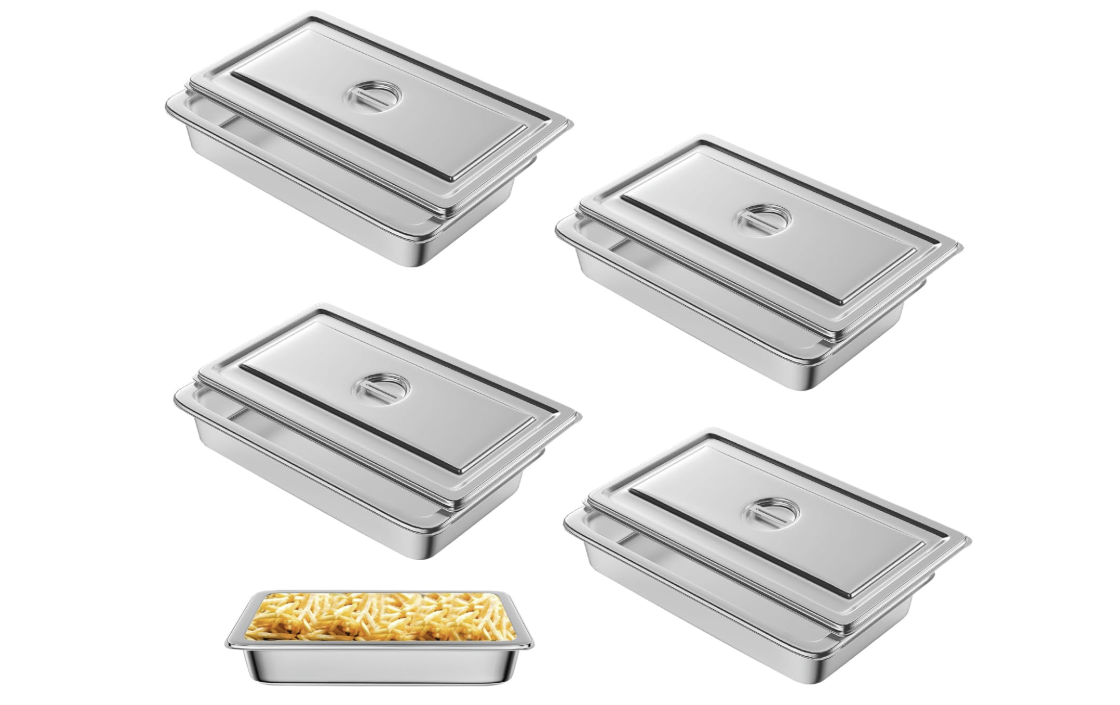
6. Set of Four Stainless Steel Chafing/Serving Dishes With Lids

These steel chafing dishes come with lids and folding frames, and even two places underneath each tray to place small burners to keep the trays warm (above 140° F). These are an excellent alternative to the warming trays (#1 and #2) above, commercially graded and highly rated.

ON AMAZON (affiliate link): https://www.amazon.com/dp/B0C8CTNQ2B?tag=144205-20

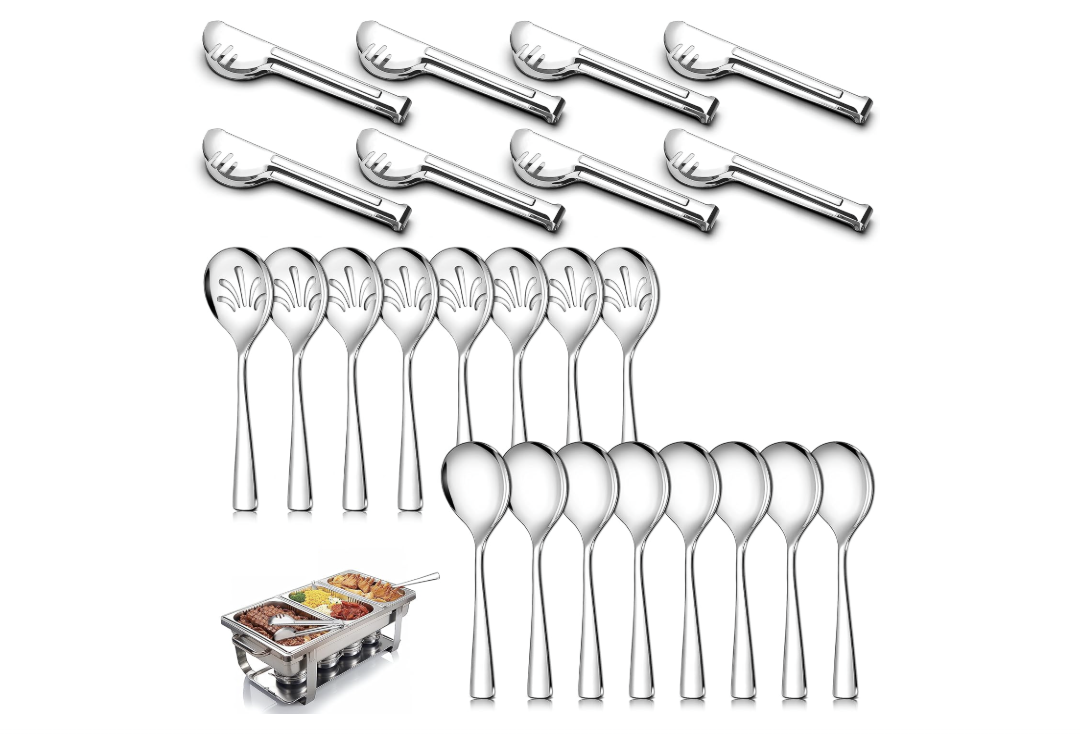
7. Set of 24 Stainless Steel Large Serving Utensils (8 Spoons, 8 Slotted Spoons, 8 Tongs)

These serving spoons are stainless steel. They are well-priced for such a large quantity and variety. You might only need a few for each service, but you can never have too many serving utensils! IYKYK

ON AMAZON (affiliate link): https://www.amazon.com/dp/B0C2H991T3?tag=144205-20

8. Commercial Grade Freezer (36 Cubic Feet), Stainless Steel, Double Doors, Large Capacity

This for when you have occasional gatherings. (You do not need to freeze leftovers when you are having daily Ramadhan service!) Easily store all your trays of food in this massive freezer.

ON AMAZON (affiliate link): https://www.amazon.com/dp/B0CJRBKVKW?tag=144205-20

9. Commercial Grade Refrigerator (49 Cubic Feet), Double Doors, Large Capacity

Excellent for the daily meals of Ramadhan. Easily store all your trays of food (hot and cold alike) for the next day in this massive stainless-steel refrigerator.

ON AMAZON (affiliate link): https://www.amazon.com/dp/B0B8HJY4RQ?tag=144205-20

10. Four-Pack of Full-Size Stainless Steel Pans (4″ Deep), With Lids

These commercial grade stainless steel pans work really well with the warming units, servers, and refrigerator and freezer units listed above.

ON AMAZON (affiliate link): https://www.amazon.com/dp/B0C5CV13FM?tag=144205-20

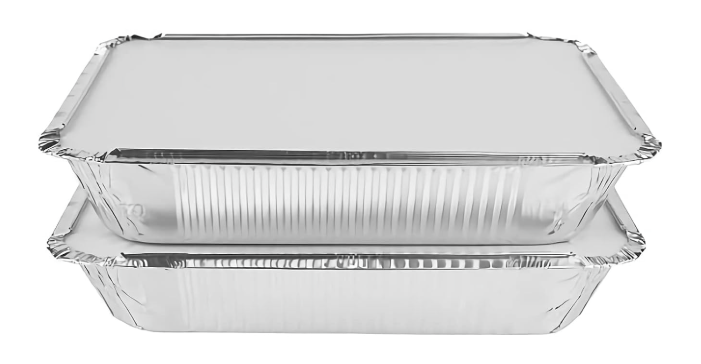
HONORABLE MENTION (1): Full-Size Disposable Aluminum Pans (21″x13″) for Storage and Serving

These are full-size trays for cooking, serving, and storing large dishes. They fit perfectly onto the surface of the Chefman Warming Tray above (#1). These are also great for take-away trays for large families to grab some leftovers. Long-term storage pans for day-to-day re-heating are coming up soon in the list, in shaa’ Allah.

ON AMAZON (affiliate link): https://www.amazon.com/dp/B086WM7W6L?tag=144205-20

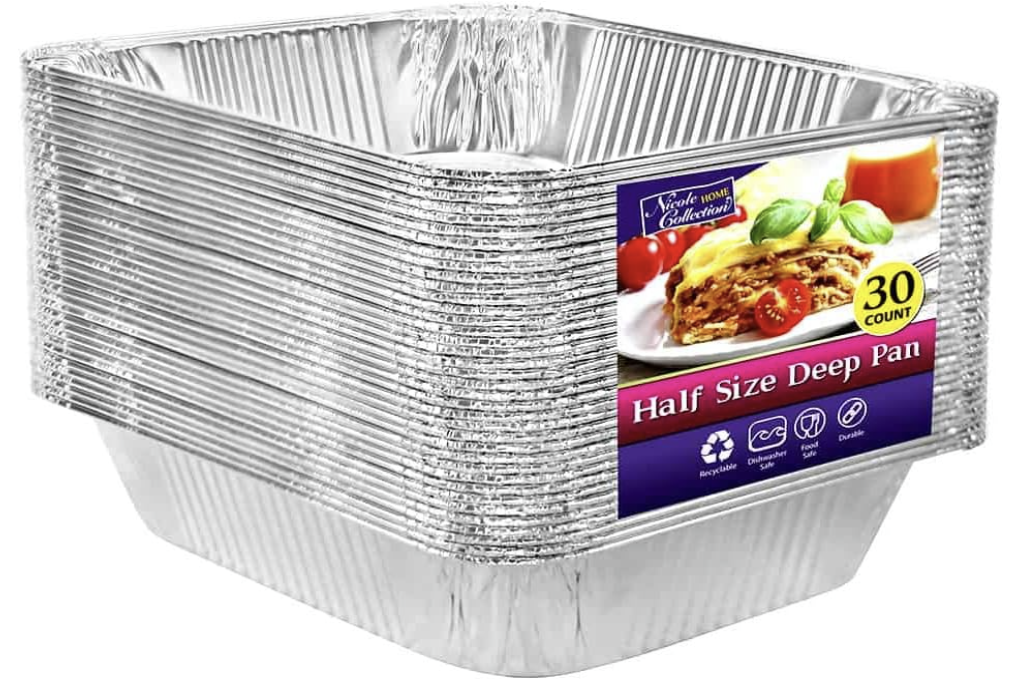
HONORABLE MENTION (2): Half-Size Disposable Aluminum Pans (13″x9″) for Storage and Serving

These are half-size trays for cooking, serving, and storing large dishes. Two of them fit perfectly onto the surface of the Chefman Warming Tray above (#1). These are also great for take-away trays for community members to grab some leftovers. Long-term storage pans for day-to-day re-heating are coming up soon in the list, in shaa’ Allah.

ON AMAZON (affiliate link): https://www.amazon.com/dp/B08MSMKY72?tag=144205-20

HONORABLE MENTION (3): 100-Pack Heavy Duty Aluminum Foil Disposable Take-Away Individual Meal Containers With Lids

These are great for smaller, individual meals taken home from your service, taken hot from your warming tray or chafing dish, and kept warm until your community members get home, in shaa’ Allah. NOTE: Do not use plastic or Styrofoam clamshell trays for hot foods! (See this)

ON AMAZON (affiliate link): https://www.amazon.com/dp/B09FLQ7VWP?tag=144205-20

Again, this article features affiliate links, through which we may earn a small commission which helps maintain our website and da’wah activities, so we thank you, jazaakum Allahu khayran!

NEW PUBLICATION: Soorah az-Zumar, Chapter 39 of the Noble Quran (Workbook), Ramadhaan Lessons 1446 (2025)

In the Name of Allah, the Most Gracious, the Ever Merciful…

We are pleased to announce that our latest publication is now available: Soorah az-Zumar, Chapter 39 of the Noble Quran (Workbook): Resources for Your 30-Day Study of the Commentary of al-Imam as-Sa’dee 

Check out this FREE version: [PDF]

*This article features affiliate links, through which we may earn a small commission which helps maintain our website and da’wah activities, so we thank you, jazaakum Allahu khayran!

BRIEF OVERVIEW:

WHAT TO EXPECT IN THIS YEAR’S LESSONS

This workbook and this year’s Ramadhaan 1446 (2025) classes will be a study of the amazing 39th chapter of the Quran, Soorah az-Zumar. Following the previous years’ precedent, we will maintain a similar focus and scop Continue reading

NEW PUBLICATION: Hadeeth Study: Fasting in Ramadhaan, Night Prayers, Zakaat al-Fitr & ‘Eed Prayer (Workbook)

In the Name of Allah, the Most Gracious, the Ever Merciful…

We are pleased to announce that our latest publication is now available: Hadeeth Study: Fasting in Ramadhaan, Night Prayers, Zakaat al-Fitr & ‘Eed Prayer (Workbook)

Check out this FREE PDF version (preview): Hadeeth Study: Fasting in Ramadhaan

*This article features affiliate links, through which we may earn a small commission which helps maintain our website and da’wah activities, so we thank you, jazaakum Allahu khayran!

BRIEF OVERVIEW:

  • Summary: A complete study of Kitaab as-Siyaam from Buloogh al-Maraam by al-Haafith Ibn Hajar (may Allah have Mercy on him), with additional narrations about Zakaat al-Fitr (from Kitaab az-Zakaat) and ‘Eed Prayer (from Kitaab as-Salaat). A total of 79 Hadeeth narrations.
  • The first 59 Hadeeths are the entire chapter on Fasting: Kitaab as-Siyaam.
  • The next three narrations about Zakaat al-Fitr are borrowed from Kitaab az-Zakaat.
  • The remaining 17 narrations about ‘Eed Prayer are borrowed from Kitaab as-Salaat.
  • A beautifully prepared workbook accompanied by regular classes and high-quality recordings, in shaa’ Allah.
  • Available resources: MP3 recordings | Workbook (digital) [PDF]
  • Printed Workbook on Amazon (affiliate links):*

LIVE BROADCASTS FROM 1MM

By Allah’s Permission, we provide authentic Islamic knowledge year-round. And we take Ramadhaan very seriously! This year, we have five weeks of Ramadhaan preparation classes lined up, beginning Continue reading

Participation in Non-Muslim Political Systems Based on the Story of Prophet Yoosuf

In the Name of Allah, the Most Gracious, the Ever Merciful…

An important clarification by the great scholar, Shaykh Muhammad Naasir ad-Deen al-Albaanee (may Allah have Mercy on him), on a crucial topic, in light of modern claims by political activists… 

QUESTIONER: In Zubdat at-Tafseer by Shaykh ‘Umar al-Ashqar, in explanation of Soorah Yoosuf, he says there that Yoosuf’s employment (may Allah grant him peace) was under the authority of the king. He uses this as proof in this Tafseer; he says this is among what proves the permissibility of believers working in positions within a non-Muslim government. So what is your comment [about this]?

AL-ALBAANEE: I cannot comment until after I know what is behind this, because I could say: Yes, it is possible, and I could provide an easy example of that. It is possible, as found in our current situation now, when we do not say that none of the Islamic countries are governing by what Allah has sent down, but at least we can say that most of the Islamic countries are not governing by what Allah sent down. Is it not possible then to be a khateeb who admonishes the people and teaches them, meaning: under the rule of a disbeliever?

QUESTIONER: Shaykh, I was actually referring to the Algerian Parliament…

AL-ALBAANEE: I know that, my brother, I know. That is why I provided the example that would be included in [the generality] of those words. However, before that, I said: What is behind these words? I fear, and this is what I think is the case, and Allah knows best, while the brother is among our brothers, and I do not praise anyone, claiming it is his reality with Allah, but I am [still] afraid of what I fear is the case, that he has been influenced by the current [political] atmosphere, as these [political] parties endorse participation in parliament, and so they rely on this Quranic passage that has been cited as a proof in their favor, so they can work in parliament under a disbeliever’s governmental system. Our answer to this is from two angles, as a basic principle, along with an extension from that. In actuality, I had begun with the extension, so we could reflect about what the actual intention was behind those expressions. So I provided an example previously, that it would be possible to be an employee in some kind of position. The example was being a khateeb in one of the masjids, while the ruler is a disbeliever. However, in this position, he does not serve the interests of disbelief, nor does he serve the cross (i.e., Christianity), nor does he serve [the interests of] ruling by other than what Allah sent down. So when the intended goal of this example was this kind of situation, there is no problem [in understanding the issue], right?

Now, we ask the one using this Verse, let us call it the Yoosufic Verse, (“al-Aayah al-Yoosufiyyah”): Could it be understood that Yoosuf (may Allah raise his rank and grant him peace), when he made his request to the leader of Egypt, “Give me authority over the stored goods of the land (i.e., the economy); I am protective and knowledgeable,” [1] was he going to rule by the governmental system in place, the one used by the leader of Egypt? Or would he rule by the governmental system from the Lord of all things? He would not be able to answer with anything other than the second answer, is that not so? [2] So now we say: Are those who get involved in parliament able to follow in Yoosuf’s footsteps (may Allah raise his rank and grant him peace), in how they govern? “Bring it, bring on what you have been promised!” (i.e., How far off that is!) [3] Thus, this line of argument (i.e., this attempt to use this Verse to prove this) makes something permissible, yet makes us afraid of many things! The least that can be said is that it is now feared that this line of argument would be used against the interests of Islam and the Muslims.

Also, I can say: From the special distinctions of the Messenger (may Allah raise his rank and grant him peace) is his statement, “I have been given a special distinction over the [other] prophets through five [things]…” and he mentioned among them: “A prophet would be sent to his people specifically, yet I have been sent to all of mankind.” [4] So the legislation of Yoosuf is not legislation for us. And from here we can disprove this line of argument from its root and base, is that clear? It is now over.”

Source: Silsilat al-Hudaa wan-Noor, no.1023 (beginning at 4 minutes into the recording). Translation: Moosaa Richardson (1446.05.05) for Bakkah.net

Resources: Arabic source (MP3) | Translation with Arabic transcript (PDF)

FOOTNOTES: (by the translator)

[1] A translation of the meaning of Soorah Yoosuf [12:55]

[2] Actually, not any more. Sadly, today we actually have political activists that would have us believe that Yoosuf would rule, at least partially, by the disbelieving king’s political system, and he would do some things in violation of Allah’s command as a compromise to stay in his position! Refuge with Allah is sought from deviation, compromising our Religion, false explanation of Allah’s Speech, and baseless slander of one of Allah’s prophets!

[3] Borrowing from the language of Soorah al-Mu’minoon [23:36]

[4] Collected by al-Bukhaaree (no.335) and Muslim (no.521), from the report of Jaabir (may Allah be pleased with him).

Resources: Things That Nullify Someone’s Islam

In the Name of Allah, the Most Gracious, the Ever Merciful…

This page is a collection of helpful resources for those who are studying the text, Nawaaqidh al-Islam (Things That Nullify Someone’s Islam), by Shaykh al-Islam Muhammad ibn ‘Abdil-Wahhaab (may Allah have Mercy on him).

*This article features affiliate links, through which we may earn a small commission which helps maintain our website and da’wah activities, so we thank you, jazaakum Allahu khayran!

VIDEO RECORDINGS of recent classes on this book: https://www.patreon.com/collection/794379

HIGH-QUALITY MP3 AUDIO RECORDINGS: https://www.spreaker.com/podcast/things-that-nullify-someone-s-islam–1667061

BUNDLE: Digital Resource Pack:

  • MP3 recording of the text (Arabic only)
  • MP3 recording of the text (English only)
  • MP3 recording of the text (Arabic & English)
  • PDF of the text (Arabic only, fully vowelled)
  • PDF of the translation of the text (English only)

Get this entire bundle of high-quality digital resources here: https://payhip.com/b/ZG4M7

WORKBOOK: Things That Nullify Someone’s Islam (23 pages)

  • Introduction by Moosaa Richardson
  • Full text in Arabic and English, with space for note-taking
  • Uninterrupted Arabic text (both vowelled and unvowelled)
  • Isnaad (Chain of Transmission)
  • Authentic Arabic Manuscript

Get the paperback version of the workbook from Amazon (affiliate links):

Get the PDF version of the workbook here: https://payhip.com/b/lZcpr

Get the mobile version of the text (Arabic): https://payhip.com/b/cqzbB

Get the mobile version of the English translation: https://payhip.com/b/4Kdkb

*This article features affiliate links, through which we may earn a small commission which helps maintain our website and da’wah activities, so we thank you, jazaakum Allahu khayran!

The Importance of ‘Aqeedah (Creed), by Shaykh Ibn Baaz

In the Name of Allah, the Most Gracious, the Ever Merciful…

The great scholar, Shaykh ‘Abdul-‘Azeez ibn Baaz (may Allah have Mercy on him), was asked the following question:

QUESTION: Teachers focus so much on matters of ‘aqeedah (creed) in their call. It is well known that it is of great importance, and it has a great status, since establishing a foundation of creed is the great focus of Islam, however we hope you could re-direct our focus on social manners and repelling lowly manners when building the creed. And why is it that most often scholars neglect this so much?

ANSWER: In each case, it is well known about the scholars that they focus on this and that. ‘Aqeedah -as you have mentioned, O questioner- is the central focus. It is the foundation. Yet with this, most of the people of knowledge in the various lands do not focus on ‘aqeedah, despite what you have said. They speak about manners and other things, about prayer, zakaat, prayer timings, and other things. ‘Aqeedah is neglected, so much so that graves are being worshipped in their midst, things beside Allah! Shirk (polytheism) has even taken place among them, yet they do not even sense it!

The scholar himself may even fall into associating partners with Allah, as he lived upon shirk with his father, with his uncle, and with his teacher. They lived their lives committing shirk due to some reasons: They did not speak about ‘aqeedah. They did not have any focus on ‘aqeedah.

You find him teaching, yet worshipping other than Allah. You find him in the masjid teaching, but then he supplicates to al-Badawee, or he supplicates to al-Husayn, or ‘Abdul-Qaadir, because he has lived his life like this, he and his father, and his grandfather, and his peers. This is from the results of neglecting ‘aqeedah and not focusing on ‘aqeedah.

You find him to be an insightful expert on the rulings of divorce, endowments, rental (or work) contracts, zakaat, bequeathals, and other things, because he studied them and focused on them. As for ‘aqeedah, then he does not focus on it, nor does he know it.
Even when he is good [not committing shirk], he still focuses on the ‘aqeedah of the people of rhetoric, along with what such people delve into of rhetoric, and the beliefs which are taught by the people of rhetoric among the Ash’ariyyah, Jahmiyyah, and Mu’tazilah [cults]. He is heedless about the Salafee ‘aqeedah, held by the companions of the Messenger (may Allah raise his rank and grant him peace), what was held by our righteous predecessors of affirming the Names and Attributes [of Allah], issues of belief in Allah, the towheed of worship, and not associating partners with Allah, the Mighty and Majestic, and focusing on these matters.

Thus, it is extremely important as an emphasized duty that one must focus on ‘aqeedah. Let the scholars focus on it when they clarify matters to both the common people and the elite. Let the lessons be primarily focused on it, while they still give focus to manners and other rulings. Neither this nor that should be neglected, yet let the greater focus be on ‘aqeedah.

Shaykh Muhammad [ibn Ibraaheem] (may Allah have Mercy on him) used to say in his writings to some his opponents who would write to him, debating issues of ‘aqeedah: “I want you to study ‘aqeedah like how you study the Chapter of Endowments.” Meaning: As you study and give great focus to issues of endowments between the people, I hope you would study ‘aqeedah, the chapter about rulings on the apostate, with the same attention you give to the chapter on endowments.

If they were to study the chapter on rulings on apostates in the books of Fiqh written by the scholars of each math-hab, if they would only study the chapter about apostates and focus on it, the falsehood and polytheism they have fallen into would become clear to them. Yet, they are heedless about that chapter, as they do not encounter any questions about it, nor is there any focus on it. Instead, you find them busy with issues of endowments and their caretakers: How should the endowment be executed? How should extra profit from an endowment be dealt with? How about rent, how should it be rented? How should people interact with the orphan’s estate?

They are occupied with these [things], yet they have neglected ‘aqeedah, since they have no focus on it, and since the common people do not ask about it. Thus, it dried up, and they lost focus on it. People then began to fall into obvious acts of associating partners with Allah, worshipping graves and righteous people. Due to this neglect, you find al-Badawee and others, So-and-So and So-and-So, in Egypt, the Levant, Iraq, and every place, are worshipped along with Allah, while the scholars are dressed in turbans, calling to that, doing that along with the common people.

They’ve caused confusion about this matter, and neglected it, as they did not give it any attention, so much so that the common people have fallen into shirk because of them. They now remain at gravesites in dedication, calling upon them along with Allah, seeking relief from them, asking them to fulfill their needs, heal them, and grant them victory over their enemies. These kinds of things are happening among the people. Anyone who would deny this who travels to other lands, go by the grave of al-Badawee, al-Husayn, So-and-So, and So-and-So. You find the people remaining there in devotion. One says: “O my master, Fulaan, Help! Heal my sick [family]! Give me victory over my enemy! Do this or that for me!” So much so, they have even gone so far as to ask them for children, for their wives to get pregnant, or to give them this or that! We ask Allah for well-being! They have disregarded Allah, so He disregarded them; there is no power nor any ability except by way of Allah.

SOURCE: The shaykh’s official website | Arabic Audio (MP3) | Transcript (Arabic & English) 

Translated by: Moosaa Richardson (1446.03.03)

How to Use an EBT Card to Make Purchases on Amazon

*This article features affiliate links, through which we may earn a small commission which helps maintain our website and da’wah activities, so we thank you, jazaakum Allahu khayran!

This is not the normal focus of our content here on Bakkah.net, but we’d like to take a moment to share this benefit, which may help many families: Did you know that you can use an EBT card to make purchases on Amazon? Yes, it is now possible, in shaa’ Allah.

If you are already signed into your Amazon account, just go to this link: https://www.amazon.com/snap-ebt/?tag=144205-20 and follow the instructions. If you are not signed in, you will need to sign in. If you are not already an Amazon customer, you will need to create an account. There are also opportunities to add an EBT card during checkout or in your wallet.

Do I need a Prime membership to use an EBT card on Amazon?
No. Customers with a valid EBT card issued by a supported state can purchase eligible items using SNAP and/or Cash EBT benefits without a Prime membership.

Can I have more than one EBT card registered to my Amazon account at a time?
No. the government requires online retailers to limit the number of EBT cards registered per online account to one at a time.

Can I pay with EBT using my Amazon Business account?
No, you will need to sign into your personal account to use your EBT benefits online.

How do I begin using my EBT card on Amazon?
Just go to this link: https://www.amazon.com/snap-ebt/?tag=144205-20 and follow the instructions.

If you found benefit in this tip, please share this page with others, and may Allah reward you for sharing even worldly benefits.

*This article features affiliate links, through which we may earn a small commission which helps maintain our website and da’wah activities, so we thank you, jazaakum Allahu khayran!

Standing in Honor of the Judge’s Arrival in Court (Shaykh ‘Abdullaah ibn Ghudayyaan)

QUESTION: It is well known that standing up for people is not permissible. Yet, in our court system (1), it is required to stand for the judge when he arrives, and this is enforced. What is your opinion about this?

ANSWER by the great scholar, jurist, appointed mufti, and member of the Permanent Committee for Research and Fatwaa in Saudi Arabia, Shaykh ‘Abdullaah ibn Ghudayyaan [d.1431] (may Allah have Mercy on him):

The Messenger (may Allah raise his rank and grant him peace) said:

من أحب أن يتمثل له الناس قياما فليتبوأ مقعده من النار
“Whoever likes that the people stand up for him, let him take his seat in the Fire.” (2)

This is because standing is a form of worship from among the various forms of worship. Regarding the prayer, for example, Allah, the Majestic and Lofty, says:

وقوموا لله قانتين
“And stand unto Allah, devoutly in worship.” [2:238]

So standing is a form of worship from among the various forms of worship. Based on that, if a person Continue reading

Products Which Can Help Your Arabic Skills

Here you can find a list of links to helpful products easily available on Amazon in shaa’ Allah. The focus of this specific list is: THINGS THAT WILL HELP YOUR ARABIC LANGUAGE SKILLS.

*This article features affiliate links, through which we may earn a small commission which helps maintain our website and da’wah activities, so we thank you, jazaakum Allahu khayran!

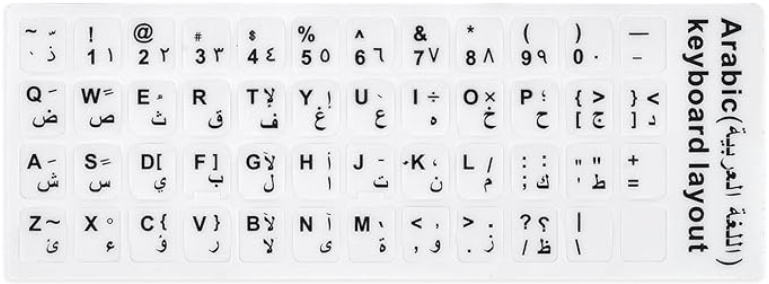
ARABIC KEYS, which come as stickers which can be applied to your current keyboard. NOTE: Clean your keyboard well before applying, and then expect these stickers to start peeling off in a few months. These stickers are not poor quality; it is just that stickers do not really remain on keyboards for long. Thus, this is not a permanent solution, but it will get you going until you find a proper Arabic keyboard, in shaa’ Allah. Most computers have language packs built in, and you just need to install the (digital) “Arabic keyboard” in your system and the language support for Arabic.
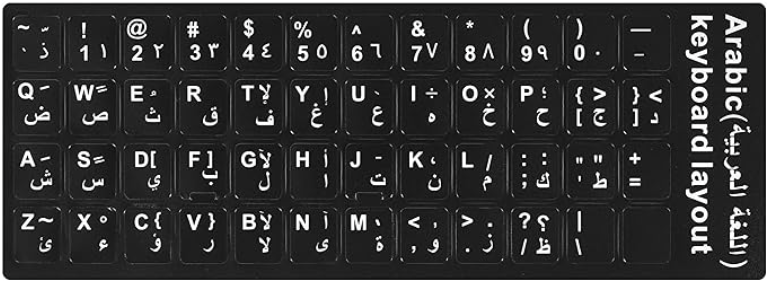
Black stickers with white letters (above): USA | UK | CAN

White stickers with black letters (above): USA | UK | CAN
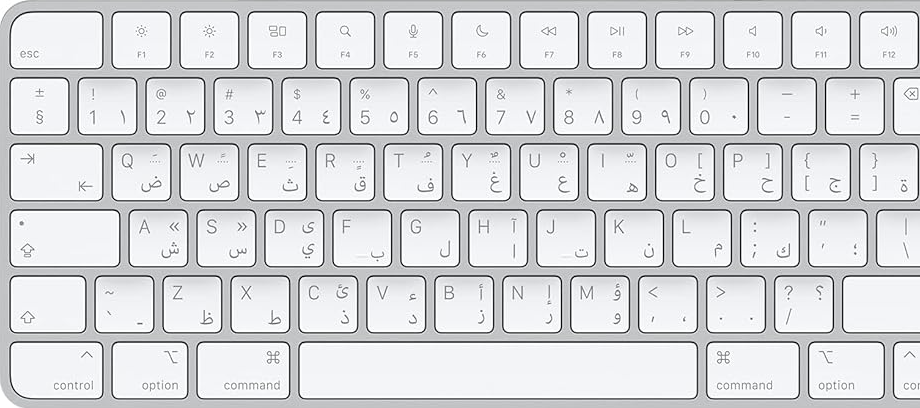
If you would like a more permanent solution, then here are some recommend Arabic (& English) keyboards you can purchase, for Apple and PC:

Arabic Keyboard for Apple (featured above): USA | UK | CAN

USB Arabic Keyboard for PC (featured above): USA | UK | CAN

Arabic wall clock, 12″ (30cm), with big, clear Arabic numbers (featured above): USA | UK | CAN

Massive 100cm DIY Arabic Wall Clock (Husband and wife project; this takes time and effort!) (featured above): USA | UK | CAN

COMING SOON (in shaa’ Allah): How to install the (digital) “Arabic keyboard”

COMING SOON (in shaa’ Allah): How to activate your computer’s Arabic Language support.


Rebuking Others For Praying More Than 11 Rak’ahs [Shaykh Arafat bin Hassan al-Muhammadi]

In the Name of Allah, the Most Gracious, the Ever Merciful…

The following question was posed to Shaykh Arafat bin Hassan al-Muhammadi (may Allah preserve him):

There are some people who rebuke others sternly for praying more than 11 rak’ahs of Night Prayer, or Taraaweeh. What is your opinion about that?

He replied:

This is wrong. This is a mistake. If you were to refer back to the books of the Salaf, and the books of Fiqh (Jurisprudence) in general, the later ones and the earlier ones, you would find that the jurists in this issue differed about the number of rak’ahs, but only about what number was best. [1]

Some said that the Sunnah for Taraaweeh is that we pray 36 rak’ahs. This is widespread and well known to be from al-Imaam Maalik. Refer to al-Mudawwanah. [2]

If you were to read from the rest of the math-habs as well, you will find that they said specifically: 20 rak’ahs. They said that the Sunnah for Taraaweeh is that we pray 20 rak’ahs. This is the math-hab of the majority: the Hanafees, the Shaafi’ees, and the Hanbalees.

You do not find a single one of the early scholars saying that it is not allowed to pray more than 11 rak’ahs. Never. [3] So do not be Continue reading

New Publication: Soorah al-Furqaan, the 25th Chapter of the Noble Quran (Workbook & Resources for the Daily 1445 Ramadhaan Lessons)

In the Name of Allah, the Most Gracious, the Ever Merciful…

We are pleased to announce that our latest publication is now available: Soorah al-Furqaan, Chapter 25 of the Noble Quran (Workbook): Resources for Your 30-Day Study of the Commentary of al-Imam as-Sa’dee 

Check out this FREE PDF version: https://www.bakkah.net/en/wp-content/uploads/2024/02/RL-1445-FURQAAN-PDF-free-sample.pdf

*This article features affiliate links, through which we may earn a small commission which helps maintain our website and da’wah activities, so we thank you, jazaakum Allahu khayran!

BRIEF OVERVIEW:

  • Summary: A complete, 30-day study of Soorah al-Furqaan, the 25th chapter of the Noble Quran, reading the entire explanation of the great scholar, Shaykh ‘Abdur-Rahmaan ibn Naasir as-Sa’dee (may Allah have Mercy on him). A beautifully prepared workbook accompanied by daily classes in shaa’ Allah. Includes weekly quizzes, a final exam, and a unique personal progress tracker.
  • Available resources: MP3 recordings | Workbook (digital) [PDF]
  • Printed Workbook on Amazon (affiliate links):*

WHAT TO EXPECT IN THIS YEAR’S LESSONS

This workbook and this year’s Ramadhaan 1445 (2024) classes will be a study of the amazing 25th chapter of the Quran, Soorah al-Furqaan. Following last year’s precedent, we will maintain a similar focus and scop Continue reading

Keen Scholarly Insight of Shaykh Rabee’ ibn Haadee al-Madkhalee (may Allah preserve him) About the Causes of Differing During Crises and Emergencies

In the Name of Allah, the Most Gracious, the Ever Merciful…

QUESTION: We are here together, and to Allah is all praise, gathered and talking to one another [cordially], without any differing between us. Yet, I see that when some of us return to their lands, they begin differing, even warning against each other. This happens even though they are all Salafees, their reference points are the same, and they all honor the same scholars of Ahlus-Sunnah in this land. So what is your advice to them, may Allah reward you with goodness?

ANSWER: I always advise my brothers and my children among the students of knowledge to stay away from whatever causes differing. This means that sticking to the texts [of revelation] is an absolutely necessary matter; it is a must. Yet, there are ijtihaadaat (attempts to assess and derive rulings on issues) which lead to division. Some ijtihaadaat are beneficial; Allah provides benefit through them to Islam and the Muslims. For this reason, the door of ijtihaad remains open, open to provide benefit to the Ummah, to guide them, to derive rulings from the Book of Allah and the Sunnah of the Messenger of Allah, may Allah raise his rank and grant him peace. The one who tries to shut the door of ijtihaad is mistaken, and he has no evidence.

However, firstly, no one is to perform ijtihaad other than one suitable for it, one who has equipped himself with the sciences of the Book, the Sunnah, the [Arabic] Language, and other things. This is the one who performs ijtihaad and investigates relative matters when nawaazil (crucial matters in need of important rulings) take place.

As for students of knowledge, one of them tries to understand as much as he can from the textual evidence. However, in current events and crises, no one is to speak other than the elite Continue reading

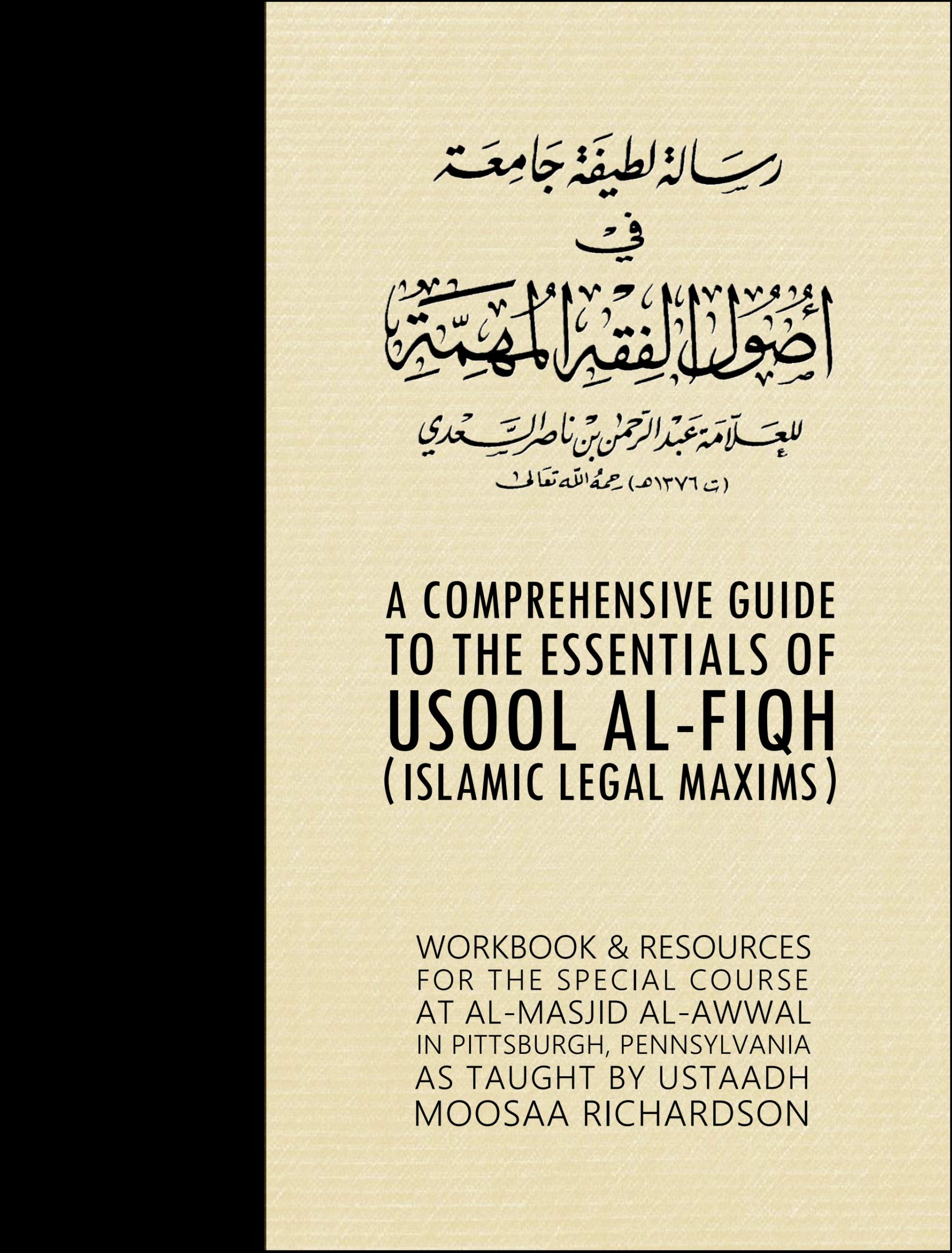
New Publication: A Comprehensive Guide to the Essentials of Usool al-Fiqh (Islamic Legal Maxims)

In the Name of Allah, the Most Gracious, the Ever Merciful…

Al-hamdu lillaah, we are pleased to announce the arrival of our latest workbook:

QUICK LINKS TO THE NEW WORKBOOK:
Amazon USA: Paperback | Hardcover | Kindle
Amazon UK: Paperback | Hardcover | Kindle
Amazon CAN: Paperback | Hardcover | Kindle
Amazon AUS: Paperback | Hardcover | Kindle
PDF Versions:  PDF Workbook | English Text (Mobile) | Arabic Text (Mobile)
Wholesale orders: Email: Publications@Bakkah.net

FREE: Preview PDF version

When you use our affiliate links, we may earn a small commission which helps maintain our website and da’wah activities, so we thank you, jazaakum Allahu khayran!

This workbook is NOT for independent self-study; it is your study guide and resources for the classes by Ustaadh Moosaa Richardson (or anyone else teaching this text, Risaalah Lateefah Jaami’ah.)

Abul-Muthaffir as-Sam’aanee (d.489, may Allah have Mercy on him) said:

Whoever does not know the foundations of the meanings of Fiqh (i.e. Usool al-Fiqh) shall not be saved from occasions of taqleed (bling following) and being considered among the [unlearned] common folk…

Continue reading

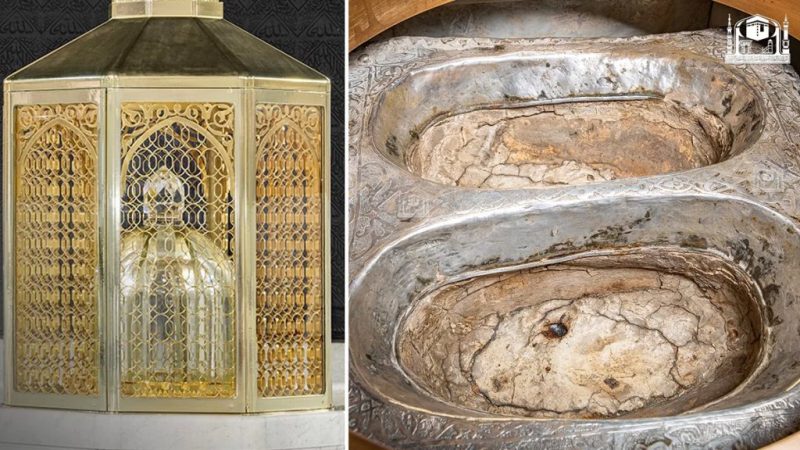
The Actual Footprints of Ibrahim at the Ka’bah?

What is “Maqaam Ibrahim”? And are they the Actual Footprints of Ibrahim (may Allah raise his rank and grant him peace)?
Imam Ibn Kathir (may Allah have Mercy on him) mentioned:
The Maqaam is the rock Ibrahim (may Allah raise his rank and grant him peace) would stand upon to build the Ka’bah. When the walls became high Isma’il (may Allah raise his rank and grant him peace) brought his father Ibrahim (may Allah raise his rank and grant him peace) the rock so he could stand upon it, and he would pass him the stones. Every time one side was completed they would move to the other side with the rock, Ibrahim (may Allah raise his rank and grant him peace) would stand upon it (& build the high parts of the walls on each side).
The footprints of Ibrahim (may Allah raise his rank and grant him peace) were clear in the rock, and the Arabs knew of them in Jaahiliyyah.
Thereafter, the Muslims witnessed them too (once Islam was revealed). It is narrated from Anas bin Malik رضي الله عنه who stated: “I saw the Maqaam and in it the imprints of the toes and soles of the feet of Ibrahim (may Allah raise his rank and grant him peace), however, people constantly wiping the imprints (despite it not being legislated) have eroded them.
Source: Tafseer of Ibn Katheer (2:125)
Shaikh Ibn ul-‘Uthaymeen was asked, “Are the imprints in Maqaam Ibrahim his actual footsteps?” The shaikh replied: Continue reading

QUIZ: Is That Chapter Makkee or Madanee? [10 Questions]

/10
2 votes, 5 avg
77
Created on By admin

Is That Chapter Makkee or Madanee?

Here are ten random questions about ten chapters of the Quran. Test your knowledge of the narration of Ibn 'Abbaas we studied and see if you can correctly categorize all ten into Makkiyyah and Madaniyyah. Review the video recording of the class here before taking the quiz: https://www.patreon.com/posts/usool-at-tafseer-91112999

1 / 10

According to the narration of Ibn 'Abbaas mentioned by Jalaal ad-Deen as-Suyootee in his book, al-Itqaan, identify the following chapter of the Quran as makkiyyah or madaniyyah:

SOORAH AT-TAARIQ (Chapter 86 of the Quran)

2 / 10

According to the narration of Ibn 'Abbaas mentioned by Jalaal ad-Deen as-Suyootee in his book, al-Itqaan, identify the following chapter of the Quran as makkiyyah or madaniyyah:

SOORAH AL-MUJAADILAH (Chapter 58 of the Quran)

3 / 10

According to the narration of Ibn 'Abbaas mentioned by Jalaal ad-Deen as-Suyootee in his book, al-Itqaan, identify the following chapter of the Quran as makkiyyah or madaniyyah:

SOORAH AL-GHAASHIYAH (Chapter 88 of the Quran)

4 / 10

According to the narration of Ibn 'Abbaas mentioned by Jalaal ad-Deen as-Suyootee in his book, al-Itqaan, identify the following chapter of the Quran as makkiyyah or madaniyyah:

SOORAH SABA'  (Chapter 34 of the Quran)

5 / 10

According to the narration of Ibn 'Abbaas mentioned by Jalaal ad-Deen as-Suyootee in his book, al-Itqaan, identify the following chapter of the Quran as makkiyyah or madaniyyah:

SOORAH AL-ANBIYAA' (Chapter 21 of the Quran)

6 / 10

According to the narration of Ibn 'Abbaas mentioned by Jalaal ad-Deen as-Suyootee in his book, al-Itqaan, identify the following chapter of the Quran as makkiyyah or madaniyyah:

SOORAH ASH-SHAMS (Chapter 91 of the Quran)

7 / 10

According to the narration of Ibn 'Abbaas mentioned by Jalaal ad-Deen as-Suyootee in his book, al-Itqaan, identify the following chapter of the Quran as makkiyyah or madaniyyah:

SOORAH ATH-THAARIYAAT (Chapter 51 of the Quran)

8 / 10

According to the narration of Ibn 'Abbaas mentioned by Jalaal ad-Deen as-Suyootee in his book, al-Itqaan, identify the following chapter of the Quran as makkiyyah or madaniyyah:

SOORAH AL-QASAS (Chapter 28 of the Quran)

9 / 10

According to the narration of Ibn 'Abbaas mentioned by Jalaal ad-Deen as-Suyootee in his book, al-Itqaan, identify the following chapter of the Quran as makkiyyah or madaniyyah:

SOORAH AL-'AADIYAAT (Chapter 100 of the Quran)

10 / 10

According to the narration of Ibn 'Abbaas mentioned by Jalaal ad-Deen as-Suyootee in his book, al-Itqaan, identify the following chapter of the Quran as makkiyyah or madaniyyah:

SOORAH AL-FAATIHAH (Chapter 1 of the Quran)

Your score is

The average score is 53%

0%

QUIZ: The Bayqooniyyah Poem (Lines 7-17)

This is a brief 10-question quiz which follows our classes in study of al-Manthoomat al-Bayqooniyyah in Mustalah (Hadeeth Terminology), covering lines 7-17 of the poem (and the meanings and examples provided). Before taking the quiz, review the video recordings of the classes at our Patreon channel: https://www.patreon.com/collection/64666

/10
1 votes, 5 avg
16
Created on By admin

Quiz: The Bayqooniyyah Poem (Lines 7-17)

This is a brief 10-question quiz which follows our classes in study of al-Manthoomat al-Bayqooniyyah in Mustalah (Hadeeth Terminology), covering lines 7-17 of the poem (and the meanings and examples provided). Review the video recordings of the classes here before taking the quiz: https://www.patreon.com/collection/64666

1 / 10

The scholars of Hadeeth call a narration "NAAZIL" when it is:

2 / 10

Which two terms together mean that the hadeeth can be described as MUSNAD?

3 / 10

When the narrators of a hadeeth narrate with a shared and repeated description, like each one says, "and this is the first hadeeth I heard from my shaykh..." what is this called? (Select all that apply.)

4 / 10

A narrator who is mentioned in a chain but not named is called what? For example: "Yoonus narrated from a man from Egypt..."

5 / 10

Which Hadeeth term applies to the hadeeth which means, "Have mercy on those on earth, the One above the heavens will have Mercy on you..."?

6 / 10

In line #7, al-Bayqoonee introduces the terms, MARFOO' and MAQTOO'. What is the third term that goes with these two, and where is it found in the poem?

7 / 10

A scholar of Hadeeth might use the term "MURSAL" to identify to which of the following things? (Select all that apply.)

8 / 10

Al-Haafith Ibn Hajar has a book called "al-Wuqoof" (featured below). What it is this book about?

9 / 10

What is true about this thulaathee (three-man) chain found in Saheeh al-Bukhaaree:

10 / 10

TRUE or FALSE: A hadeeth must be one of the following things: GHAREEB, 'AZEEZ, or MASH-HOOR.

Your score is

The average score is 73%

0%

Important Advice From Shaykh ‘Arafat al-Muhammadi

Stated Shaykh ‘Arafat bin Hassan al-Muhammadi (may Allah preserve him), one of the scholars recommended by Shaykh ‘Ubayd al-Jaabiree shortly before his passing (may Allah have Mercy on him):

We eat, drink, sleep, relax, we read and listen, but despite that there is weakness in us, a lack of action, a lack of remembrance, a lack of supererogatory prayer, night prayer, mid-morning prayer, and other than that from the supererogatory acts of worship.

Among us there is a wastage of time, and a creation of problems between us because of spare time – because we have spare time we end up becoming involved in problems and issues, we stir up problems between us. If you were preoccupied with memorisation of the Qur-ān and its recitation, and memorisation of the Sunnah and lessons, you would not have spare time for gossip.

As for the knowledge of appraisal and disparagement then this field has its men from ahlus-Sunnah, and the students are behind their scholars. However, we have begun delving into matters that do not benefit, matters that are actually harmful, that are causes of splitting occurring. If you know that this particular matter – a matter from the affairs of the world, some statement or action – you know it upsets your brother and is a cause of placing your brother into a difficult situation, and discomforting him, then why do you do it! Why do you do it? Why do you engage in it? Stay away from everything that is a cause for splitting and separating, and likewise from that which causes pain to your brother, or is a reason for causing him pain…

Read the full article here: PDF

Translation by: Shaykh Taqweem Aslam Abu Muadh (may Allah reward him well)

Arabic source: MP3

May Allah bless and reward both Shaykh ‘Arafat and the translator. This is beautiful advice, and I ask Allah to allow it to reach our hearts! This entire passage reminds me of the beautiful admonitions we would hear so often from our beloved shaykh, al-‘Allaamah Rabee’ ibn Haadee al-Madkhalee (may Allah preserve him). Moosaa Richardson

QUIZ: The Bayqooniyyah Poem (Lines 1-6)

This is a brief 10-question quiz which follows our first four classes in study of al-Manthoomat al-Bayqooniyyah in Mustalah (Hadeeth Terminology), covering the first six lines of the poem (and the meanings and examples provided). Before taking the quiz, review the video recordings of the classes at our Patreon channel: https://www.patreon.com/collection/64666

/10
1 votes, 5 avg
54
Created on By admin

Quiz: The Bayqooniyyah Poem (Lines 1-6)

This is a brief 10-question quiz which follows our first four classes in study of al-Manthoomat al-Bayqooniyyah in Mustalah (Hadeeth Terminology), covering the first six lines of the poem (and the meanings and examples provided). Review the video recordings of the classes here before taking the quiz: https://www.patreon.com/collection/64666

1 / 10

What is the EXACT difference between a SAHEEH hadeeth and a HASAN hadeeth?

2 / 10

This is an example of a HASAN hadeeth we studied along with line #5 of the Bayqooniyyah Poem. What is correct about it?

Question Image

3 / 10

What can be understood directly from the wording of the second line of the Bayqooniyyah Poem?

Question Image

4 / 10

This is Hadeeth #2321 from Saheeh Muslim. In its chain of transmission, who is Zuhayr's teacher from whom he narrates this hadeeth?

Question Image

5 / 10

How many conditions must be fulfilled for a narration to be classified as SAHEEH, according to Lines 3 and 4 of the Bayqooniyyah Poem?

Question Image

6 / 10

Which of the following are essential descriptions of an 'ADL narrator?

7 / 10

In the Bayqooniyyah Poem, the author states that everything that does not fulfill the conditions of a HASAN hadeeth is classified as:

8 / 10

Which of the following are NOT essential descriptions of a HASAN narration?

9 / 10

The hadeeth in this image is not authentic. What was the major problem we found with its chain of transmission?

Question Image

10 / 10

How many lines of poetry are found in the Bayqooniyyah Poem?

(We reserve the right to ask EASY QUESTIONS sometimes!)


Question Image

Your score is

The average score is 66%

0%

QUIZ: Risaalah Lateefah in Usool al-Fiqh (Lessons 1-5)

ANOTHER UNIQUE REVIEW TOOL: This is a 10-question quiz for the first five classes (Points 1-6) of our study of Risaalah Lateefah Jaami’ah in the field of Usool al-Fiqh, a new class on Patreon taught by Moosaa Richardson, available here: https://www.patreon.com/collection/68022

/10
4 votes, 5 avg
126
Created on By admin

Risaalah Lateefah (Lessons 1-5, Points 1-6)

This is a brief 10-question quiz which follows our first five classes in study of Risaalah Lateefah in Usool al-Fiqh (Islamic Legal Maxims). Review the video recordings of the classes here before taking the quiz: https://www.patreon.com/collection/68022

1 / 10

In Point #3 of Risaalah Lateefah, the author stated:

"Based on this, we understand the dire need and necessity of knowing Usool al-Fiqh..."

What was he referring to, when he said: Based on this...?

2 / 10

Fill in the missing phrase from Point #4 of Risaalah Lateefah, with the EXACT term used by the author:

"The rulings which Fiqh revolves around are five: Waajib... Haraam...  _____... Makrooh... Mubaah..."

3 / 10

Waajib (obligatory) can be categorized into: Fardh ‘Ayn (an individual obligation) and
Fardh Kifaayah (a community obligation).

4 / 10

Since Islam is a religion with a heavy focus on community, most religious obligations are actually fardh kifaayah, due from the community collectively.

5 / 10

When speaking about the evidences used in Fiqh discussions, the author of Risaalah Lateefah stated:

These proofs are two types:

Kulliyyah (comprehensive maxims), which encompass all rulings of similar types, from the first issues of Fiqh to the last ones, like when we say: Commands indicate obligations, prohibitions indicate impermissibility, and the likes. These are Usool al-Fiqh.

And ___________ proofs, which need built on those comprehensive maxims. Once this is complete, verdicts are applied to issues with these proofs. (Which phrase completes the thought of the author accurately?)

6 / 10

The author of Risaalah Lateefah stated:

Usool al-Fiqh is knowledge of comprehensive legal maxims, since Fiqh [itself] is either:

Individual cases wherein one of the five rulings is needed;

Or ____ (complete the words of the author)

7 / 10

In Point #6 of Risaalah Lateefah, the author stated:

"Issues which include pure benefits (i.e. without any harms) or mostly beneficial aspects (i.e. with limited and comparatively less harm) are things ordered by the Legislator (Allah), with orders indicating obligations or [at least] recommendations..."

He meant: That all matters of pure benefit are obligatory (waajib), and all matters of predominant benefit are recommended (mustahabb).

He died in the year 1376.

8 / 10

Who is the author of the book in this picture?


Question Image

9 / 10

What was the author of Risaalah Lateefah talking about when he said the following?

"One who does it is rewarded; one who abandons it is punished."

10 / 10

Something which has a mix of harms and benefits, yet the small amount of benefit is outweighed by a greater level of harm, is correctly classified as:

Your score is

The average score is 57%

0%

Quiz: Makkee Vs. Madanee (Class 1)

ANOTHER UNIQUE REVIEW TOOL: This is a 5-point quiz for the first class of our study of al-Itqaan fee ‘Uloom al-Qur’aan by as-Suyootee, a new class on Patreon taught by Moosaa Richardson available here: https://www.patreon.com/posts/usool-at-tafseer-89858980

/5
4 votes, 4.5 avg
34
Created on By admin

Makkee Vs. Madanee [Class 1]

This is a brief 5-point quiz which follows our first class in study of al-Itqaan fee 'Uloom al-Quraan by as-Suyootee (may Allah have Mercy on him). Review the video recording of the class here before taking the quiz: https://www.patreon.com/posts/usool-at-tafseer-89858980

1 / 5

Which of the following topics is NOT something mentioned by as-Suyootee (or quoted from others) as relative to the issue of Makee vs. Madanee?

It is a two-digit number.

2 / 5

As-Suyootee quotes Abul-Qaasim an-Naysaabooree (d.406), listing a large number of topics connected to Makkee vs. Madanee, and then as-Syuootee mentions that he covered each one of them, either individually or as part of larger discussions. How many topics were mentioned in total? (The actual number cited by an-Naysaabooree.)

3 / 5

How is learning about Makkee vs. Madanee important for understanding the Quran? (Select all correct answers.)

4 / 5

As-Suyootee states that "Makkee" authored a book on the topic of Makkee and Madanee passages of the Quran. Who was he?

The date of death mentioned in class was erroneous.

5 / 5

As-Suyootee states that "al-'Izz ad-Dayneeree" authored a book on the topic of Makkee and Madanee passages of the Quran. Who was he?

Your score is

The average score is 51%

0%

Pooling Ideas: Advise Your Brothers & Sisters Trying to Get Married [Interactive]

In the Name of Allah, the Most Gracious, the Ever Merciful…

Some of us were married, and those marriages did not work out. Instead of focusing on the negative side of such an event, let us be productive and help others by sharing what you would advise a brother or sister considering marriage to ask about before the marriage.

Others of us got married, and Allah blessed us with good marriages. This is also a great resource for others. Your success -a gift from Allah- includes steps in a process that worked out well. So share what worked out well for you, perhaps someone might find a great deal of benefit in it!

The topic is potentially very broad. Culture and local customs can play a role.

Let me begin by offering some general reminders that some of us might find helpful, by Allah’s Permission. (Contribute to the content of this article by using the “Leave a reply” feature below.)

1. Marry people of upright religion.

The Prophet (may Allah raise his rank and grant him peace) said:

إذا أتاكم من ترضون خلقه ودينه فزوجوه إن لا تفعلوا تكن فتنة في الأرض وفساد عريض
“When someone comes to you with manners and religion you are pleased with, then marry him [to your wards]. If you do not, there will be trials in the land and widespread corruption.” [1]

When a person fears Allah and upholds his/her duty to Allah, such a person will respect and honor your rights, since Allah is the One who gave each person their rights. Openly disobedient people show the world that they Continue reading

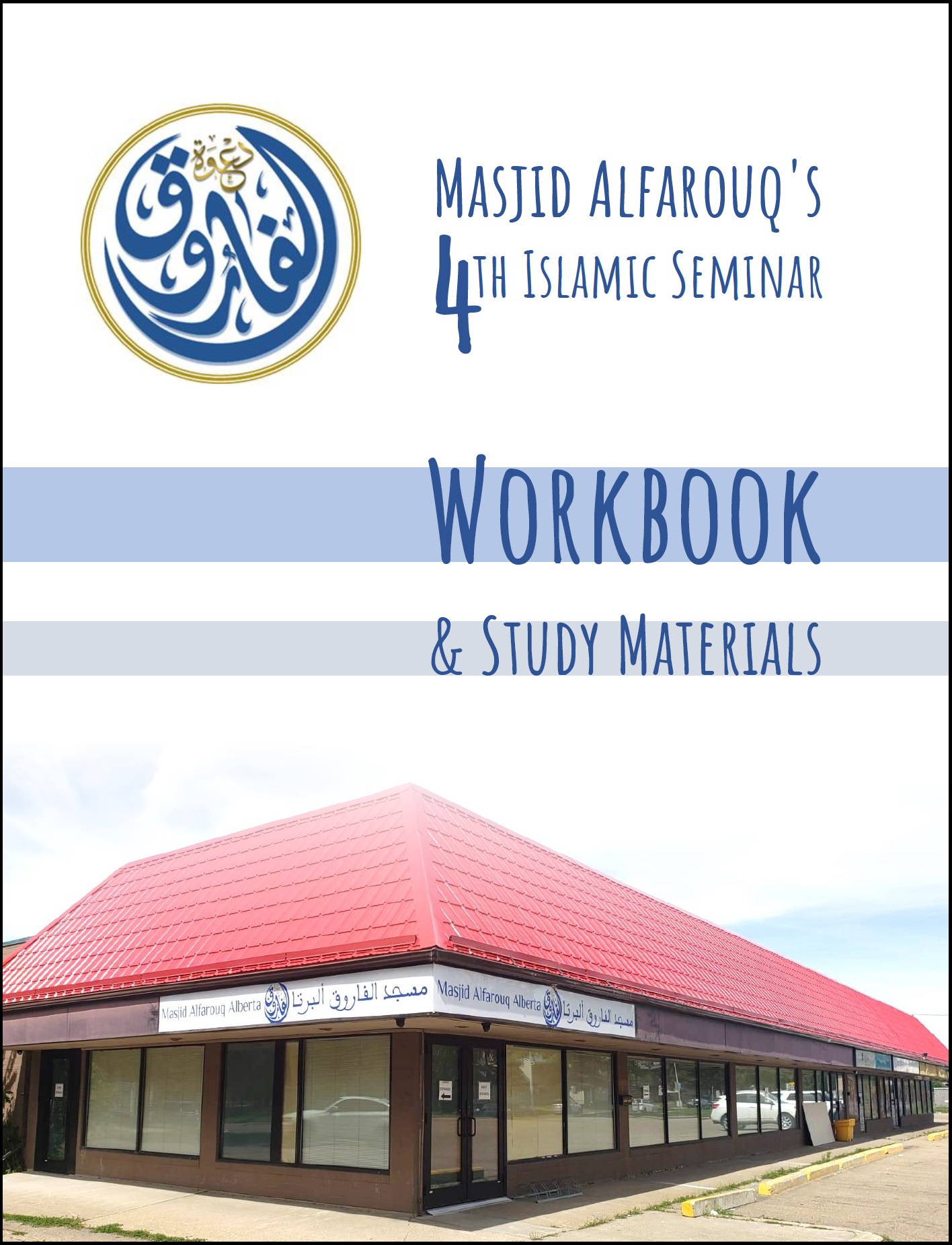
Resources for the 4th Islamic Seminar at Masjid Alfarouq in Edmonton

In the Name of Allah, the Most Gracious, the Ever Merciful…

QUICK LINKS TO THE NEW WORKBOOK:*
Print (Paperback) Version on Amazon: USA | UK | CAN | AUS 
PDF Versions:  PDF Workbook | English Text (Mobile) | Arabic Text (Mobile)

*When we recommend any products available on Amazon, as Amazon Associates we may benefit from qualifying purchases when you follow our links from Bakkah.net. This helps us offset the costs of maintaining the website, and we do appreciate your understanding and support!

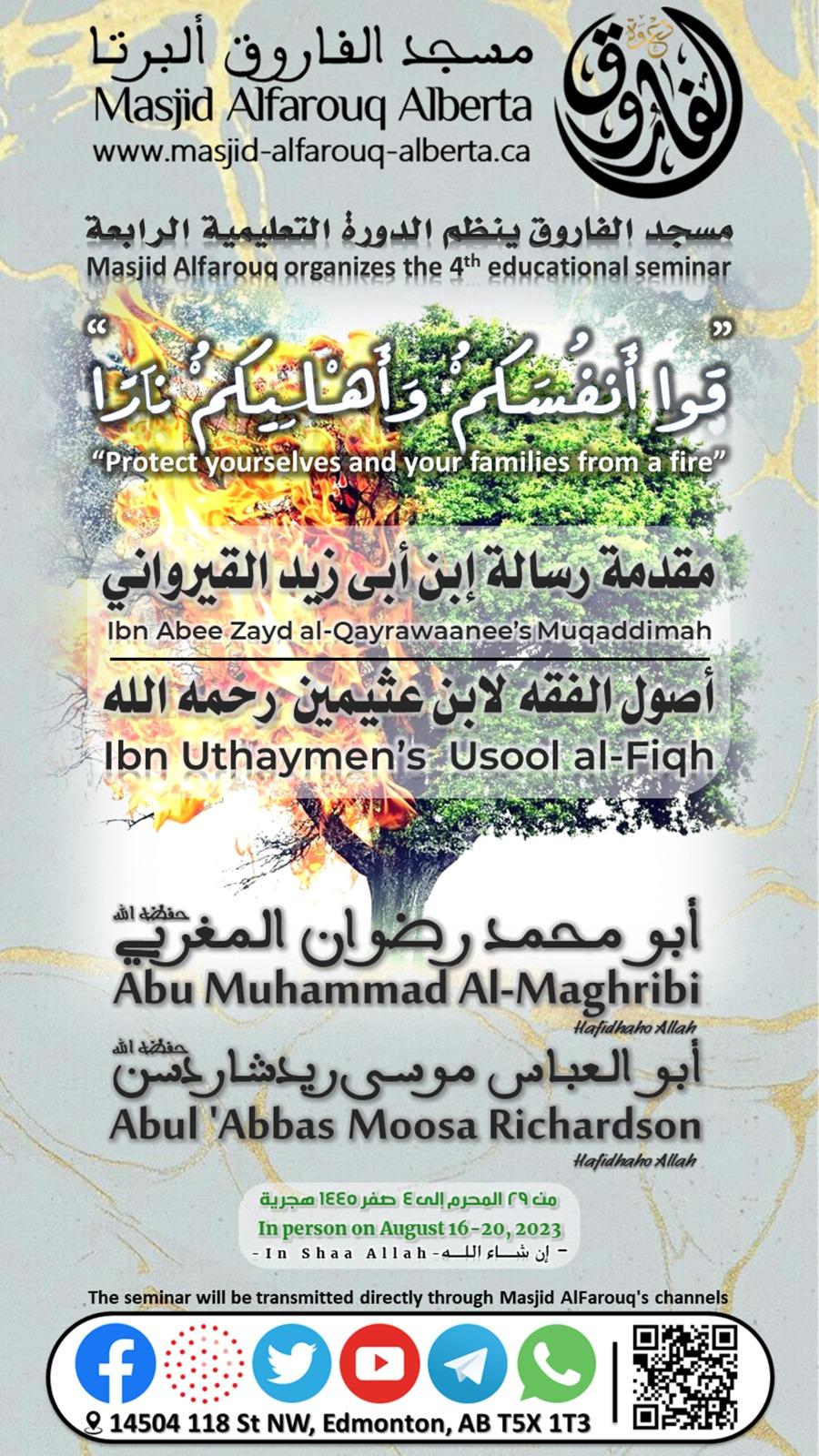
Here you will find helpful resources and guidance, by Allah’s Permission, connected to the seminar at Masjid Alfarouq in Edmonton, Alberta (Canada), which took place starting on Muharram 29, 1445 (Aug.16-20, 2023), wal-hamdu lillaah, along with special information about the official seminar workbook and some exclusive images of its content.

In anticipation of the seminar, Ustaadh Moosaa Richardson stated:

Upon visiting our brothers in Islam and Sunnah at Masjid Alfarouq in Edmonton, Alberta (Canada) earlier this year, based on the advice of Shaykh Abu Muhammad al-Maghribi (may Allah preserve him), I was delighted to find such beautiful cooperation at an emerging community upon Salafiyyah there. May Allah bless them and increase them in good. Their good efforts to learn and host special events for the benefit of their community and the Muslims of Edmonton at large are exemplary and deserving of our support…

This upcoming fourth seminar, scheduled for the end of Muharram 1445 (August 16-20, 2023), in shaa’ Allah, is another five-day event, similar to the last one. This time, Shaykh Abu Muhammad will be broadening the focus of family matters to include more practical advice and guidance for parents and children, siblings, as well as spouses, in shaa’ Allah. I will continue sharing and explaining verses from the same poetry on Islamic Legal Maxims. After considering that a significant number of the local congregants grew up in communities and households where the Maalikee math-hab is taught, I thought to explain a small text in basic Islamic Creed by an exemplary Maalikee scholar of old, al-Imaam Ibn Abee Zayd al-Qayrawaanee (may Allah have Mercy on him).

Continue reading

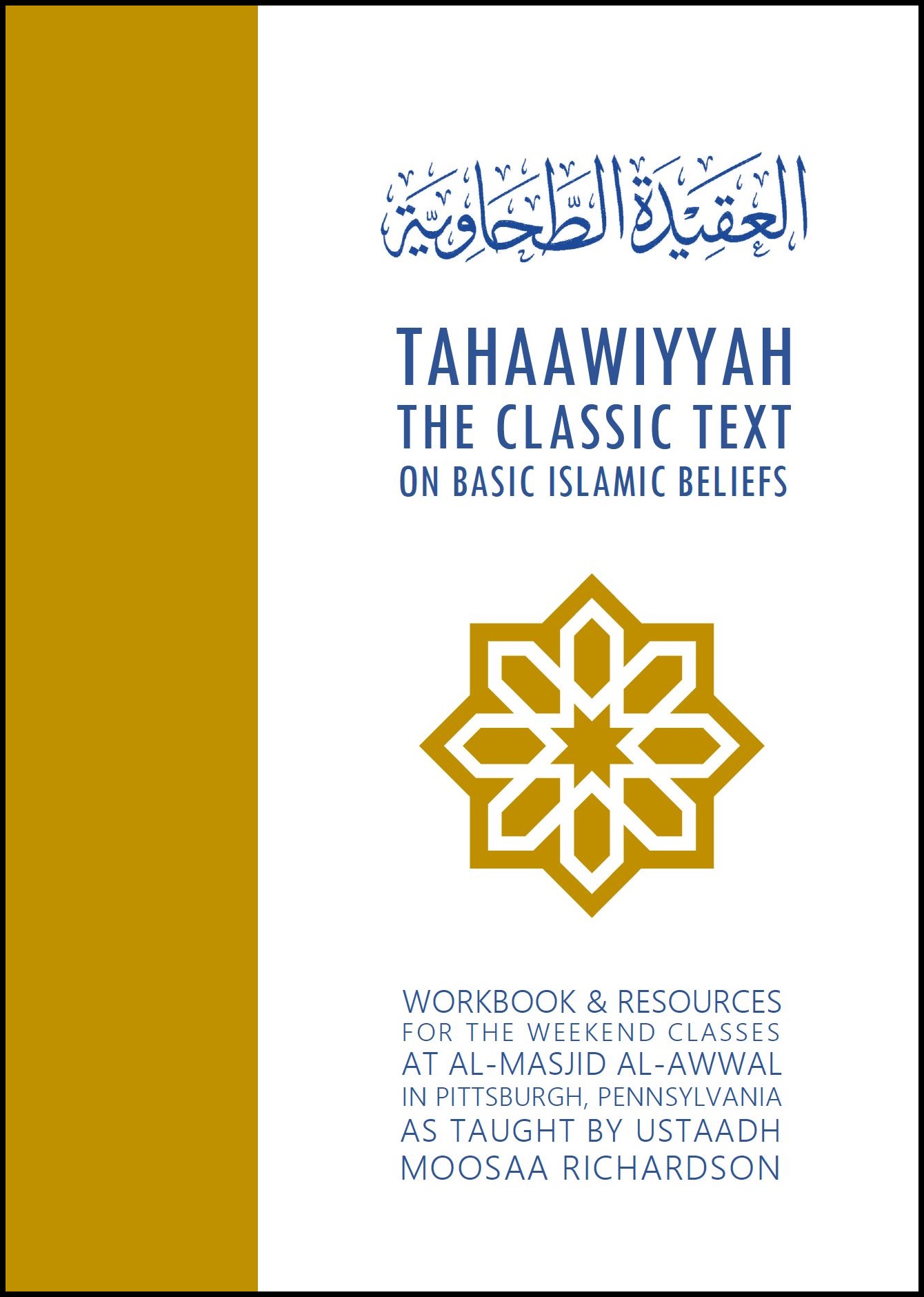
RESOURCES for the New Course: al-‘Aqeedah at-Tahaawiyyah

In the Name of Allah, the Most Gracious, the Ever Merciful…

QUICK LINKS TO THE NEW WORKBOOK:
Amazon USA: Paperback | Hardcover | Kindle
Amazon UK: Paperback | Hardcover | Kindle
Amazon CAN: Paperback | Hardcover | Kindle
Amazon AUS: Paperback | Hardcover | Kindle
PDF Versions:  PDF Workbook | English Text (Mobile) | Arabic Text (Mobile)
Wholesale orders: Email: Publications@Bakkah.net [Catalog: USA | UK]

When we recommend any products available on Amazon, as an Amazon Associate we may benefit from qualifying purchases when you follow our links from Bakkah.net. This helps us offset the costs of maintaining the website, and we do appreciate your understanding and support!

Here you will find helpful resources and guidance, by Allah’s Permission, connected to the study of al-‘Aqeedah at-Tahaawiyyah, the classic primer on basic Islamic creed in the English Language and information about the newly available workbook.

The Course: al-‘Aqeedah at-Tahaawiyyah

We’ve completed a few introductory lessons in preparation for our study of the text of al-‘Aqeedah at-Tahaawiyyah. So far, Continue reading