Self-Issued Verdicts: Nullifying One of the Three Divorces After Final Separation Has Occurred

In the Name of Allah, the Most Merciful, the Bestower of Mercy…

QUESTION posed to the virtuous Shaykh, Dr. Arafat al-Muhammadi, may Allah preserve him, from his brothers at al-Masjid al-Awwal, in the city of Pittsburgh, Pennsylvania, in the United States of America. [1]

As Salaamu ‘Alaikum wa Rahmatullaahi wa Barakaathu… There has occurred in America, where there are no Islamic courts, instances of a man who divorces his wife with the third legislated divorce, and he takes witnesses to that effect, and then he desires to return to his wife that he has irrevocably divorced so he thinks about the number of divorces that he has issued and cancels one of them having decided this for himself, without returning the matter to the People of Knowledge, nor to those able to judge correctly in the affair, that it is permissible for him to continue to live with his wife by taking her back, or marrying her with a new contract, or simply returning to her as if nothing ever happened. Many of these husbands claim that one of the three divorces was incorrect (did not take effect) due to his anger, and then he and his wife mutually agree that only two divorces actually occurred; thus, they return to marital life despite having taken members of their community as witnesses to the third and final irrevocable divorce. This is done in opposition to the advice given to them by their teachers in the Islamic Centers (of their city) and the responsible parties therein (i.e. masjid administrators). So, what is your advice to these men and women who are in this circumstance? What advice do you have for the Islamic centers there (dealing with these issues)? How do they (administrators) handle such evil occurrences? May Allah reward you with good.

Masjid Administration

ANSWER:

Wa ‘Alaikum Salaam wa Rahmatullaahi wa Barakaatuhu…

We say to these individuals that they must fear Allah within their own selves and be aware of Him; for whomsoever seeks to deceive Allah, then Allah deceives them. This woman is no longer permissible for him until Continue reading

The Return to Connected Rows (Without Gaps) at the Two Sacred Mosques in Makkah and al-Madeenah

In the Name of Allah, the Most Gracious, the Ever Merciful…

In a very significant historical event, al-hamdu lillaah, at Fajr Prayer on the morning of Sunday, the 11th of Rabee’ al-Awwal, 1443 (October 17, 2021), restrictions requiring distance between the people in prayer at the two sacred mosques were officially lifted, and for the first time in a year and a half, Muslims praying there heard the imaam request the people to come together in the rows and not leave any gaps. People of Sunnah around the world rejoice and understand this to be a monumental event, a welcome relief, a comfort to the heart and soul, and a long-awaited sign of good things to come, in shaa’ Allah.

2021-10-17 08_15_09-Amazing.Fajr Salah Masjid Al Haram, Makkah after capacity restrictions were -b

Why Were Such Restrictions There in the First Place?

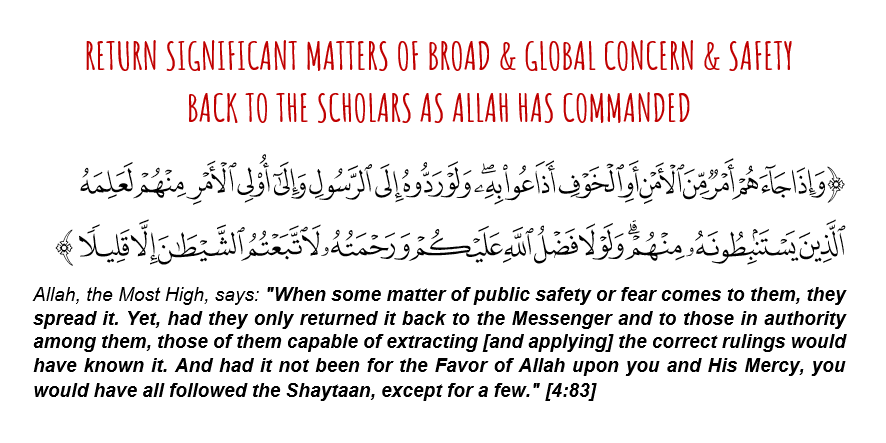
Praying side-by-side, without gaps, is something our Prophet (may Allah raise his rank and grant him peace) ordered when he would line the people up for prayer. This obligation was (and still is, in other mosques) only being foregone temporarily, because of the need to take precautions against the spread of Covid-19, something deemed by the senior Muslim scholars, top governmental Muslim leaders, and appointed and responsible Muslim health officials to be a serious threat to human life and safety. In the most urgent matters of emergencies that jeopardize the health and well being of many millions of people, the Book of Allah certainly leads us to safety and prosperity:

return things to ahlul ilm in nawaazil

This is a good beginning, yet all other masjids there at this time continue to operate under the well-known safety precautions of wearing masks, distancing in the rows, and bringing personal prayer rugs. May Allah make us grateful for both the removal of the restrictions at the two Harams and for the care and concern the Muslim scholars and authorities have shown for the health and well-being of the Muslims all over the world.

Written by: Moosaa Richardson

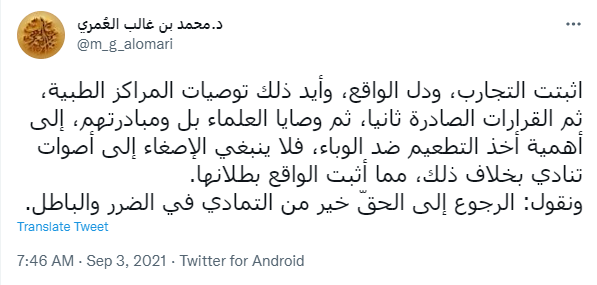
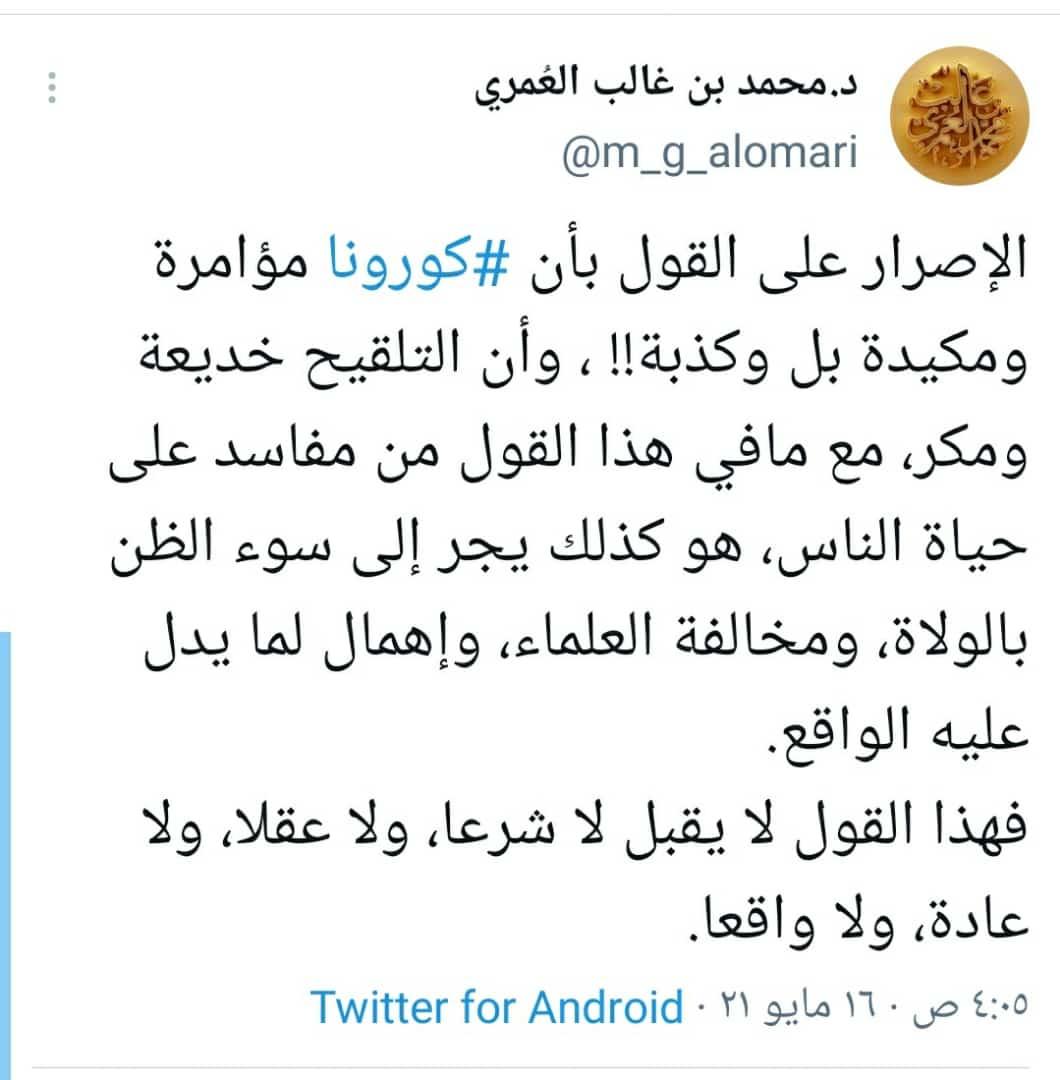
See: This tweet on the topic by Shaykh Dr. Mohammad bin Ghalib al-Omari, and this tweet (in response) as well.

FURTHER RESOURCES ON THE TOPIC OF COVID-19 REGULATIONS AND ISLAM:

Questions From the West About Covid-19 Answered by the Grand Mufti of Saudi Arabia, Shaykh ‘Abdul-‘Azeez Aal Shaykh

Do not Listen to Those Warning Against the Vaccine; Returning to the Truth is Better than Persisting in Harm and Falsehood, by Shaykh Mohammad bin Ghalib al-Omari

One Who Cannot Wear a Mask During the Covid-19 Pandemic is Excused from Congregational Prayers, by Shaykh Arafat bin Hassan al-Muhammadi

One Who Avoids Prayer in Congregation Because of the Gaps Between People in the Row, by Shaykh Saalih al-Fowzaan

The Ruling on Forging Vaccination Records in Order to Avoid the Vaccine, by Shaykh Arafat bin Hassan al-Muhammadi 

Regarding Those Who Insist that Coronavirus and the Vaccination is a Conspiracy, by Shaykh Mohammad bin Ghalib al-Omari

PDF: Nine Advices As Relates the Novel Coronavirus by the Mufti Shaykh ‘Abdul-‘Azeez Aal Shaykh

PDF: A Summary of Verdicts Issued by the Permanent Committee of Scholars Concerning the Coronavirus Epidemic [Anwar Wright]

MP3 Audio: Shaykh Saalih al-Fowzaan on the Obligation of Social Distancing During the Covid-19 Outbreak [Phrase-by-phrase translation]

PDF: Advice of Shaykh ‘Abdullah al-Bukhari About Coronavirus

Video: Healthy, Realistic, Practical Optimism During the Coronavirus Outbreak (Youtube)

PDF: Fleeing From the Decree to the Decree [Rahmaaniyyah, Abul-Hasan Maalik]

Video: Don’t Downplay the Seriousness of the Coronavirus! (Youtube)

MP3 Audio: Key Lessons About the Coronavirus [Hassan Somali]

Article: Social Distancing During These Times is an Obligation From Allah; It Only Increases Our Love for One Another

PDF: The Issue of Contagion – An Islamic Perspective [Taqweem Aslam]

Article: What Blessings Could Come From the Closing of Masjids?!

Khutbah: Coronavirus – How Muslims Understand it & Other Epidemics

MP3 Audio: Q&A About Coronavirus Conspiracy Theorists [Hassan Somali]

One Who Avoids Prayer in Congregation Because of the Gaps Between People in the Row

In the Name of Allah, the Most Gracious, the Ever Merciful…

The following question was posed to Shaykh Saalih al-Fowzaan, Member of the Permanent Committee for Islamic Verdicts and Research and the Council of Senior Scholars (may Allah preserve him):

ما رأي فضيلتكم شيخ صالح فيمن يصلى في البيت ويترك صلاة الجماعة بحجة التباعد ظنا منه أن الصلاة غير جائزة في مثل هذه الحالة؟

What is the opinion of your excellence, Shaykh Saalih, about someone who prays at home and leaves off the prayer in congregation, justifying that with the issue of distancing (i.e. the gaps between people in the row), assuming that the prayer is not allowed to be offered in this way? [1]

الجواب: هذا يعذر بالجهل، إن كان جاهلا فيعذر بالجهل. أما إذا كان متعمدا فإنه لا يجوز له ذلك، مفارقة الجماعة، نعم.

The answer: This one can be excused because of ignorance. If he is ignorant, then he is excused because of ignorance. However, if he is doing this on purpose [knowing that it is actually valid], this is not permissible for him, [it is] separating away from the jamaa’ah (congregation, i.e. without right).

SOURCE: The live radio program, Noor ‘Alad-Darb, dated: Sunday 1443/1/27, at about 13 minutes into the program. [Arabic Audio]

TRANSLATION: Moosaa Richardson

FOOTNOTES:

[1] This question is specifically about the distancing that is established between people in the prayer rows during the Covid-19 Pandemic, something deemed necessary for the preservation of health and safety by the Muslim scholars, leaders, and top health officials. [See: Social Distancing During These Times is an Obligation From Allah; It Only Increases Our Love for One Another by Shaykh Saalih al-Fowzaan.]

FURTHER RESOURCES ON THE TOPIC OF COVID-19 REGULATIONS AND ISLAM:

Questions From the West About Covid-19 Answered by the Grand Mufti of Saudi Arabia, Shaykh ‘Abdul-‘Azeez Aal Shaykh

Do not Listen to Those Warning Against the Vaccine; Returning to the Truth is Better than Persisting in Harm and Falsehood, by Shaykh Mohammad bin Ghalib al-Omari

One Who Cannot Wear a Mask During the Covid-19 Pandemic is Excused from Congregational Prayers, by Shaykh Arafat bin Hassan al-Muhammadi 

The Ruling on Forging Vaccination Records in Order to Avoid the Vaccine, by Shaykh Arafat bin Hassan al-Muhammadi 

Regarding Those Who Insist that Coronavirus and the Vaccination is a Conspiracy, by Shaykh Mohammad bin Ghalib al-Omari

PDF: Nine Advices As Relates the Novel Coronavirus by the Mufti Shaykh ‘Abdul-‘Azeez Aal Shaykh

PDF: A Summary of Verdicts Issued by the Permanent Committee of Scholars Concerning the Coronavirus Epidemic [Anwar Wright]

MP3 Audio: Shaykh Saalih al-Fowzaan on the Obligation of Social Distancing During the Covid-19 Outbreak [Phrase-by-phrase translation]

PDF: Advice of Shaykh ‘Abdullah al-Bukhari About Coronavirus

Video: Healthy, Realistic, Practical Optimism During the Coronavirus Outbreak (Youtube)

PDF: Fleeing From the Decree to the Decree [Rahmaaniyyah, Abul-Hasan Maalik]

Video: Don’t Downplay the Seriousness of the Coronavirus! (Youtube)

MP3 Audio: Key Lessons About the Coronavirus [Hassan Somali]

Article: Social Distancing During These Times is an Obligation From Allah; It Only Increases Our Love for One Another

PDF: The Issue of Contagion – An Islamic Perspective [Taqweem Aslam]

Article: What Blessings Could Come From the Closing of Masjids?!

Khutbah: Coronavirus – How Muslims Understand it & Other Epidemics

MP3 Audio: Q&A About Coronavirus Conspiracy Theorists [Hassan Somali]

Do not Listen to Those Warning Against the Vaccine; Returning to the Truth is Better than Persisting in Harm and Falsehood

2021-09-03-md-ghaalib-imptce-of-vaccines-emphasized-again

Shaykh Dr. Mohammad bin Ghalib al-Omari (may Allah preserve him) said:

أثبتت التجارب، ودل الواقع، وأيد ذلك توصيات المراكز الطبية، ثم القرارات الصادرة ثانيا، ثم وصايا العلماء بل ومبادرتهم، إلى أهمية أخذ التطعيم ضد الوباء، فلا ينبغي الإصغاء إلى أصوات تنادي بخلاف ذلك، مما أثبت الواقع بطلانها.

ونقول: الرجوع إلى الحقّ خير من التمادي في الضرر والباطل.

Experience (real-life interactions) has validated, and reality has proven, and further it is supported by the directives of the health centers, and then by governmental decisions secondly, and then by the advices of the scholars and even their own [personal] initiatives, [all of this demonstrates] the importance of taking the vaccine against the disease (Covid-19). So it is not appropriate to listen to voices which call to the opposite of that (i.e. those who warn against the vaccine), from that which reality has confirmed to be falsehood.

And so we say: Returning to the truth is better than persisting in harm and falsehood.

SOURCE: The shaykh’s official Twitter account (Arabic).

Translation: Moosaa Richardson

FURTHER RESOURCES ON THE TOPIC:

Questions From the West About Covid-19 Answered by the Grand Mufti of Saudi Arabia, Shaykh ‘Abdul-‘Azeez Aal Shaykh

One Who Cannot Wear a Mask During the Covid-19 Pandemic is Excused from Congregational Prayers, by Shaykh Arafat bin Hassan al-Muhammadi 

The Ruling on Forging Vaccination Records in Order to Avoid the Vaccine, by Shaykh Arafat bin Hassan al-Muhammadi 

Regarding Those Who Insist that Coronavirus and the Vaccination is a Conspiracy, by Shaykh Mohammad bin Ghalib al-Omari

PDF: Nine Advices As Relates the Novel Coronavirus by the Mufti Shaykh ‘Abdul-‘Azeez Aal Shaykh

PDF: A Summary of Verdicts Issued by the Permanent Committee of Scholars Concerning the Coronavirus Epidemic [Anwar Wright]

MP3 Audio: Shaykh Saalih al-Fowzaan on the Obligation of Social Distancing During the Covid-19 Outbreak [Phrase-by-phrase translation]

PDF: Advice of Shaykh ‘Abdullah al-Bukhari About Coronavirus

Video: Healthy, Realistic, Practical Optimism During the Coronavirus Outbreak (Youtube)

PDF: Fleeing From the Decree to the Decree [Rahmaaniyyah, Abul-Hasan Maalik]

Video: Don’t Downplay the Seriousness of the Coronavirus! (Youtube)

MP3 Audio: Key Lessons About the Coronavirus [Hassan Somali]

Article: Social Distancing During These Times is an Obligation From Allah; It Only Increases Our Love for One Another

PDF: The Issue of Contagion – An Islamic Perspective [Taqweem Aslam]

Article: What Blessings Could Come From the Closing of Masjids?!

Khutbah: Coronavirus – How Muslims Understand it & Other Epidemics

MP3 Audio: Q&A About Coronavirus Conspiracy Theorists [Hassan Somali]

One Who Cannot Wear a Mask During the Covid-19 Pandemic is Excused from Congregational Prayers

In the Name of Allah, the Most Gracious, the Ever Merciful…

The following is a question posed to Shaykh Dr. Arafat bin Hassan al-Muhammadi (may Allah bless and preserve him) on Friday night, the 19th of al-Muharram, 1443 (August 27, 2021):

May Allah treat you well, noble shaykh, this questioner says: Does not wearing a mask due to health reasons make it permissible to leave off the Jumu’ah and congregational prayers in the masjid, since these conditions have been stipulated by the Corona Committee in our land, and may Allah reward you with good?

The shaykh’s answer: Continue reading

The Ruling on Forging Vaccination Records in Order to Avoid the Vaccine

In the Name of Allah, the Most Gracious, the Ever-Merciful…

The following is a question posed to Shaykh Dr. Arafat bin Hassan al-Muhammadi (may Allah bless and preserve him) [1], on a topic which many genuinely confused Muslims may be considering due to the heavy amount of misinformation spread on social media. The reader will note that our senior scholars and their top students continue to offer sober and consistent advice about how Muslims are to return these important matters back to the scholars who are qualified to deal with matters of global safety and urgent concerns which affect the religion, health, and safety of millions of Muslims. May Allah allow this advice to reach receptive hearts.

QUESTION: May Allah be kind to you, dear virtuous shaykh, there is a questioner from France who asks: Our shaykh -may Allah bless you-, the French government has passed a law that requires vaccinations against Coronavirus for many segments of the population. Restrictions will prevent people from entering many public places, traveling, and other things, unless a person can show medical records which confirm that he, the bearer of the records, is fully vaccinated. Due to what people share from some news sources and social media outlets regarding these vaccinations, that they are potentially harmful to one’s health, or that they are a worldwide conspiracy to wipe out mankind, some people are considering ways to avoid this vaccination, like paying money to someone who would provide him with forged documents, or conspiring with a doctor to lie and say that he is fully vaccinated.

So the question then, our shaykh -may Allah bless you- is: What is the ruling on doing this? And we would like you to direct some advice to Continue reading

Regarding Those Who Insist that Coronavirus and Vaccination is a Conspiracy

md-ghaalib-corona-conspiracy

Shaykh Dr. Mohammad bin Ghalib al-Omari (may Allah preserve him) said:

Insisting upon saying that coronavirus is a conspiracy, scheme, or even a lie (!!), and that vaccination is a deceit and deception, leads towards having ill thoughts about rulers, contradicting scholars, and neglecting that which is evidenced by reality, along with what this speech has of evil effects upon people’s lives. And so, this speech is not acceptable, neither religiously, nor intellectually, nor out of habit, and nor by looking at reality.

SOURCE: The shaykh’s official Twitter account (Arabic/English).

Translation by: The shaykh’s designated translator(s).

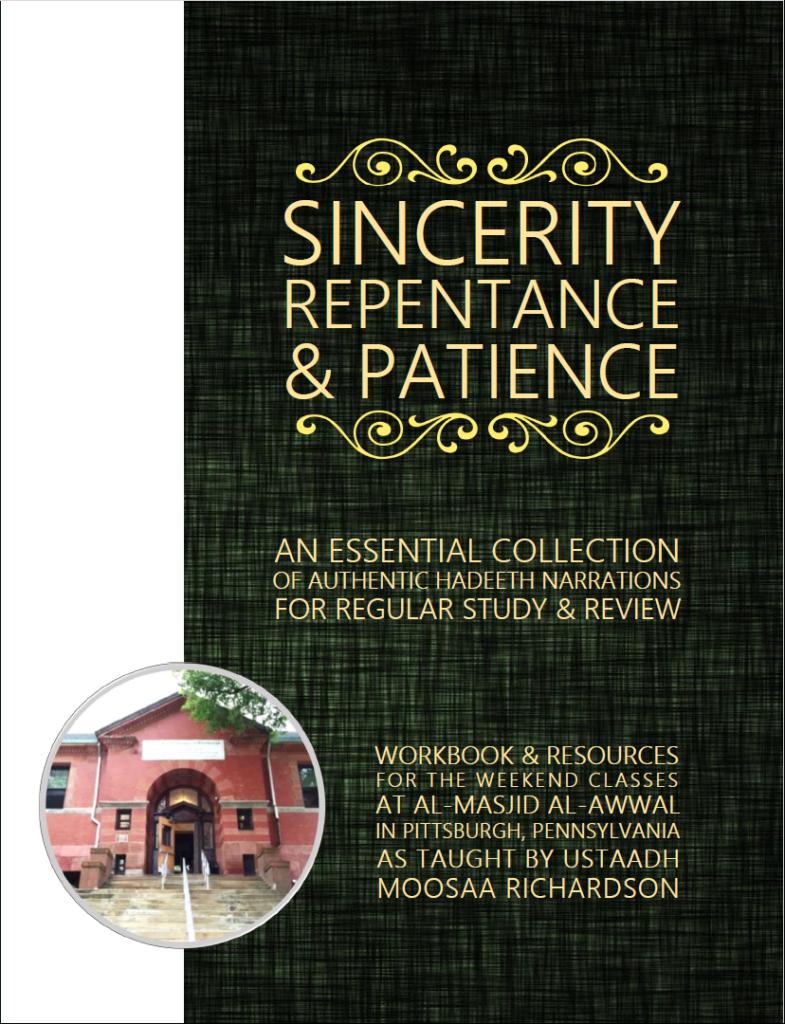
NOW AVAILABLE: Sincerity, Repentance, & Patience, An Essential Collection of Authentic Hadeeth Narrations for Regular Study & Review

Al-hamdu lillaah, our latest publication is now available on Amazon in kindle, paperback, and hardcover formats:

Click here to order from Amazon.This is the workbook for our upcoming Saturday night classes at al-Masjid al-Awwal (locally and live online), in shaa’ Allah.

On Amazon (affiliate links):*

Other countries: Just search “Sincerity, Repentance, and Patience” in the Amazon website of your country.

PDF Version: https://payhip.com/b/pkMSY

Mobile version (English): https://payhip.com/b/OsGE3

Mobile Version (Arabic): https://payhip.com/b/GYxbu

*When you use our affiliate links to Amazon, we may earn a small commission, which helps us maintain this website and many of our activities, so may Allah reward you! 

Some of the pages from the workbook: Continue reading

Fatwaa: Multiple ‘Eid Prayers in One Place During the Covid-19 Restrictions

In the Name of Allah, the Most Gracious, the Ever Merciful…

On Saturday, the 26th of Ramadhaan, 1442 (May 8, 2021), the leading scholarly authority for Islamic verdicts in the Kingdom of Saudi Arabia, the Mufti, Shaykh ‘Abdul-‘Azeez Aal ash-Shaykh (may Allah preserve him), was asked about the permissibility of establishing multiple ‘Eid prayers [1] in lands where the Muslims are a minority, and there are not enough masjids to accommodate all the Muslims, given the safety protocols in place to restrict the spread of Covid-19, by the Permission of Allah. [2]

He replied:

لا يجوز تكرار إقامة صلاة العيد في مصلى واحد من جماعة بعد أخرى؛ من غير ضرورة ولا حاجة ماسة لأن هذا عمل محدث، وقد قال النبي صلى الله عليه وسلم : من أحدث في أمرنا هذا ما ليس منه فهو رد

It is not allowed to hold multiple ‘Eid Prayers in one place of prayer, having one congregation after another, without any emergency or urgent need for that, because this is a newly invented matter. The Prophet (may Allah raise his rank and grant him peace) said, “Whoever introduces into our affair what is not from it, it is rejected.” [3]

وأجازها بعض أهل العلم عند الحاجة وبحسبها، وفي حالنا هذه الأيام مع جائحة كورونا والإجراءات الاحترازية، وحيث أن حفظ النفوس وصيانتها من مقاصد الشريعة الكبرى، وقد ثبت عن النبي صلى الله عليه وسلم أنَّه قال: لا ضَرَرَ ولا ضِرارَ واجتماع المصلين بأعداد كبيرة مظنة العدوى وانتشار المرض

Some of the people of knowledge have allowed this, at the time of a need, and according to the level of that need. During our current situation these days, with the Coronavirus pandemic and the safety procedures [in place], the protection and preservation of human life is from the major overall objectives of the Sharee’ah (Islamic Legislation). [4] It has been authentically established that the Prophet (may Allah raise his rank and grant him peace) said, “There is to be no harm, nor any reciprocation of harm.” [5] And the gathering of people for prayer in large numbers is a concern related to the contagion and the spread of illness.

ولعدم تفويت هذا الفضل على المسلمين، خصوصا في دول الأقليات المسلمة ولعدم القدرة على وجود مصلى خارج المدينة يجتمع فيه الناس للصلاة فنرى والله أعلم بجواز ذلك، في مثل هذه الظروف

So to prevent the Muslims from missing out on this great virtue (i.e. the ‘Eid Prayer), especially in lands where Muslims are a minority, without the ability to have a musallaa (outdoor prayer area) outside of the city big enough to accommodate all the people for the prayer, we hold that this (i.e. multiple ‘Eid Prayers in one place) [1] would be permissible during the likes of these circumstances.

هذا ما تيسر إيراده والله أعلم بالصواب وإليه المرجع والمآب, وبالله التوفيق وصلى الله وسلم على نبينا محمد

This is what has been made easy to mention at this time, and Allah knows best about what is correct. Unto Him [alone] is the return and the final end, and through Allah [alone] is success. May Allah raise the rank of our Prophet Muhammad and grant him peace.

Continue reading

Continuing to Maintain Safety Protocols to Prevent the Spread of Coronavirus

By the leading authority among the senior scholars of Saudi Arabia: The Mufti, Shaykh ‘Abdul-‘Azeez Aal ash-Shaykh (may Allah preserve him)

All praise is due to Allah, the Lord of all things. May Allah raise the rank of and grant peace to our Prophet Muhammad, and likewise all of his family and companions. As for what follows:

The Muslim continues to worship and perform good deeds which benefit himself, his family, and his Ummah. By way of that, he becomes capable of caring for the entire world. Indeed the Prophet (may Allah raise his rank and grant him peace) praised the strong believer, saying:

(( الـمُؤْمِنُ القَوِيُّ خَيْرٌ وَأَحَبُّ إِلَـى اللهِ مِنَ الـمُؤْمِنِ الضَّعِيفِ وَفِـي كُلٍّ خَيْرٌ ))
“The strong believer is better and more beloved to Allah than the weak believer, while there is good in both.”
[1]

The Messenger of Allah (may Allah raise his rank and grant him peace) meant by this: One who is strong in his eemaan (faith) in Allah, the Exalted, and in his creed, his soul, and his physical body.

So good health is a tremendous blessing, and the Prophet (may Allah raise his rank and grant him peace) stressed its importance, saying:

(( نِعْمَتَانِ مَغْبُونٌ فِيهِمَا كَثِيْـرٌ مِنَ النَّاسِ: الصِّحَّةُ وَالفَرَاغُ ))
“Two blessings are neglected by many of the people: good health and free time.” [2]

So the body’s good health is a great blessing not fully understood except by those who have lost it. Thus, it is imperative that a person be keen to preserve his health and stay away from whatever would corrupt or harm it from diseases, contagions, and symptoms.

Islaam has instituted Continue reading

Shaykh ‘Ubayd al-Jaabiree on Neglecting Child Support

In the Name of Allah, the Most Gracious, the Ever Merciful…

The respected scholar of al-Madeenah, Aboo ‘Abdil-‘Azeez ‘Ubayd ibn ‘Abdillaah ibn Sulaymaan al-Jaabiree al-Hamdaanee (may Allah preserve him) was asked the following question:

One of my relatives divorced his wife and left his three children with her, and then refused to spend on the children, assuming himself to be free of them. He has continued in this way [of dealing with the matter], and he is still doing this now. What would you advise him with? May Allah reward you.

The shaykh replied (may Allah bless and preserve him): Continue reading

Nine Advices as relates the Novel Coronavirus (Covid-19) Pandemic [Shaykh ‘Abdul-‘Azeez Aal Shaykh]

In the Name of Allah, al-Raḥmān al-Raḥīm…

In these days the world is witnessing the spread of the novel coronavirus (Covid-19) and is utilizing its collective abilities and potentialities to limit its spread and to mitigate the outcome as relates its health, economic, and societal impact. This matter requires that the scholars and students of knowledge assume their roles in clarifying the legislated methodology of dealing with this new epidemic or other contagious pestilence and illnesses, and in explaining the religious rulings of precautionary measures and protective protocols taken by competent authorities such as: suspending work and schooling; curfews and travel bans; the enforcement of social distancing, nose and mouth covering, and quarantine and home isolation for those who have it; as well as other precautionary and protective measures to safeguard human life.

It is known that Allah legislated the religion of Islam to be the methodology of human living so that they may operate in accordance to its laws and teachings. So there is no matter in life and no newly occurring problem except that it has a ruling in Islam. Allah (the Exalted and Most High) said:

“We have neglected nothing in the Book.” [al An’aam: 38]

From such measures and protocols that are legislated in our monotheistic religion that are befitting to utilize at the onset and spread of pestilence and contagious diseases—such as the novel coronavirus—are as follows:

1.) The ban from entering or exiting localities afflicted with pestilence & illnesses.

On the authority of ‘Abd al-Raḥmaan bin ‘Awf (may Allah be pleased with him) who said: I heard Allah’s Messenger (may Allah raise his rank and grant him peace) say: Continue reading

Questions From the West About Covid-19 Answered by the Grand Mufti of Saudi Arabia, Shaykh ‘Abdul-‘Azeez Aal Shaykh

In the Name of Allah, the Most Gracious, the Ever Merciful…

From Moosaa at-Taweel al-Amreekee to the Grand Mufti, the virtuous Shaykh ‘Abdul-‘Azeez Aal ash-Shaykh: As-Salaamu ‘alaykum wa rahmatullaah wa barakaatuh. As for what follows:

In these days -the days of the Coronavirus Pandemic- Allah has indeed blessed us with good leadership, governmental leaders and scholars who love the Muslims, and the Muslims love them. They lead the people to safety and well-being, by the Permission of their Lord. Their cooperation in establishing safety protocols in the land of Tawheed, the land of the two sacred and honored mosques, the respected Kingdom of Saudi Arabia -may Allah protect it from every evil- is an exemplary thing, a role model for the entire world, and the praise is for Allah. People of all different religions and various languages notice this, so may Allah compensate you for your hard work and reward you with the best reward for what you do for your Ummah!

A matter that causes fear has indeed come to us, a very serious matter, and [about it] the people have differed in their views. And our Lord, the All-Knowing, the Ever Informed, has indeed guided us to what is befitting for us in these types of issues, with His Statement [which means]:

And when there comes to them a matter of safety or fear, they spread it openly. Yet had they only referred it back to the Messenger and those in authority among them, those of them capable of extracting its ruling would have done so. [4:83]

So in order to implement this Noble Verse, and with due concern for unity, I present some important questions. I do believe that your answers to them will –by Allah’s Permission- save your children of Ahlus-Sunnah in foreign lands from the differing that has befallen them, as you hold a position of trust with everyone. It is from Allah that I hope that we could benefit from your noble instructions.

The First Question: How do we know exactly what the nawaazil (pending issues in need of verdicts) are, those which must be deferred to the senior scholars Continue reading

Free Islamic Courses Online [Recordings, Workbooks, Resources]

In the Name of Allah, the Most Gracious, the Ever Merciful…

This page features access to free recordings, live broadcasts, workbooks, and additional resources for study of a number of important Islamic topics and basic primers in a number of fields of study, as taught by Ustaadh Abul-‘Abbaas Moosaa Richardson, categorized into:

  • Ongoing courses currently being taught (and thus not yet completed)
  • Courses taught and completed
  • Courses taught but not completed
  • Courses planned for the near future (in shaa’ Allah)

ISLAMIC COURSES CURRENTLY TAUGHT BY USTAADH MOOSAA RICHARDSON

1. Al-‘Aqeedah al-Waasitiyyah (Creed)

On Friday nights at the First Muslim Mosque in Pittsburgh, Pennsylvania (USA), and live online on the masjid’s radio station, Ustaadh Moosaa Richardson reads this classic primer in Islamic beliefs by Shaykh al-Islam Ibn Taymiyah (may Allah have Mercy on him), along with the explanation of Shaykh ‘Ubayd al-Jaabiree (may Allah preserve him). A recording of the live broadcast remains online for about 24 hours (for free listening, but not downloadable yet), until it is replaced by a high-quality re-mastered MP3 recording for free listening and/or downloading. Sometimes we may pre-record these lessons in order to avoid connection problems due to internet bottle-necking at peak hours.

RECORDINGS: https://www.spreaker.com/show/waasitiyyah-basic-muslim-creed

WORKBOOK (traditional print):
USA: https://amzn.to/2VGvNJN
UK: https://amzn.to/3ggfMnl
CANADA: https://amzn.to/37FWkfF
OTHER COUNTRIES: Search “Waasitiyyah” (with that exact spelling) on the Amazon website of your country.

WORKBOOK (Kindle print replica version):
USA: https://amzn.to/3qr7DkB
UK: https://amzn.to/36IRNdd
CANADA: https://amzn.to/39Of7Z8
INDIA: https://www.amazon.in/dp/B0841N65PM/
OTHER COUNTRIES: Search “Waasitiyyah” (with that exact spelling) on the Amazon website of your country.

Upcoming FREE GIVEAWAY Day: Thursday, January 7, 2021 (Get a FREE copy of the Kindle Print Replica Version of this workbook from the Amazon website of your country on this day, in shaa’ Allah.) [Follow our Twitter for more free giveaways.] Continue reading

Social Distancing During These Times is an Obligation From Allah; It Only Increases Our Love for One Another

In the Name of Allah, the Most Gracious, the Ever Merciful…

The following translation of the advice of a great scholar is being provided to assist our brothers and sisters in taking the correct stance on serious matters of public safety, in a time of confusion and widespread opinions, in order to obey Allah’s Command to return these important matters back to our leading authorities:

ولو ردوه إلى الرسول وإلى أولي الأمر منهم لعلمه الذين يستنبطونه منهم
“Had they only returned it back to the Messenger and those in authority among them, those of them capable of extracting the ruling would know it.” [4:83]

The more serious a matter becomes, and the more lives which are harmed by unqualified rulings related to it, the more dire the need becomes to return the matter back to only the senior scholarly resources of this Ummah.

Regarding the issues surrounding the current global pandemic, our world has become flooded with opinions and claims about wearing masks, social distancing, and even the very existence of a pandemic in the first place! To avoid confusion, let us fear Allah, remain silent and cautious, and implement the Quranic methodology of returning such serious matters of global safety back to the leaders of our Ummah, the ones whom He, the Most High, has made responsible for providing us with direction in the most difficult of issues!

One such scholar, al-‘Allaamah Saalih ibn Fowzaan al-Fowzaan (may Allah preserve him), is one of those great senior resources of knowledge in our times, known and trusted by the Muslims worldwide for his knowledge, insight, and sound creed. He has spoken about the Islamic obligation of social distancing recently, during the 1441 Hajj season. (audio) The following are a translation of his words of advice, in which he emphasizes the following important matters:

  • The obligation of social distancing
  • The temporary nature of this distancing
  • Mutual love will increase because of it
  • Gaps in the prayer rows must be maintained
  • Social distancing is in everyone’s best interests
  • Allah’s Help is needed to remove the pandemic

Shaykh Saalih al-Fowzaan (may Allah bless and protect him) said:

“Taking steps to protect oneself is an objective, especially in gatherings during the two ‘Eeds, the five [daily] prayers, and Jumu’ah. They must keep a distance from each other these days, fearing the spread of the contagion. There is to be a gap between each two people. Aside from this circumstance, it is Continue reading

What Blessings Could Come From the Closing of Masjids?!

In the Name of Allah, the Most Gracious, the Ever Merciful…

I was recently involved in consultations over the most difficult decision I have ever been part of in my life. I attempted to keep to the command of Allah, to return matters back to the most knowledgeable and capable scholars, who know best about the application of Islamic rulings to specific situations:

وإذا جاءهم أمر من الأمن أو الخوف أذاعوا به ولو ردوه إلى الرسول وإلى أولي الأمر منهم لعلمه الذين يستنبطونه منهم ولولا فضل الله عليكم ورحمته لاتبعتم الشيطان إلا قليلا

“When a matter of [public] safety or fear reaches them, they openly spread it. Yet, had they only returned it back to the Messenger and to those in authority among them, those who extract and apply rulings would have known about it. And had it not been for the Bounty of Allah upon you and His Mercy, you would have all followed the Shaytaan, save a few.” (Quran 4:83)

I feared that the wrong decision from myself, independently, could lead to severe harm and lives lost. I did not want to be among those whom our Messenger (may Allah raise his rank and grant him peace) referred to, after they issued a ruling that a man with wounds had to take a bath, and no concession applied to his case, which led to his death:

قتلوه قتلهم الله
“They killed him, may Allah destroy them!”
(Abu Dawud, authentic by way of its numerous routes)

I had to place my trust in Allah fully, and in His Words:

إنما يخشى الله من عباده العلماء
“Those who truly fear Allah among His worshipers are the scholars.” (Quran 35:28)

I placed my trust in Allah, and then I looked to those whom He commanded me to trust and return to, and I made the same decision that they made, to close masjids. I can only have good thoughts about those whom Allah has raised and entrusted with such a highly impacting verdict, those known for lifetimes of facilitating knowledge and worship, those who have more love and care for the Muslims and their safety than me, with lives of 50, 60, 70 years of work proving that. I firmly trust that they would not support the closing of masjids unless it were an absolute emergency, to avoid serious losses and protect the Muslims and the world from serious harm. I hold that to be the case, and I do not believe that I love this Ummah more than my scholars, great men of knowledge and piety. I thank Allah that He has not made me in a position to make decisions on the level they are responsible for. I know my place, and I prayed istikhaarah to close our local masjid for a time, and to support communities in the temporary closing of their masjids. I would never, ever support such an idea, except that I believe that this is better with my Lord, and better for His worshipers. I beg Allah to forgive me and my brothers and sisters, and to guide us to acts of piety and sincerity, and to allow us to regain His Favor that we have lost!

I further believe that, Continue reading

Standing Around the Udhiyah Sacrifice as a Family, Reciting Quran Before the Slaughter

In the Name of Allah, the Most Gracious, the Ever Merciful…

يوجد بعض من الناس لدينا وخاصة كبار السن في عيد الأضحى المبارك يعملون الأعمال الآتية:
يحضرون الأضحية، ويقفون حولها كالعائلة جمعيا، وهم أهل البيت والرجل قبل أن يبدأ بالذبح، يقرأ الفاتحة، ثم آية الكرسي، وكذلك المعوذتين، والإخلاص مع ذكر الاستفتاح، مثل قول: وجهت وجهي لله رب العالمين إلى آخره، ويجعل الرجل يده على ظهر الذبيحة، ويمد بها من عند الرقبة إلى آخر الظهر، ثم بعد ذلك يقوم بذبحها بعد هذا الفعل، وإن بعضا منهم إذا لم يحضر ذبح الأضحية يقوم بذبح أضحية غيرها، وهم أهل البيت؛ لأنه يقول يلزمه حضور الذبح، لذا أرجو من الله ثم من فضيلتكم البيان لهم بالطريقة الصحيحة لمن يفعل هذا…

QUESTION: Some people in our area, specifically some of the elders, do the following things during the blessed ‘Eed al-Adha:

They bring the sacrificial animal, and they stand around it all together as a family. They are the members of one household. Before the head of household slaughters, he recites al-Faatihah, and then Aayat al-Kursee, and then the last three Soorahs, along with an opening prayer, like: “I turn my face unto Allah, the Lord of all things…” The man then places his open hand on the back of the animal, wiping it from its neck down to the tailbone. Only at this point does he carry out the slaughter. If some of the family members did not attend at the time of the slaughtering of the Udhiyah, he would then carry out a separate Udhiyah for them, whilst they are all members of the same household. This is because he says they are required to attend the actual slaughtering.

I hope firstly from Allah, and then from your distinguished selves, that you would clarify for them the correct manner of doing this (Udhiyah Sacrifice)…

ANSWER by the Permanent Committee for Religious Verdicts, headed by Shaykh ‘Abdul-‘Azeez Aal Shaykh (may Allah have Mercy on him):

هذا العمل الذي تعملونه عند ذبحكم للأضحية من وقوفكم عندها، وقراءتكم لآية الكرسي والسور المذكورة، وأن من لا يحضر لا يشترك في ثواب الأضحية، بل لا بد أن يذبح أضحية غيرها، كل هذا لا أصل له، وهو عمل مبتدع يجب عليكم تركه والتنبيه على أنه لا يجوز، وثواب الأضحية إذا كانت تبرعا يتناول كل من نوي فيها، ولو لم يحضر لقول النبي صلى الله عليه وسلم : إنما الأعمال بالنيات وإنما لكل امرئ ما نوى.

These things you are doing when you slaughter your Udhiyah Sacrifice:

  • Standing together around it
  • Reciting Aayat al-Kursee and the other Soorahs mentioned
  • Believing that anyone who did not attend cannot share in the reward of the Udhiyah Sacrifice
  • That a separate Udhiyah needs done for those who were absent

All of these things are baseless. These are innovated practices which you must cease doing and advise others that they are not permissible. The reward for the Udhiyah Sacrifice, when done voluntarily, includes all of those who were intended, whether or not they attended the actual slaughter in person, due to the statement of the Prophet -may Allah raise his rank and grant him peace-, [which means] “Actions are but by their intentions, and each person shall only have what he intended.” [1]

وبالله التوفيق وصلى الله على نبينا محمد وآله وصحبه وسلم.

And through Allah Alone is all success. May Allah raise the rank of our Prophet Muhammad, and that of his family and companions, and may He grant them all peace.

SOURCE: Fataawaa al-Lajnah ad-Daa’imah (10/440-441 of the second compilation), translated by Moosaa Richardson.

FOOTNOTES by the Translator:

[1] Collected by al-Bukhaaree and Muslim, from the report of ‘Umar (may Allah be pleased with him).

Can Money Be Given as Charity in Place of the Udhiyah Sacrifice?

In the Name of Allah, the Most Gracious, the Ever Merciful…

هل يجوز إخراج قيمة الشاة في العقيقة أو الأضحية وإعطاء هذا المبلغ للجمعيات الخيرية التي تكفل اليتامى والمساكين والفقراء بدلا عن شراء شاة وذبحها

QUESTION: Is it permissible to give money in place of the value of the sheep slaughtered for an ‘Aqeeqah or an Udhiyah Sacrifice? The amount of money would be given directly to charitable organizations that sponsor orphans and the poor and needy, instead of being used to actually purchase a sheep and slaughter it.

ANSWER by the Permanent Committee for Religious Verdicts, headed by Shaykh Ibn Baaz (may Allah have Mercy on him):

لا يجزئ دفع القيمة عن ذبح العقيقة وذبح الأضحية؛ لأن ذبحهما والأكل من لحمهما والتصدق منه عبادة لا يقوم مقامها التصدق بالقيمة.

It is Continue reading

Sending Money to Family Back Home To Slaughter the Udhiyah Sacrifice There

In the Name of Allah, the Most Gracious, the Ever Merciful…

هل يجزئ المسلم صاحب العيال ترك عياله في وطنه إذا حان عيد الأضحى أن يرسل ثمن أضحيته إلى عياله في وطنه؛ لتذبحها العيال أو تنحرها نيابة عنه؛ لأنه مهاجر، وهو متأكد أن العيال تضحي عنه كما أمر، أو لا بد أن يضحي حيث هو؟

QUESTION: Is this acceptable: A Muslim head of household leaves his family behind in his homeland and when ‘Eed al-Adha comes around, and he sends them the amount needed to purchase an animal for the Udhiyah Sacrifice, so they could slaughter it on his behalf, as he is traveling. He is certain that they would actually slaughter on his behalf according to his instructions. Or must he slaughter it himself wherever he is?

ANSWER by the Permanent Committee for Religious Verdicts, headed by Shaykh Ibn Baaz (may Allah have Mercy on him):

لا بأس أن يرسل المغترب ثمن الأضحية إلى أولاده في وطنه؛ ليقوموا بشرائها وذبحها في بيتهم، بل هذا هو الأفضل والسنة.

It is no problem for a traveler to send the value of the Udhiyah to his children back in his homeland, in order for them to purchase and slaughter it at their home. Actually, this is Continue reading

Does a Man in Charge of Two Households Slaughter Two Udhiyah Sacrifices?

In the Name of Allah, the Most Gracious, the Ever Merciful…

يوجد لي بيتان تبعد عن بعضها حوالي 15 كم، وأريد أن أضحي. فهل أذبح عند كل بيت أضحية، أم أذبحها في بيت واحد؟ مع العلم أنني ذبحتها عند أحد البيتين وأحضرت أهل البيت الثاني فحضروا الذبح.
وهل تكسر عظام الأضاحي بعد الذبح؟ وهل تكسر قرون الأضاحي بعد الذبح؟

QUESTION: I have two households which are 15 kilometers apart from one other. I want to offer an Udhiyah Sacrifice. Do I offer a separate Udhiyah at each house, or do I slaughter at one house only? Please know that I have already slaughtered one sacrifice at one of the houses, and I brought the family of the second house to be there for the sacrifice. Also, are the bones of the animal sacrificed for Udhiyah allowed to be cut after the slaughter? And are the horns of the Udhiyah animal allowed to be cut after the slaughter?

ANSWER by the Permanent Committee for Religious Verdicts, headed by Shaykh Ibn Baaz (may Allah have Mercy on him):

يجزئ عنك أضحية واحدة لبيتيك ما دام أن صاحبها واحد، وإن ذبحت في كل واحد من البيتين أضحية مستقلة فهو أفضل، ولا شيء في كسر عظام وقرون الأضاحي.

It is sufficient for you to offer Continue reading

Trimming Hair or Nails in Thul-Hijjah Forgetfully [For One Who Intends to Offer an Udhiyah Sacrifice]

In the Name of Allah, the Most Gracious, the Ever Merciful…

رجل حلق شعره في العشر من ذي الحجة، وهو يريد الأضحية وهو ناسي، فما جزاؤه؟

QUESTION: A man who wanted to offer an Udhiyah Sacrifice forgetfully shaved his hair during the [first] ten days of Thul-Hijjah, How can this be corrected or compensated for?

ANSWER by the Permanent Committee for Religious Verdicts, headed by Shaykh Ibn Baaz (may Allah have Mercy on him):

لا شيء عليه؛ لقول الله عز وجل: {رَبَّنَا لَا تُؤَاخِذْنَا إِنْ نَسِينَا أَوْ أَخْطَأْنَا} وصح عن رسول الله صلى الله عليه وسلم أن الله سبحانه قال: “قد فعلت” خرجه مسلم في صحيحه.

There is nothing he has to do [to rectify that], due to the Statement of Allah, the Mighty and Majestic [which means]: “Our Lord! Do not hold us accountable when we forget or err…” [2:286], and it was authentically reported from the Messenger of Allah -may Allah raise his rank and grant him peace- that Allah, the Exalted, has said, “I have done that.” This was collected by Muslim in his Saheeh [Compilation].

وبالله التوفيق وصلى الله على نبينا محمد وآله وصحبه وسلم.

And through Allah Alone is all success. May Allah raise the rank of our Prophet Muhammad, and that of his family and companions, and may He grant them all peace.

SOURCE: Fataawaa al-Lajnah ad-Daa’imah, (11/404 of the first compilation), translated by Moosaa Richardson.


Obtaining an Animal for the Udhiyah Sacrifice on Credit and Paying for it Later

In the Name of Allah, the Most Gracious, the Ever Merciful…

هل يجوز للرجل أن يذبح ذبيحة عيد الأضحى وهي ليس مدفوع ثمنها، ثم تسدد بعد مدة؟ .

QUESTION: Is it permissible for a man to slaughter a sacrificial animal on the Day of ‘Eed al-Adha without having paid for it yet, and then he would pay for it sometime later?

ANSWER by the Permanent Committee for Religious Verdicts, headed by Shaykh Ibn Baaz (may Allah have Mercy on him):

يجوز ذبح الأضحية ولو تأخر دفع قيمتها عن ذبحها.

It is permissible to offer the Udhiyah Sacrifice when a person pays for it later after slaughtering it.

وبالله التوفيق وصلى الله على نبينا محمد وآله وصحبه وسلم.

And through Allah Alone is all success. May Allah raise the rank of our Prophet Muhammad, and that of his family and companions, and may He grant them all peace.

SOURCE: Fataawaa al-Lajnah ad-Daa’imah, (11/411 of the first compilation), translated by Moosaa Richardson.


Should the Meat of the Udhiyah Sacrifice be Distributed as Cooked Food or Raw Meat?

In the Name of Allah, the Most Gracious, the Ever Merciful…

ما هو حكم الأضحية، وما هو الأفضل، هل تقسم لحما أم طبخها أفضل؟ علما أن فيه بعض الناس يقول: إنه لا يجوز في الثلث الذي يتصدق به أن يطبخه أو يكسر عظمه.

QUESTION: What is the ruling on the Udhiyah Sacrifice, and what is more virtuous – that it be distributed as raw meat or as cooked food? As there are some people who say that the third which is given as charity is not allowed to be cooked nor have its bones cut?

ANSWER by the Permanent Committee for Religious Verdicts, headed by Shaykh Ibn Baaz (may Allah have Mercy on him):

الأضحية سنة كفاية، وقال بعض أهل العلم: هي فرض عين، والأمر في توزيعها مطبوخة أو غير مطبوخة واسع، وإنما المشروع فيها أن يأكل منها، ويهدي، ويتصدق.

The Udhiyah Sacrifice is a Sunnah Kifaayah [1], and some scholars have said it is an obligation on everyone individually. The manner of distributing it, whether cooked or raw, is Continue reading

Sharing an Udhiyah Sacrifice: Sheep, Cows, and Camels

In the Name of Allah, the Most Gracious, the Ever Merciful…

هل يصح اشتراك عدد من الناس (من غير الحجاج) الاشتراك في ذبيحة، وهل تعتبر أضحية لكل منهم؟

QUESTION: Is it valid for a number of people (not pilgrims on Hajj) to share in the slaughtering of a sacrificial animal? If so, could that qualify as an Udhiyah Sacrifice for each of them?

ANSWER by the Permanent Committee for Religious Verdicts, headed by Shaykh Ibn Baaz (may Allah have Mercy on him):

تسن الأضحية بالنسبة للمكلف المستطيع، ويجوز اشتراك سبعة في واحدة من الإبل سنها خمس سنوات أو أكثر، أو في واحدة من البقرة سنها سنتان فأكثر، وتجزئ الشاة عن الرجل وأهل بيته سنها سنة فأكثر إن كانت من المعز، أو ستة أشهر فأكثر إن كانت من الضأن.

The Udhiyah is a Sunnah for every sane, adult Muslim who is capable of offering it. It is allowed for seven people to share in the slaughtering of a single Continue reading

Giving Some of the Udhiyah Sacrifice to Non-Muslim Family or Neighbors

In the Name of Allah, the Most Gracious, the Ever Merciful…

هل يجوز أن يهدي المسلم شيئا لأهل الكتاب، وهل يجوز إهداء شيء من الأضحية لشخص من أهل الكتاب؟

QUESTION: Is it permissible for a Muslim to give gifts to the People of the Book (Jews and Christians), and is it permissible to give some of the Udhiyah sacrifice to someone from the People of the Book?

ANSWER by the Permanent Committee for Religious Verdicts, headed by Shaykh Ibn Baaz (may Allah have Mercy on him):

يجوز الإهداء إلى الكافر وإطعامه من الأضحية وصدقات التطوع إذا لم يكن محاربا لنا؛ لقول الله تعالى:

It is permissible to give gifts or food to a non-Muslim, from the Udhiyah [Sacrifice] or other optional acts of charity, [1] so long as he is not at Continue reading

The Hypocrisy of Objecting to Hudood [Legislated Punishments in Islam]

In the Name of Allah, the Most Gracious, the Ever Merciful…

The great senior scholar, Shaykh Saalih ibn Fowzaan al-Fowzaan (may Allah preserve him) stated: [1]

فيجب إقامة الحد على أصحاب هذه الجرائم، ولا يجوز لأحد كائنا من كان أن يعترض إقامة الحد، ويمنع إقامة الحد على المجرم، أو يعترض على ذلك بالقول، أو بالتنديد، أو بالكلام في الإنترنت، أو غيره، مما يفعله أهل النفاق، ويفعله أهل الشكوك والأوهام الذين لم يستقر الإيمان في قلوبهم.

It is obligatory to establish the Hadd [Islamically legislated] punishment upon people who commit these crimes, and it is not permissible for anyone, no matter who he is, to object to the establishment of the punishment, or to prevent the punishment from being applied to the guilty criminal, or to object to that in speech, or to denounce it, or by spreading speech on the internet, or any other way, as the people of hypocrisy do, and as the people of doubts and delusions do, those who have not had faith settle in their hearts.

بل يجب الفرح بإقامة الحدود لأنها تطهير للأرض قال صلى الله عليه وسلم

Instead, it is obligatory to be happy with the establishment of the Hudood punishments, as they Continue reading

A Special Ramadhaan Message From the Custodian of the Two Sacred Mosques

In the Name of Allah, the Most Gracious, the Ever Merciful:

All praise is due to Allah, the Lord of the worlds, the One who said in His Noble Book:

“O you who believe! Prescribed upon you is fasting, as it was prescribed upon the people before you, in order for you to attain piety.” [2:183]

May Allah raise the rank of and grant peace to the best of His creation, Muhammad, the son of Abdullah, and likewise all of his family and companions.

Dear brother citizens and brother Muslims in every place:

As-Salaamu ‘alaykum wa rahmatullaahi wa barakaatuh.

With each year that passes, we hope you are well.

Here we are, this blessed night, standing before a month from the most noble and greatest of months with Allah, the Blessed and Lofty. All praise is due to Allah, the One who allowed us to reach the month of Ramadhaan, the month of Mercy, Forgiveness, and being set free from the Fire. We ask Allah that He make us from those who fast and stand in prayer out of faith and hope for reward. Within our souls is a great longing for its joyous arrival, because of what lies in its days and nights of worship offered by Muslims, and because of what is encouraged in this virtuous month of keeping ties, coming together, and excusing each other.

Dear brothers and sisters,

We praise Allah, the Mighty and Majestic, for all that He has bestowed upon this blessed land, the Kingdom of Saudi Arabia, that He has made it the central nest of Islam, with the message of Islam originating from its land. He has given our land the special favor of Continue reading

Exposing the Fake Story of Salmaan Refusing to Obey ‘Umar

[In the name of Allaah, the Most Gracious, the Ever Merciful…]

The Khawaarij of this era, those who promote political turmoil and rebellion in the name of “activism” and “freedom of speech”, have spread the following false narration:

Ibn Qutaybah said in his book, ‘Uyoon al-Akhbaar:

Al-‘Utbi [d.228] said that ‘Umar received some war booty, two-piece garments. He distributed those things among the people. He went up on the Minbar and he had a complete set himself (both pieces). So he said “Oh people, will you not listen?” So Salmaan said: “We will not listen!” ‘Umar asked, “Why, O Father of ‘Abdullaah [meaning Salmaan]!?” He said, “Because you distributed the garments to us, one garment for each person, yet you have a whole set (i.e. two garments).” ‘Umar said, “Don’t be so hasty, oh Abaa ‘Abdillah,” and he called out, “Oh, ‘Abdullaah!” Nobody answered him. So he said, “Oh ‘Abdullaah bin ‘Umar!” His son responded, “At your service, O Commander of the Faithful!” Umar said, “I ask you, by Allaah, as a witness: The garment I’m wearing as an ezaar (the lower part), is it yours?” He replied, “Allaahumma Na’am (Yes).” Salmaan, may Allaah be pleased with him, then said, “OK, so now we will obey you!”

Shaykh Rabee’ ibn Haadee al-Madkhalee (may Allaah preserve him) explained the falsehood of this story. The following is a summary of his writings on the topic:

This is how al-‘Utbi narrated this, without any chain. And it’s been mentioned in the sittings of dictation that were recorded from ibn Durayd, #132, in the same way, without a chain. Ibn al-Jowzee also put it in his book: Sifatus Safwa with no chain. So this fable is rejected from the following angles:

Firstly, it has no chain from al-‘Utbi to ‘Umar and Salmaan, may Allaah be pleased with both of them. There is a huge gap in time between ‘Umar (and Salmaan) and this ‘Utbi. You would break the necks of camels trying to make that distance! [more than 200 years of broken chain!]

The second issue is that this ‘Utbi is Continue reading

The Relationship Between Medical Quackery and Shirk (Polytheism)

In the Name of Allaah, the Most Gracious, the Ever Merciful…

The great scholar, Shaykh Muhammad ibn Saalih al-‘Uthaymeen (may Allaah have Mercy on him) was asked once about bracelets worn to alleviate rheumatism. His brief and insightful answer includes a very beneficial principle that can be used to differentiate between real medical treatments and fraudulent medical quackery, as the real difference between the two is that of towheed (Islamic monotheism) and shirk (polytheism). With this in mind, understanding this issue is of the utmost importance.

He (may Allaah have Mercy on him) said:

“Know that a medical treatment is (merely) a means toward recovery, while the One who provides that means and makes it effective is (only) Allaah, the Most High. Thus, there exist no means or methods (of recovery) other than what Allaah, the Most High, has made to be a (genuine) means.

There are two types of genuine means that Allaah, the Most High, has made:

The first type are Continue reading

Working in Construction: Building a Church

In the Name of Allaah, the Most Gracious, the Ever Merciful…

The Standing Committee for Religious Verdicts (al-Lajnah ad-Daa’imah) was asked:

Can a Muslim who works in construction build a church for non-Muslims?

They replied: Continue reading

How Should a Man Behave as the Walee of His Own Mother?

In the Name of Allaah, the Most Gracious, the Ever Merciful…

Often, especially in the West, a man may find himself in the position of being his own mother’s walee (guardian) for marriage.  Of course, we know the walee’s approval is a necessary requirement for the validity of a marriage contract. This predicament can be a difficult one to navigate, since in Islam he is required to obey, respect, and honor his mother. Yet, if she wishes to marry a man whom he is not pleased with, can he actually refuse to consent and prevent such a marriage? How does he balance between obedience to his mother and this apparent position of authority over her, as limited as it may be?

To aid our brothers who are faced with such a dilemma, I posed the following question to Shaykh Muhammad ‘Umar Baazmool (may Allaah bless and preserve him):

شيخنا من كان وليًا لأمه ولاية النكاح كيف يتأدب معها إذا كان لا يواقق على اختيار رجل لها فيه رغبة
Our shaykh, regarding someone who is a walee (guardian) for the marriage of his mother: How does he uphold good manners with her if he does not agree with the choice of a man she is interested in?

He replied: Continue reading

Observing the “Islamic New Year”

In the Name of Allaah, the Most Gracious, the Ever Merciful…

At the end of Thul-Hijjah, the twelfth month of the Islamic calendar, some Muslims begin sharing messages with each other, with reminders to end the year with good deeds and begin the new year with obedience. Some observe the time as an opportunity for repentance and “setting things right”, similar to how the non-Muslims enter their new year by making “New Year’s resolutions”. Others may even go so far as to celebrate the event with special greetings, acts of worship like fasting, or festive gatherings.

THE ISLAMIC RULING ON OBSERVING THE ISLAMIC NEW YEAR

A question was posed to the Standing Committee for Fatwaa in Saudi Arabia about this issue, and their response was:

لا تجوز التهنئة بهذه المناسبات؛ لأن الاحتفاء بها غير مشروع

“It is not permissible to congratulate people on these occasions, since observing/celebrating them is not legislated.” [1]

Shaykh Saalih al-Fowzaan, one of the committee’s long-standing members, and widely recognized senior authority in Islamic verdicts, was asked Continue reading

Shaykh Ibn Baaz: Is the Name “Muhsin” Allowed?

In the Name of Allaah, the Most Gracious, the Ever Merciful…

The following question was posed to the great scholar, Shaykh ‘Abdul-‘Azeez ibn Baaz (may Allaah have Mercy on him):

My name is Muhsin*, and a student of knowledge told me that this name was not allowed. He advised me to change my name. What is your opinion, may Allaah reward you with goodness?

*Muhsin literally means one who does things proficiently, with sincerity to Allaah. It also carries the meaning of one who is kind and graceful to others.

The shaykh responded, saying:

There is no problem [with this name], since it is one of the names which can be used [for people], like ‘Azeez (Mighty), Samee’ (one who hears), Haleem (gentle), and Continue reading

Confusion Ended: “Thanksgiving is a Day of Gratitude Observed by Most Muslims” [?]

In the Name of Allaah, the Most Gracious, the Ever Merciful…

Thanksgiving Day is a modern Christian religious holiday observed on the fourth Thursday of November in America. Thanksgiving has been adopted as a national holiday as well.

The Permanent Council of Scholars in Saudi Arabia, headed by Shaykh ‘Abdul-‘Azeez ibn Baaz (may Allaah have Mercy on him), was asked about the observance of Christian religious holidays, and they responded:

It is not permissible to take part with the disbelievers in their holidays and religious celebrations, due to the description Allah has given to the servants of the Most-Merciful [what means]: ( Those who do not witness “zoor”, and if they pass by falsehood, they pass by it with dignity ). [25:72] “Zoor” is explained to be: the celebrations of the disbelievers and witnessing them, attending them, or taking part in them.

Source: The Permanent Council’s second series of Fatwas (1/452-453). [in Arabic here]

Many other clear statements of the scholars about non-Muslim holidays and celebrations have been made widely available in English.

Aside from being a Christian holiday, Thanksgiving is commonly represented by images depicting the “peace” made between Continue reading

Jumu’ah Prayer Established in Prisons

In the Name of Allaah, the Most Gracious, the Ever Merciful…

The Standing Committee for Legal Verdicts and Research in Saudi Arabia was asked about a prisoner’s stance on Jumu’ah Prayer when incarcerated. They replied:

إذا أقيمت الجمعة داخل السجن أو في غيره، واستطاع أداءها فتجب عليه، وإذا لم يستطع أداء الجمعة فيصليها ظهرا.

وأما الحرية التي يذكرها الفقهاء شرطًا في وجوب الجمعة فمرادهم الحرية من الرق؛ لأن المملوك لا تجب عليه.

If Jumu’ah Prayer is established inside the prison or elsewhere, and he is capable of performing it, then it is binding (waajib) upon him. If he is unable to pray Jumu’ah Prayer, then he offers (in its place) Thuhr Prayer. As for the condition of freedom which the scholars of Fiqh mention in order for Jumu’ah to be an obligation, the intended meaning was: freedom from slavery, as a slave would not be required (to attend Jumu’ah).

Signed by:
Shaykh ‘Abdullaah ibn Qu’ood
Shaykh ‘Abdullaah ibn Ghudayyaan
Shaykh ‘Abdur-Razzaaq ‘Afeefee
Shaykh ‘Abdul-‘Azeez ibn Baaz

Source: Verdicts of the Standing Committee (8/184-185), as found here.

Translation: Moosaa Richardson

rev.aw.