About admin

Admin of www.Bakkah.net/en

Smiles of the Great Predecessors: The Upright Character of Ayyoob as-Sikhtiyaanee

In the Name of Allaah…

The great imam of the early Muslims, Aboo Bakr Ayyoob as-Sikhtiyaanee (d.131) – may Allaah have mercy on him – , was known for his great knowledge, personal piety, and outstanding manners.

One of his students and an imam in his own right, Hammaad ibn Zayd (d.179), said about him:

مَا رَأَيْتُ رَجُلاً قَطُّ أَشَدَّ تَبُسُّماً فِي وَجُوْهِ الرِّجَالِ مِنْ أَيُّوْبَ
I have not seen a man dedicated to smiling in the faces of the people more than Ayyoob!

From the completeness of a Muslim’s character is his pleasant attitude around the Muslims, his smile, positivity, and cheerfulness.  Ayyoob as-Sikhtiyaanee was exemplary in this.

Hammaad also said about him:

أَيُّوْبُ عِنْدِي أَفْضَلُ مَنْ جَالَستُهُ، وَأَشَدُّهم اتِّبَاعاً لِلسُّنَّةِ

To me, Ayyoob was the best person I ever sat with and the most devout of them in following the Sunnah!

From the Sunnah is balance, and Ayyoob was balanced.  This great imam would not waste his smile on the people of deviation.  The same jovial and pleasant attitude would turn to contempt and disdain at the mention of innovators.  One of them would try to open a discussion with him, saying, “O Abaa Bakr, let me ask you about just one word?”

He would say:

وَلاَ نِصْفِ كَلِمَةٍ وَلاَ نِصْفِ كَلِمَةٍ
Not even half a word, not even half a word!

All of the previous quotes can be found in his biography in the book, Siyar A’laam an-Nubalaa’ (6/15-23) of ath-Thahabee.

This is the balance of Islaam.  Muslims are not to smile in the faces of those who corrupt and polute the teachings of the Religion.  Islaam is to love and hate for the sake of Allaah. Just as open manifestations of love for Allaah’s sake, like smiling, kind words, and support are legislated for those who deserve it, so is hatred for Allaah’s sake, including showing outward signs of anger and displeasure and parting company, in the appropriate situations.

It is reported that Al-Fudhayl ibn ‘Iyaadh (d.187) said:

مَن تبسَّم في وجهِ مبتدعٍ فقد استخفَّ بما أَنزل الله عزَّ وجلَّ على محمد صلى الله عليه وسلم
Whoever smiles in the face of an innovator has made light of what Allaah, the Mighty and Majestic, has sent down to Muhammad, may Allaah raise his rank and grant him peace.

Source: Sharh as-Sunnah (p.128) of al-Barbahaaree

So a balanced Muslim smiles and shows outward signs of love and respect for those who deserve it, just as he frowns for Allaah’s sake, and shows outward signs of hatred and contempt for those who deserve it.

And Allaah knows best.

Writted by: Moosaa Richardson
The Islamic Ruling on Rent-to-Own Contracts

In the Name of Allaah…

Shaykh Saalih al-Fowzaan mentions that the Council of Senior Scholars has studied the modern “Rent-to-Own” schemes, and they have ruled that they are impermissible transactions, due to the prohibition of two contracts in one.

Audio: http://www.safeshare.tv/w/maZtfNemwq

Video: http://www.safeshare.tv/w/xetfuzAwnZ (different)

Rent-to-own schemes may also include some so-called “installment plans” for automobiles and property, where legal ownership remains with the seller until the payments are complete, which is essentially a rent-to-own contract cleverly disguised as an installment plan.

As an important reminder, we live in times of widespread deception and corruption, so let every Muslim be extremely cautious in how he approaches complex business transactions.

Written by: Moosaa Richardson

Hadeeth About Not Naming Children Ya’laa, Barakah, Aflah, Yasaar, and Naafi’

In the Name of Allaah, the Most Merciful, the Ever Merciful…

I was asked about the following hadeeth:

Jaabir ibn ‘Abdullaah reported that the Prophet (S) decided to forbid names like Ya’laa (elevated), Barakah (blessing), Aflah (successful), Yasaar (wealth) and Naafi’ (beneficial) (Reported by Muslim)

[1] Firstly, as an obligation, we say ( صلى الله عليه وسلم “sallallaahu ‘alayhe wa sallam” when mentioning our beloved Prophet, which may be expressed in English with the phrase: May Allaah raise his rank and grant him peace.  It is not permissible to change legislated phrases of thikr into abbreviations, like (S), (SAW), (PBUH), or the likes. Review the detailed verdicts of the scholars and further explanations here.

[2] Secondly, this prohibition has been collected by Imaam Muslim and others from two of the Companions, Samurah ibn Jundub and Jaabir ibn ‘Abdillaah, may Allaah be pleased with both of them. There are some slight differences in the wordings of their reports, and the wording mentioned in the question above seems to mix some of them together.

[A] Samurah’s wording is explicit, that he forbade four names: Aflah, Rabaah, Yasaar, and Continue reading

Ibn ‘Uthaymeen: Removing the Socks One has Wiped Over Does not Break the Wudhoo’

In the Name of Allaah…

On the live radio show, Noor ‘alad-Darb, the great scholar, Shaykh Muhammad ibn Saalih al-‘Uthaymeen [d.1421] – may Allaah have Mercy on him – was asked about the things that nullify the allowance to wipe over the footwear, other than the legislated time running out (one day for residents and three days for travelers).

He replied:

Removing the footwear is also something that nullifies the (allowance for) wiping over it. When a person takes off the footwear, the allowance to wipe over it ends, no matter when that occurs. However, the state of purity remains (i.e. removing the footwear does not nullify the wudhoo’).

The proof that removing the footwear nullifies (the allowance for) wiping (over it) is the hadeeth of Safwaan ibn [‘Assaal] (1) (who said): “The Messenger of Allaah – may Allaah raise his rank and grant him peace – ordered us not to take off our socks…”  This shows that removing them negates the allowance to wipe over them. Thus, when a person removes his socks after wiping over them, the allowance to wipe has been nullified, meaning Continue reading

Did Imam Al-Bukhari say “My Recitation of the Quran is Created”?

In the Name of Allaah, the All-Merciful, the Ever Merciful…

A phrase of disbelief and one of the slogans that identify the Laf-thiyyah Cult from the offshoots of the disbelieving Jahmiyyah Sect was attributed to the greatest scholar of Hadeeth in the history of Islaam, al-Imaam Muhammad ibn Ismaa’eel al-Bukhaaree (d.256), may Allaah have Mercy on him.  This short phrase was attributed to him:

لفظي بالقرآن مخلوق

“My recitation of the Quran is created.”

According to the scholars of Islam, anyone who held this belief was considered a disbeliever, speaking with one of the distinguishing traits of the Laf-thiyyah Cult, who were considered far more dangerous than the original Jahmiyyah disbelievers.

The great imaam, Abul-Qaasim al-Laalakaa’ee (d.418), listed the names of the scholars who were reported to have declared those who say “My recitation of the Quran is created” to be disbelievers. He listed over 50 scholars, including: Continue reading

Is this a Hadeeth: “Whoever Learns a People’s Language Shall be Safe from their Plots”?

In the Name of Allaah, the Most Compassionate, the Most Merciful…

I have recently heard someone quoting the following statement as a hadeeth of the Messenger of Allaah (may Allaah raise his rank and grant him peace):

من تعلم لغة قوم أمن مكرهم

“Whoever learns a people’s language shall be safe from their plots”

I would like to offer some important points regarding this so-called “hadeeth”:

[1] It is NOT a hadeeth, rather it is considered “laa asla lahu” (baseless).

After careful research, I could not find any basis for this statement as a hadeeth, nor as a statement of a Companion or early scholar.  After exhausting the usual source books of hadeeth, I searched in the books of “Ahaadeeth Mushtaharah” which discuss claimed hadeeths that are commonly quoted by people, and in the books of “Mowdhoo’aat” (fabricated and baseless hadeeths), and I again did not find a trace.

The only reference to it I could find from a trusted scholar was something mentioned by Shaykh Muqbil ibn Haadee al-Waadi’ee (may Allaah have Mercy on him) who Continue reading

The Stillborn Fetus Will Drag Its Mother into Paradise by the Umbilical Cord!

In the Name of Allaah, the Most Merciful, the Ever Compassionate…

Imaam Ibn Maajah collected an amazing hadeeth in his Sunan, on the authority of Mu’aath ibn Jabal, may Allaah be pleased with him, who said that Prophet (may Allaah raise his rank and grant him peace) said:

 وَالَّذِي نَفْسِي بِيَدِهِ إِنَّ السِّقْطَ لَيَجُرُّ أُمَّهَ بِسَرَرِهِ إِلَى الجَنَّةِ إِذَا احْتَسَبَتْهُ

“By the One in whose Hand is my soul, verily the stillborn fetus will drag its mother into Paradise by the umbilical cord if she accepts it (i.e. deals with it patiently, hoping for reward).”

Source: Sunan Ibn Maajah, Kitaab al-Janaa’iz, Chapter: Regarding Those Afflicted with a Stillborn Fetus (#1609).  Al-‘Allaamah al-Albaanee called it “saheeh” (authentic) in his checking of the book.

My shaykh, Dr. Muhammad ibn ‘Umar Baazmool (may Allaah preserve him), said:

If a woman gives birth prematurely, or has a miscarriage, and what comes out is in the form of a human, then it is considered a siqt (stillborn). And the blood that comes with it is nifaas (post-partum) blood, and thus takes the related rulings (ie. 40 days of not praying or until the bleeding ceases).

Written by: Moosaa Richardson

ST Archives – Originally Published 09-13-2003

The (So-Called) “Nation of Islam” are Not Muslims (Shaykh Saalih al-Luhaydaan)

In the Name of Allaah, the Most Merciful, the Ever-Merciful…

Recently, the renowned senior scholar, Shaykh Saalih al-Luhaydaan (may Allaah preserve him) was asked the following question about the group called “the Nation of Islam” headed by Louis Farrakhan:

Shaykh, in America there is a religious sect who call themselves “The Nation of Islam” and they claim to be upon Islaam. Their beliefs are as follows:

That generally, every black person is an incarnate of Allaah, specifically that He is in the form of a man named Fard Muhammad, and that all whites are devils.

That Muhammad (sallallaahu ’alayhe wa sallam) was not the seal of all Prophets and Messengers, and that Elijah Muhammad was in fact Continue reading

Q&A: Hadeeth about not Sleeping Alone?

In the Name of Allaah…

QUESTION: Is there a hadeeth in which sleeping alone has been prohibited and, if so, what is the proper understanding of this hadeeth? Someone read that on a website providing tips on how not to miss Fajr, and one of those tips was not to sleep alone. It said al-Albaanee authenticated the hadeeth in as-Silsilatus-Saheehah.

ANSWER: There does exist a hadeeth in the Musnad of Ahmad (2/91) which alledgedly states that the Messenger of Allaah (may Allaah raise his rank and grant him peace) prohibited people from sleeping alone:

نهى عن الوحدة أن يبيت الرجل وحده أو يسافر وحده

He forbade (us) from seclusion: that a man sleeps alone or travels alone.

The chain appears to be authentic at first glance, since all of the narrators are from the narrators used in the two Saheeh collections of al-Bukhaaree and Muslim, except for one who was not used in Saheeh Muslim, Aboo ‘Ubayd ‘Abdul-Waahid ibn Waasil al-Haddaad.  At face value, scholars have graded its chain to be saheeh (authentic), one of them being the great scholar of Hadeeth and its sciences, Muhammad Naasir ad-Deen al-Albaanee in his Silsilah Saheehah (#60), as mentioned in the question.

Al-Haythamee said about this hadeeth in Majma’ az-Zawaa’id (8/104), “Its narrators are from the narrators of the Saheeh (collections of al-Bukhaaree and/or Muslim).”  I learned a very important thing about this kind of statement from al-Haythamee, when he refrains from calling the chain or the hadeeth saheeh, and suffices with profiling the narrators as reliable – that this is not sufficient as authentication, as other factors are involved in declaring a hadeeth authentic beyond the reliability of its narrators, like the connectivity of the chain and the absence of any hidden defects. In fact, when al-Haythamee refrains from calling the hadeeth or its chain saheeh, there is often a hidden defect somewhere in the chain, a very fine point of hadeeth criticism I learned from al-Albaanee himself, from his highly beneficial hadeeth commentary in his two massive works – as-Saheehah and adh-Dha’eefah.

Furthermore, referring to the narrators as being from those used in the Saheeh collections of al-Bukhaaree and Muslim is insufficient by itself to establish their reliability in a general sense for a number of reasons, the easiest of which to explain in English would be that sometimes al-Bukhaaree and Muslim only relied on a narrator when he was maqroon, or paired with someone else relaying the same narration – meaning they would not rely on his narration independently.  This connects us directly to this hadeeth…

The narrator, Aboo ‘Ubayd al-Haddaad, was from those used by al-Bukhaaree, when paired with another narrator, not independently, as mentioned by ath-Thahabee in al-Meezaan.  This helps us understand the criticism levelled against him regarding his precision as a narrator, while he was from those used in Saheeh al-Bukhaaree, the most authentic source book of Hadeeth available.

Furthermore, Aboo ‘Ubayd al-Haddaad has narrated this hadeeth from his shaykh, ‘Aasim ibn Muhammad, as eight or nine other reliable students did, except that none of them mentioned sleeping alone, their narrations only mention travelling!

From this, we can understand clearly that the mention of sleeping alone in this narration was a mistake added by Aboo ‘Ubayd, and thus is not authentic as a hadeeth of the Messenger (may Allaah raise his rank and grant him peace).

This very fine of point of criticism of this hadeeth can only be detected when gathering the chains together and inspecting them very closely, as done by a number of scholars and hadeeth researchers who have come to this same conclusion.  The one most worthy of mention was the great scholar of Hadeeth criticism of Yemen, Muqbil ibn Haadee al-Waadi’ee (may Allaah have mercy on him), in his book, Ahaadeeth Mu’allah Thaahiruhas-Sihhah (#269).

In conclusion, the part of the hadeeth mentioning the prohibition of sleeping alone is not authentic.

Even without this hadeeth, however, it is still an acceptable point to say that one way to wake up for Fajr prayer on time is to sleep with or around others who can help each other to wake up together at the right time.  And Allaah knows best.

Written by: Moosaa Richardson

Q&A: Giving Charity on Behalf of the Deceased [Permanent Committee]

In the Name of Allaah, the Most Merciful, the All-Merciful…

QUESTION: Is charity given on behalf of the deceased something that benefits the deceased?

ANSWER: Yes, the deceased will benefit from the charity given by the living on his behalf, according to the consensus of Ahlus-Sunnah wal-Jamaa’ah.

This is based on the hadeeth collected by al-Bukhaaree and Muslim from the narration of ‘Aa’ishah (may Allaah be pleased with her), who said that a man came to the Prophet (may Allaah raise his rank and grant him peace) and said, “O Messenger of Allaah!  My mother’s soul was taken (suddenly), and she had not bequested anything (as charity to be given from her wealth).  I believe that she would have done so if she had spoken (before her death).  Would she get any reward if I gave charity on her behalf?”

He replied, “Yes.”

Also, due to the hadeeth collected by al-Bukhaaree from the narration of ‘Abdullaah ibn ‘Abbaas (may Allaah be pleased with him and his father), that Sa’d ibn ‘Ubaadah’s (may Allaah be pleased with him) mother died in his absence.  He later went to the Prophet (may Allaah raise his rank and grant him peace) and said, “O Messenger of Allaah! My mother has died while I was absent, so would she benefit if I gave charity on her behalf?”

He replied, “Yes.” 

He (Sa’d) said, “Then I take you as a witness that I give away my garden, al-Mikhraaf (the name of the garden), as charity on her behalf.”

These are among the authentic evidences about the deceased benefitting from giving charity on their behalf.

And through Allaah (alone) is success.  May Allaah raise the rank of our Prophet Muhammad and that of his family and companions, and grant them all peace.

Signed by:

  • [Shaykh] ‘Abdullaah ibn Qu’ood, Member
  • [Shaykh] ‘Abdur-Razzaaq ‘Afeefee, Vice-Chairman
  • [Shaykh] ‘Abdul-‘Azeez ibn ‘Abdillaah ibn Baaz, Chairman

(May Allaah have Mercy on them.)

Source: The Permanent Committee’s Collection of Fatwaas (9/27-28)

Translated by: Moosaa Richardson

Shaykh Saalih al-Fowzaan: Applauding (Clapping) is Imitating the Non-Muslims

In the Name of Allaah…

Shaykh Saalih al-Fowzaan (may Allaah preserve him) said:

From the aspects of the pre-Islaamic period of ignorance (jaahiliyyah) that the Messenger of Allaah (may Allaah raise his rank and grant him peace) opposed them in was their attempt to draw near to Allaah in worship by whistling and clapping.  Allaah, the Most High, has said:

( وما كان صلاتهم عند البيت إلا مكاء وتصدية )

( Their prayer at the House (the Ka’bah) was but whistling and clapping ) [8:35]

This means that the polytheists would only try to draw near to Allaah at the prestigious Ka’bah by whistling and clapping…

…They would do this at the House (the Ka’bah), calling it “prayer”, thinking to draw near to Allaah, the Exalted and Most High.  It was just one of the ways the devils of mankind and Jinn had beautified for them.

We know this because Continue reading

Q&A on Potential Dangers Found in Many Accounting Jobs

A Muslim concerned about his income asks:

I am an accountant that presents the financial statements of my organization to my employers. The banks pays interests (riba) on the company’s funds (the company is involved in halal business) saved with the banks and in the periodic statements they (the bank) send to us (accountant and my employers) they show clearly the analysis of the transaction my organisation has done with them over the period.

In the normal accounting profession, we are supposed to report this interest (riba) as well as all other transactions in the financial statements to the company, and the financial statements will not be complete unless they are shown, and thus Continue reading

Retraction: Saying “Yaa Allaah” is not Correct

In previous lectures, perhaps more than once, I erred in mentioning a point of Arabic language regarding the phrase “Yaa Allaah” – that the Arabs used the phrase “Allaahumma” to replace it.

On the Salafitalk Forum (the older, currently uneditable version of Salafitalk.com), I wrote:

As a note for proper pronunciation: Yaa Allaah would be pronounced together as: Yallaah (saying the yaa’ and going right to the laam), since the hamza in Allaah’s name is hamzat al-wasl, however saying “Allaahumma” instead is the usage found in the Qur’aan and the Sunnah. And Allaah knows best.

Today I was sent an authentic hadeeth which proves that at least one Companion supplicated saying, “Yaa Allaah,” and it was approved by the Messenger of Allaah (may Allaah raise his rank and grant him peace), disproving my mistaken claim.  A Companion Continue reading

Hadeeth Study: Only Allaah Punishes With Fire

In the Perfect Name of Allaah…

Imaam Aboo Daawood (may Allaah have Mercy on him) collected three hadeeths in a chapter of his Sunan called “The Detestable Nature of Burning the Opposing Forces (in Military Confrontation) With Fire.”

The first two hadeeths narrated by Aboo Hamzah al-Aslamee (#2673) and Aboo Hurayrah (#2674) – may Allaah be pleased with them – include the following clear prohibition:

لا يعذب بالنار إلا رب النار

“No one may punish using fire other than the Lord of the Fire (Allaah).”

The third hadeeth narrated by ‘Abdullaah ibn Mas’ood (#2675) – may Allaah be pleased with him – includes Continue reading

Shaykh Al-Albaanee Lights a Soofee Magician on Fire – Really!

In the Name of Allaah, the Most Merciful, the Ever Merciful…

The great scholar, Shaykh Muhammad Naasir ad-Deen al-Albaanee (d.1420) – may Allaah have Mercy on him – tells an amazing story about his encounter with a soofee performing acts of illusionary magic.  This story comes after his detailed academic discussion of the narration of Jundub (may Allaah be pleased with him) and its chains of transmission.

To summarize the story: A governer in Iraq during the the Caliphate of ‘Uthmaan ibn ‘Affaan was being entertained by a magician Continue reading

Easy Phrases of Thikr (Remembrance) for After the Prayer

Here are some easy phrases of thikr (remembrance) for after the prayer, especially for children who are learning to pray:

1 – Saying: Subhaan Allaah (10x), al-Hamdulillaah (10x), Allaahu akbar (10x) after the prayer.

سُبْحَانَ اللهِ – الْحَمْدُ لِلَّهِ – اللهُ أَكْبَرُ

This is something very easy that few people do that would wipe away 2,500 sins a day (combined with one other act)!

On the authority of ‘Abdullaah ibn ‘Amr ibn al-‘Aas (may Allaah be pleased with him and his father), the Messenger of Allaah (sallallaahu ‘alayhe wa sallam) said Continue reading

Shaykh Ibn Baaz on Love and Hatred for the Sake of Allaah

In the Name of Allaah, the Most Merciful, the Ever Merciful…

Allaah describes the true believers in Islaam with the following description:

( وَالَّذِينَ آمَنُواْ أَشَدُّ حُبًّا للهِ )

( While the people of eemaan are stronger in their love for Allaah [than anyone else] ) [Soorah al-Baqarah: 165]

Love and hatred are opposites.  Since it is logically impossible to truly love something without hating what stands against it, Muslims Continue reading

The Permanent Committee of Scholars on the Kufr (Apostasy) of Illusionary Magicians

In the Name of Allaah, the Most Merciful, the Ever-Merciful…

The Permanent Committee of Scholars in Saudi Arabia discussed the issue of sihr (magic) in an official published verdict (fatwaa) signed by:

  • Shaykh ‘Abdullaah ibn Manee’
  • Shaykh ‘Abdullaah ibn Ghudayyaan
  • Shaykh ‘Abdur-Razzaaq ‘Afeefee

May Allaah have Mercy on all of them.  In this fatwaa, they explained the meaning of illusionary magic and its ruling, saying:

The word sihr (magic) also refers to illusions and tricks done to make someone think that an inanimate object is moving, while it is really not.  Such a person is shown the object in a way that changes his perception of its reality, and so he really believes it is like that (moving).  An example of this would be Continue reading

Shaykh Ibn Baaz on the Kufr (Apostasy) of Illusionary Magicians

In the Name of Allaah, the Most Merciful, the Ever-Merciful…

The great scholar, the late Muftee of Saudi Arabia and head of their permanent council of scholars, Shaykh ‘Abdul-‘Azeez ibn Baaz (d.1420, may Allaah have Mercy on him), commented on a seminar about magicians and religious swindlers held in 1415.  After acknowledging the accuracy of their speeches on the topics of witchcraft, the practice of sorcery and its reality, and other topics, the shaykh noted that they had not discussed illusionary magic, and felt the need to add the following clarification:

Their magic could also be illusionary, and the shaykhs did not discuss illusionary magic.  Allaah has clearly mentioned that they could also perform illusionary tricks on people, as He, the Glorious and Most High, said in Continue reading

Shaykh Ibn ‘Uthaymeen: Did the Prophet Make Human Errors? What About Personal Sins?

In the Name of Allaah, the Most Merciful, the Al–Merciful…

[Our shaykh, the great scholar of Islaam, Shaykh Muhammad ibn Saalih al-‘Uthaymeen (may Allaah have Mercy on him), posed an important question that many Muslims debate about, and answered it with sound evidence, showing the weakness of the stance of those who would disagree, saying…]

Could human errors ( الخطأ ) have occurred from the Prophet (may Allaah raise his rank and grant him peace)?

The answer: The Prophet (may Allaah raise his rank and grant him peace) said:

(( اللهم اغسلني من خطاياي ))
(( O Allaah!  Cleanse me of my mistakes… ))
[1]

So he directly ascribed “mistakes” ( خطايا ) to himself.  He also Continue reading

The “National Day” is Bid’ah (Blameworthy Innovation) and an Imitation of the Non-Muslims

In the Name of Allaah, the Ever-Merciful…

The National Day, or “al-Yowm al-Watanee”, widely celebrated in the various Muslim countries as a national holiday, is a bid’ah (blameworthy innovation) in Islam and an impermissible act of imitating the non-Muslims.

As collected in the two Saheehs of al-Bukhaaree and Muslim, the Prophet (may Allaah raise his rank and grant him peace) said:

من أحدث في أمرنا هذا ما ليس منه فهو رد
“Whoever introduces something into this affair of ours (Islaam) that which is not part of it shall have it rejected.”

And he said:

من تشبه بقوم فهو منهم
“Whoever imitates a people is from them.”

The scholars Continue reading

15 Reasons to Give out Your Own Zakaat al-Fitr Yourself (Part One)

In the Name of Allaah, the Most Merciful…

The Prophet (may Allaah raise his rank and grant him peace) ordered that Muslims give out zakaat al-Fitr at the end of Ramadhan – one saa’ of staple food on behalf of yourself and each person you are responsible for. [1]

In light of the beautiful and complete religion of Islam and the amazing benefits we reap when implementing it properly, we would like to remind ourselves with the benefits of distributing this form of charity personally, from our own hands, without the use of a third party.

I offer this advice to my brothers and sisters in Islam due to widespread use of charity organizations and community services, and some of the harms that result, or at least the loss of some great benefits that we should not be so prepared to forfeit. Continue reading

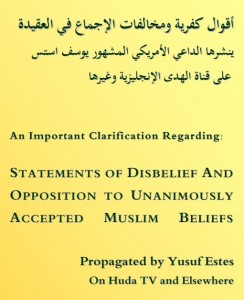
Serious Errors of Yusuf Estes in Basic Muslim Creed

Yusuf Estes and the Quran

Version 2.0

Beware of the dangerous beliefs of Yusuf Estes!  He has been spreading statements of disbelief about the Quran over the past 10 years or so – unchecked!  He has openly propagated on Huda TV and other mediums:

  • What is in the mus-haf is not considered Quran.
  • The Mus-haf Represents the Real Quran in al-Lowh al-Mahfooth, like how paper money represents stored wealth.
  • The written Quran is similar to sheet music for Christian hymns.
  • The math-hab of the modern Raafidhah state of Iran, the Ja’fari math-hab, is a legitimate Islamic math-hab.
  • The word “Shiite” has a known linguistic basis, but we don’t know where we got the word “Sunni” from.
  • An Iranian Shiite Ayatollah is a “true scholar of Islam” (as he links his victims to the Ayatollah’s writings).
  • George Bush’s (illegal) invasion of Afghanistan was justified by the Quranic order for jihaad.

And other statements of disbelief and innovation, aiding various deviations of old, as well as some newly invented ones.

Statements of the Scholars

Shaykh ‘Ubayd ibn ‘Abdillaah al-Jaabiree, retired professor at the University of al-Madeenah, warned the Muslims from this man, saying, “He is either astray, leading others astray, or he has lost his mind.” [Source]

Shaykh ‘Abdur-Rahmaan Muhyiud-Deen, another retired professor at the same university, said, “He is astray, leading others, astray… he doesn’t know anything about Islaam… The shaytan has spoken upon his tongue…” [Source]

The Free E-Book

In this e-book prepared for free and unlimited distribution you can:

  • Read the actual statements of Yusuf Estes, word-for-word.
  • Compare between his corrupt teachings and the pure understanding of Islam from the Book, the Sunnah, and the imaams of the Salaf.
  • Find out what one of today’s scholars has said about him.
  • Learn how to respond to false claims about his teachings and this clarification.

Download the e-book now, and equip yourself with knowledge of Islam, so you don’t fall for one of the many calls to innovation:

An Important Clarification Regarding Statements of Disbelief and Opposition to Unanimously Accepted Muslim Beliefs Propagated by Yusuf Estes on Huda TV and Elsewhere

To help spread awareness of this extremely important topic amongst your brothers and sisters in Islaam:

  • Send this e-book to your contacts.
  • Mention this article or the website YusufEstesQuran.com in a comment under every video of Yusuf Estes you see on YouTube or elsewhere.
  • Encourage your local masjid to have a few printed versions of it in the masjid library.
  • Print it yourself and make copies for the Muslims you know that do not use the internet often or at all.
  • Encourage your local Muslim chaplain to print it and distribute it to the inmates he works with.
  • Encourage all Islamic website admins to upload a copy of the e-book and make it available for download.

Ahlus-Sunnah need to be united in the face of this serious calamity.  A man has been spreading the beliefs of the Jahmiyyah Cult and worse amongst the ranks of the unsuspecting common Muslims.  The issue here is Islaam vs. kufr, and your help is needed.  Take a position for Allaah’s Sake alone, and help the Muslims shun obvious falsehood.

Be patient with the reactions of your brothers and sisters.  Spread the clarification as much as you can, and avoid debates and arguments.  For every person who will not leave their attachment to a personality for the ‘aqeedah of Ahlus-Sunnah, you will find others who will, so do not focus on those who insist on destroying themselves, rather work hard to reach the people who embrace guidance when it comes to them.

Important: Before using the “Leave a Reply” feature below, make sure you’ve read the entire e-book, especially the last two appendices called: “20 Responses to 20 Honest Concerns” (p.59-64) and “20 Responses to 20 Dishonest Claims” (pp.65-72).

Concerns that are addressed there will not be approved below.  As a reminder of an essential principle in Islam (speaking only with knowledge), it is always important to read something entirely before commenting on it, especially a topic as important as this one.

If anyone honestly fears that Yusuf Estes has not been advised about this matter, then please be one more positive voice for change, and send him another copy personally to whatever email or contact information you have for him.  Ask him to purify his intentions, read it carefully, and act on it with things that are pleasing to Allaah.  We don’t want to get carried away defending an individual at the expense of our brothers and sisters not being able to distinguish between Islaam and disbelief!

Furthermore, while we do appreciate all the replies showing support and making du’aa’ for us and for Yusuf Estes (may Allaah guide him), comments that do not meet our requirements for comment approval will not be approved, and we seek your pardon and thank you for understanding.

Catching the Rak’ah of Congregational Prayer

QUESTION

If someone joins the congregation while the imaam is making rukoo’, has he caught that rak’ah? And what do you know about the position of those who say that he has not caught that rak’ah and it must be repeated?

ANSWER by Shaykh Muhammad ‘Umar Baazmool, Instructor at Umm Al-Quraa University in Makkah

This is an old issue, an issue of great differing amongst the scholars: Does the person who reaches the congregation during the rukoo’ get credit for that rak’ah or not?

The majority of the scholars Continue reading

Zakaat on Real Estate (Four Types)

In the Name of Allaah, the Most Merciful, the Ever-Merciful…

The Permanent Committee for Research and Fatwaas, headed by Shaykh ‘Abdul-‘Azeez ibn Baaz (may Allaah have Mercy on him), was asked about a vacant lot of land purchased three years ago – Is there zakaat due upon it?

Their official published answer was as follows: Continue reading

Zakaat al-Fitr Measurements: One Saa’ = Three Litres, One Mudd = .75L

In the Name of Allaah, the Most Merciful, the Ever-Merciful…

The Prophet (may Allaah raise his rank and grant him peace) ordered that a fasting person give out Zakaat al-Fitr at the end of Ramadhan – one saa’ of staple food on behalf of yourself and each person you are responsible for. [1]

What is a Saa’?

A Prophetic saa’ ( صاع ) is not a weight measurement.  It was and still is a measurement of volume, similar to the size of a large salad bowl.  It is made up of four mudds, and a mudd ( مد ) is a smaller container, close to the size of a small salad bowl.

To be precise, a Prophetic mudd in modern volume measurements is .75L (or 750mL), which means Continue reading

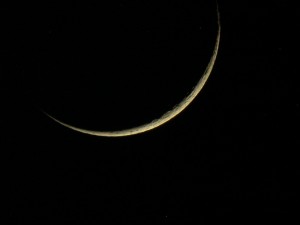
Astronomical Calculations are Subject to Human Error (Regarding the “Mistake” in the Saudi Moonsighting)

In the Name of Allaah, the Most Merciufl, the Ever-Merciful…

Shaykh Saalih al-Fowzaan (may Allaah preserve him) stated:
Astronomical calculations are the work of humans, they could be correct or mistaken, as for the sighting of the moon, then this is based on Prophetic evidence.

Mr. Ali Al-Moosa wrote a piece in the Al-Watan newspaper (published) on 1433/9/11, entitled: ‘This is not from the Unseen Matters’ as a critique of my statements Continue reading

If Someone Stops His Prayer Because of the Iqaamah, Does He Make Tasleem (Give Salaams) or Just Stop Praying?

In the Name of Allaah, the All-Merciful…

The following question was posed to the Permanent Committee of Scholars in Saudi Arabia:

If the iqaamah is called, and a person was praying two rak’ahs of Sunnah prayer or tahiyyat al-masjid, does he stop praying this prayer to join the congregational prayer?  If the answer is yes, then does he give salaams (tasleem) when leaving the prayer or does he simply stop praying without salaams?

They replied:

What is correct from the two positions held by the scholars is that he stops praying, and Continue reading

An Important Warning Regarding Fictional Story Writers and Their Fatwaas

Shaykh Muhammad ibn Saalih al-‘Uthaymeen (may Allaah have Mercy on him) reminds us that those who write fictional stories not based on real events are sinful and considered to be from what the Messenger of Allaah (may Allaah raise his rank and grant him peace) spoke about when he said (what means), “Woe to the one who speaks with lies to make the people laugh, woe to him, woe to him!” (Collected by Aboo Daawood)

Listen to these important words from Continue reading

Don’t Play Games with Wilaayah (the Right of Being the Walee for a Marriage)

In the Name of Allaah…

In the West, it is not too uncommon to find a woman who disputes with her father about a potential spouse, who then goes to an Islamic center to get another walee (legal representative for the marriage) appointed for her, so she can get married without the father’s permission.

Sometimes, another relative is brought in to take the father’s place, and other times a walee is requested to be appointed from outside of her family.

Let’s be perfectly clear here – Playing games with wilaayah (the right of being the walee) can lead to the marriage contract being invalid, even if Continue reading

Common Acts of Religious Excessiveness (Ghuluww): Overplanning an ‘Aqeeqah

In the Name of Allaah, the Most Merciful…

Allaah says, addressing the Jews and Christians with a stern admonition that Muslims are required to also heed and live by:

يا أهل الكتاب لا تغلوا في دينكم
“O people of the Book!  Do not go overboard in your religion!” [1]

His Messenger (may Allaah raise his rank and grant him peace) said:

إياكم والغلو فإنما أهلك من كان قبلكم الغلو
“Be warned against ghuluww (religious excessiveness), since that which destroyed the people who came before you was ghuluww!” [2]

To help fulfill this Prophetic order, this series of brotherly reminders highlights some everyday manifestations of religious excessiveness that Muslims may commonly fall into, so that we can be on guard against them and warn others of them.

Overplanning an ‘Aqeeqah

An ‘aqeeqah is when a Muslim father slaughters two sheep after being blessed with a newborn baby boy, or one sheep for a girl. Continue reading

Common Acts of Religious Excessiveness (Ghuluww): Overplanning Hajj

In the Name of Allaah, the Most Merciful…

Allaah says, addressing the Jews and Christians – an important admonition that Muslims are required to also heed and live by:

يا أهل الكتاب لا تغلوا في دينكم
“O people of the Book!  Do not go overboard in your religion!” [1]

His Messenger (may Allaah raise his rank and grant him peace) said:

إياكم والغلو فإنما أهلك من كان قبلكم الغلو
“Be warned against ghuluww (religious excessiveness), since that which destroyed the people who came before you was ghuluww!” [2]

To help fulfill this Prophetic order, this series of brotherly reminders highlights some everyday manifestations of religious excessiveness that Muslims may commonly fall into, so that we can be on guard against them and warn others of them.

Overplanning Hajj

Hajj is a one-time obligation on all adult Muslims, those who have the ability to perform it – both physically and financially. Continue reading

A Real Eye-Opener: Upset with the Qadr of Allaah!?

In the Name of Allaah…

Most people entertain bad thoughts about Allaah regarding their own personal situations and the situations of others.  The only ones who remain safe from this are those who truly know Allaah, His Names, His Attributes, and what His Wisdom and Right to be praised really entails.

So let every sincere, sound-minded individual focus on himself regarding this, and then repent to Allaah and seek His Forgiveness from the negative notions he entertains about his Lord. Continue reading

The So-Called Story of Alqamah, Whose Mother was Displeased with Him

In the Name of Allaah…

The following fabricated story has been passed around in emails and is found on some websites that don’t seem too concerned about what is attributed to the Messenger of Allaah (may Allaah raise his rank and grant him peace):

Alqamah (radi Allahu anhu) was a very pious person. He spent his time in prayer and fasting. At the approach of death he was unable to proclaim the Kalima Shahada, in spite of repeated instruction by those present. Alqamah’s wife sent a messenger to Rasul Allah (sal Allahu alaihi wa sallam) to inform him of Alqamah’s grave condition. Continue reading