Seeking Knowledge Until Death

[ Part Nine of a series of inspiring articles from a recorded lecture entitled, "Min Ma'een al-Imaam Ahmad" ("Benefits from the Life and Works of Imam Ahmad") by Shaykh Saalih Aal ash-Shaykh (may Allaah preserve him) ]

Seeking Knowledge Until Death

Imam Ahmad had two sons, ‘Abdullaah and Saalih. They were half-brothers, meaning that each of them had a different mother. Saalih, the son of Imam Ahmad, said, “A man saw my father carrying a mih-barah.” A mih-barah was a wooden inkwell that students used to carry along with their pens.

He said, “A man saw my father was carrying a mih-barah, and said, ‘O Abaa ‘Abdillaah!’ Look at how the all the people were fascinated by him, even the elders of the people! He said, “O Abaa ‘Abdillaah! You have reached this position, you are the imam of the Muslims!” He had a problem seeing Imam Ahmad carry his mih-barah as the young students would carry it, or that he would still read books or shoulder the same responsibilities that the youth did.

Imam Ahmad replied with a statement that nullified this man’s whole understanding. He said, “With the mih-barah all the way to the maq-barah (the graveyard).” What did he mean? Continue reading

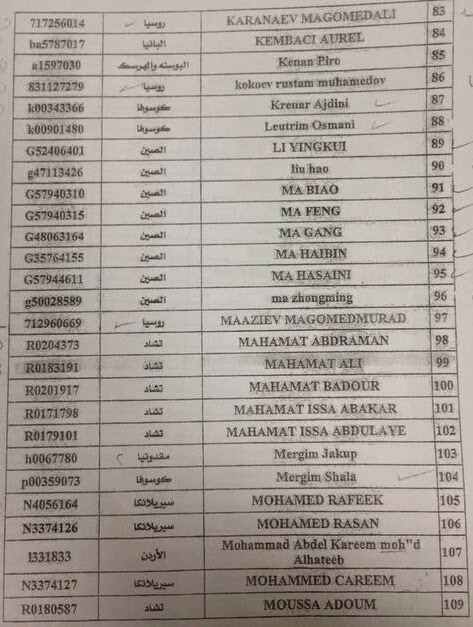
List of Accepted Students at Imam University in Riyadh for the Spring Semester 2012

In the Name of Allaah…

Imam Muhammad ibn Saud Islamic University in Riyadh has just announced their list of accepted students for the second semester (Spring term) of the 2011-2012 school year.  The following names appear on the list of accepted students (names may be spelled phonetically, with more than one mistake):  

1.        

ادغوز الوف بختيار ابن غول آغا

ADGOZALOV BAKHTIYAR

P3388893

أذربيجاني

2.        

محمد خبيب عبدالذاكر

MOHAMMAD KHUBAID KHURSHID

ST009157

أفغاني

3.        

عبالحق حجييف ابن هاشم

HOJIEV ABDULHAK

02006447

أوزبكي

4.        

محمد رفاقت محمدى

MUHAMMADI MUHAMMD RAFAQAT

PH0158091 Continue reading

Recognizing the High Status of Islamic Scholars

[ Part Four of a series of inspiring articles from a recorded lecture entitled, "Min Ma'een al-Imaam Ahmad" ("Benefits from the Life and Works of Imam Ahmad") by Shaykh Saalih Aal ash-Shaykh (may Allaah preserve him) ]

Recognizing the High Status of the Scholars

From his other noteworthy sayings, may Allaah have Mercy on him, elevate his and our positions, and reward him with the best reward, the most plentiful and loftiest one, “Whatever the scholars of Ahlus-Sunnah have detested, then it is evil.” He (Imam Ahmad) said (repeating), “Whatever the scholars of Ahlus-Sunnah have detested, then it is evil.” He meant that the scholars of Ahlus-Sunnah are to be referred to in affairs of what is to be considered evil and what is not.

So whatever the scholars of Ahlus-Sunnah have detested in the issues of ‘aqeedah, then it is evil. Whatever the scholars of Ahlus-Sunnah have detested with regards to manners, then it is evil. Whatever the scholars of Ahlus-Sunnah have detested in affairs of ordering righteousness and forbidding evil, then it is evil. This means that a man must return to the scholars of the Sunnah if he wants to know about the affairs of the Sunnah, about the proper understanding of righteousness and evil. Continue reading

Dedicating One’s Youth to Worship

[ Part One of a series of inspiring articles from a recorded lecture entitled, "Min Ma'een al-Imaam Ahmad" ("Benefits from the Life and Works of Imam Ahmad") by Shaykh Saalih Aal ash-Shaykh (may Allaah preserve him) ]

Dedicating One’s Youth to Worship

Since his childhood, Imam Ahmad (may Allaah have Mercy on him) could be seen with signs of nusuk on him. [The term nusuk will be explained shortly.]  Ma’roof Al-Karkhee (may Allaah have Mercy on him) said, “I saw Ahmad ibn Hanbal when he was a young boy, and he had signs of nusuk on him. I used to hear him making statements that were full of benefit.”

This statement describes how he was upon guidance even as a young boy. He used to be seen with signs of nusuk on him. What is meant by nusuk is worship and acts of obedience. The effects of worship and obedience are not only physical ones seen in the appearance and dress, but their effects are also found in one’s speech, manners, in the acts of worship and obedience themselves, and in one’s preference for the next life over this one.

Imam Ahmad said about his own self, “I did not marry until after I reached 40 years of age.” His companions said that this was because he used to be busy traveling to seek knowledge before that. He went to Makkah, and from there to San’aa’. There is a story about this trip:

He set out with his companion, Yahyaa ibn Ma’een, for Hajj. He said to Yahyaa, “When I finish Hajj, verily I am going to Yemen to meet the scholar of Yemen, the scholar of Hadeeth, ‘Abdur-Razzaaq ibn Hammaam As-San’aanee.” As-San’aanee died in the year 210 after Hijrah.

When they reached Makkah, they found that ‘Abdur-Razzaaq was making Hajj that year as well. So Yahyaa knew who he was and met him. He saw him going around the Ka’bah, and since he knew him, he went and greeted him. Yahyaa said to ‘Abdur-Razzaaq, and they knew each other, “This is Ahmad ibn Hanbal” So ‘Abdur-Razzaaq became happy about this and said, “It has reached us that he is a person who has a lot of goodness.”

When they prayed their two rak’ahs after making tawaaf, Yahyaa said to Imam Ahmad, “Ahmad, our provisions for the journey to San’aa’ have been used. And here is ‘Abdur-Razzaaq, so let us stay with him so we can take some narrations from him.”

Ahmad said to Yahyaa ibn Ma’een, “My intention is still present, and I will not oppose it. So I will continue on to San’aa’.” This shows the effects of his commitment to the hardships of seeking knowledge. A trip to San’aa’ in that time was not made in cars or airplanes or the likes, rather it was only made with great hardships, the realities of which can not be described.

Ma’roof said, “I saw Ahmad ibn Hanbal when he was a young boy and he had signs of nusuk on him.” In reality, this is what we should see in our children, that they work hard to correct themselves in their youth, in their early years. Because at this, if they do not build upon this foundation with what is correct, with acts of worship and obedience, then it will be very difficulty after that, except for those whom Allaah, the Mighty and Exalted, excludes.

Whoever holds to His Religion in his youth, firmness will return to him. Someone being devout or obedient is not just a claim or a verbal ascription to something, nor is it something seen only from the outside. Rather devoutness in the Religion entails one taking on serious rituals, he must worship, and he must be obedient.

This leads us to the story when Imam Ahmad once hosted one of his students in Hadeeth, ‘Abdus-Samad ibn Sulaymaan. When he was hosting him in his house, and it came time to sleep, he brought him some water to make wudhoo’ from or for general use. Then he went to sleep. When the morning came, Imam Ahmad saw that all of the water was still there, so he asked about it. ‘Abdus-Samad replied, “I did not use the water.” Imam Ahmad said, “A student of the narrations who does not do anything at night?!”

He meant, “All the way to the morning, you did not pray in the night?! You did not worship!? You did not even pray two rak’ahs?!” ‘Abdus-Samad replied, “Verily I am a traveler.” He said, “Even as a traveler!” Meaning, “Where is the witr? Where is the prayer?”

So without a doubt, if this was important in that day and time for cultivating one’s soul and getting set in the proper direction, then we are in more need of it today. This is the case especially with the youth who seek knowledge, or those holding tight to their guidance, or those who display the effects of prayer, or those who are keen in doing good deeds.

One must keep his soul tied to some acts of worship. No doubt, one must keep his soul tied to some acts of obedience. If you force the soul to be obedient, it will become obedient. If you abandon it, then it will be a soul that gravitates toward wrongdoing.

It has been related that the Prophet (sallallaahu ‘alayhe wa sallam) said:

“Whoever shows enduring patience, Allaah will make him firm upon patience. Whoever seeks knowledge, Allaah will teach him. Whoever hunts for good, he will be given it. Whoever expects evil, he will be made to fall into it.” [1]

Therefore, this description of Imam Ahmad proves that he had an upbringing based on obedience to Allaah and acts of worship, so much so that he used to force his soul to shun many worldly things and to take on great hardships. The result of this was that he established his soul firmly upon obedience to Allaah, the Mighty and Exalted.

FOOTNOTES

[1] The first part of this hadeeth, “Whoever shows enduring patience, Allaah will make him firm upon patience,” it is found in Saheeh Al-Bukhaaree, on the authority of Aboo Sa’eed Al-Khudree (may Allaah be pleased with him).

Continue reading this series…
Part Two - Speaking Only About Beneficial Matters

Or go to the Index of articles in this inspiring series.

Translation, Titles, and Footnotes by: Moosaa Richardson

Originally published on Bakkah.net: 1423-05-16

10 FAQs About Studying at Umm al-Qura University in Makkah, Saudi Arabia

In the Name of Allaah, the All-Merciful, may His Salaah and Salaam be upon His final Messenger Muhammad, to proceed…

The following frequently asked questions are answered in this article:

  • I’m over 25 years old. Is it possible for me to be accepted?
  • How can they put an age limit on seeking Islaamic knowledge!?
  • I have a family and I would want them to live with me during my studies. Is that possible?
  • What is the difference between Umm Al-Quraa University and the Islamic University of Al-Madeenah?
  • I heard that Umm Al-Qura University does not allow non-Saudi students into any of the colleges. Is that true?
  • What is the best way to submit an application?
  • Is it a must to include pictures in my application?
  • Can women study at Umm Al-Qura University?
  • As a female student, can I bring my uncle or grandfather to live with me in Makkah to fulfill the condition of having a male relative with me?
  • Can you please give me special consideration for acceptance? Continue reading

List of Accepted British Students 2011-2012: The Islamic University of al-Madeenah

In the Name of Allaah…

The Islamic Univeristy of al-Madeenah has just announced their list of accepted students from for 2011-2012.  The following names appear on the list of accepted British students (names may be spelled phonetically, with more than one mistake): 

  • KARL PIERRE ODET COUTET
  • RUNAKO AKUA CHARLES
  • KIERAN HUGHHAMM-PASCOE
  • abdulmajid mohamed hersi
  • STEPHEN TOMS
  • HUSSEIN JAMAL HUSSEIN
  • BUSSAM NASHEETH MOHAMED SIDDEEK
  • Adnan Khan
  • MUHAMMED ABUBAKER
  • HAROON METWALI Continue reading

List of Accepted Canadian Students 2011-2012: The Islamic University of al-Madeenah

In the Name of Allaah…

The Islamic Univeristy of al-Madeenah has just announced their list of accepted students from for 2011-2012.  The following names appear on the list of accepted Canadian students (names may be spelled phonetically, with more than one mistake): 

  • HICHAM DJEMAI
  • MOHAMED AHMAD URUR
  • SHAHBAZ GAYA
  • MAGEE GERALD COBRUN
  • KAN ZEYD
  • MOHAMED MOHAMED
  • MUHAMMAD TAYYAB
  • OMAR MAO Continue reading

List of Accepted American Students 2011-2012: The Islamic University of al-Madeenah

In the Name of Allaah…

The Islamic Univeristy of al-Madeenah has just announced their list of accepted students from for 2011-2012.  The following names appear on the list of accepted American students (names may be spelled phonetically, with more than one mistake): 

  • KREG QUEBEDEAUX
  • ARSALAN MOHAMMAD MAJID
  • MUSTAFIZUR MATIN
  • ZAID ALI
  • IBRAHIM BOULIL
  • DEVAUGHN MARCELL KENNY EDGE Continue reading

Studying Islam Overseas in Saudi Arabia’s Universities

In the Name of Allaah, the Most-Merciful, may His Salaah and Salaam be upon His final Messenger Muhammad, to proceed:

Bakkah.net features exclusive pictures, applications, and inside information about studying Islam overseas in Saudi Universities. Saudi Arabia hosts a number of Islamic colleges and educational institutions that provide opportunities for non-Saudis to come and learn Islam abroad. Here is some introductory information about some Saudi Universities: Continue reading

Imam Muhammad bin Saud Islamic University, Riyadh, Saudi Arabia

In the Name of Allaah, the All-Merciful…

OVERVIEW

Al-Imaam Muhammad bin Su’ood Islaamic University (IMIU), or Imam University for short, opened with two colleges, the College of Arabic Studies and the College of Islaamic Law in 1953 in Riyadh. Since then, many colleges have been added, as well as branches in other cities. Similar to Al-Madeenah and Umm Al-Quraa, non-Arabic speakers have a chance to learn Arabic here from the beginning in an Arabic Language Institute designed specifically for them. They can then continue their studies in one of the colleges only if they qualify with at least an 80% level of achievement. Continue reading

The Islamic University of Madeenah, Saudi Arabia

In the Name of Allaah, the All-Merciful…

OVERVIEW

Located in the beloved city of our Messenger (sallallaahu ‘alayhe wa sallam), the Islaamic University of Al-Madeenah was founded by the government of Saudi Arabia by a royal decree in the year 1381, intending to spread the teachings of Islaam all over the world. Continue reading

Umm Al-Qura University, Makkah, Saudi Arabia

In the Name of Allaah, the Most-Merciful, may His Salaah and Salaam be upon His final Messenger Muhammad, to proceed:

OVERVIEW

The Arabic Language Institute at Umm al-Qura University in Makkah, Saudi ArabiaLocated in the most virtuous of cities, Umm al-Qura University in Makkah, Saudi Arabia offers a chance for non-Arabic speakers, male or female, to learn Arabic within a two-year intensive program. Upon completing the initial studies in the Arabic Language Institute with qualifying grades (80% average or higher), the student earns the opportunity to take an entrance exam apply to study in one of the colleges of Umm Al-Qura University. Continue reading

Daar al-Hadeeth al-Khayriyyah, Makkah, Saudi Arabia

In the Name of Allaah, the All-Merciful…

OVERVIEW

Daar Al-Hadeeth Al-Khayriyyah in Makkah, established in 1352 (around 1930 according to the Christian calendar), not only gives students in-depth understanding of the Sunnah and its sciences, it also includes studies in all areas of the Sharee’ah. The school consists of four departments: Elementary school level, middle school level, high school level, and college level. Continue reading

Seeking Knowledge – What you Should Know Before you Go

Important advice for those who may undertake the role of the student of knowledge – those who want to leave behind their homeland, perhaps family, jobs, homes, college studies, or important positions in their communities. [1]

In the Name of Allaah, the Most-Merciful, may His Salaah and Salaam be upon His final Messenger Muhammad, to proceed:

Verily from the most rewarding ventures a person can undertake is to pursue knowledge of Allaah’s Deen. The ones who are favored with understanding of the Religion, not only does Allaah want good for them, Continue reading

Islamic Degrees and Certificates Vs. Grounded Knowledge and Understanding

In the Name of Allaah, the Ever Merciful…

Shaykh Saalih al-Fowzaan (may Allaah preserve him) was asked the following question about academic qualifications:

Question: Am I qualified to call to the Salafee ‘aqeedah if I have attained an excellent mark in a course offered by a da’wah office?

Answer: This (being truly qualified) does not happen except by way of knowledge.  If you know the correct ‘aqeedah and have a complete understanding of it, then you have attained knowledge of it.  But it is not sufficient for you to have an excellent (academic) mark without understanding ‘aqeedah.   Continue reading